

An A2O wastewater treatment package is one of the advanced biological treatment solutions for treating domestic and sanitary wastewater and some industrial effluents. By creating three controlled zones — anaerobic, anoxic, and aerobic — this method helps simultaneously reduce the organic matter, nitrogen, and phosphorus in the wastewater.
The A2O process, also known as A²/O, Anaerobic-Anoxic-Oxic, and the anaerobic-anoxic-aerobic system, is suitable for projects that, in addition to reducing BOD and COD, require the control of nitrogen and phosphorus compounds in the output effluent.
By reviewing the specifications of the inlet wastewater, the project flow rate, the installation space, the required output effluent standard, and the operating conditions, Poly Payesh designs and builds the A2O wastewater treatment package to suit the needs of each project.
What Is an A2O Wastewater Treatment Package?
An A2O wastewater treatment package is an engineered system consisting of several continuous biological units, in which the wastewater passes in sequence through three different environments:
- The anaerobic zone
- The anoxic zone
- The aerobic zone
Each of these zones provides different conditions for the activity of a specific group of microorganisms. The result of this design is a process for reducing organic matter, converting and removing nitrogen compounds, and helping with the biological removal of phosphorus.
In this method, the removal of organic pollution is not the only concern; controlling nutrients such as nitrogen and phosphorus is also important in the process design. For this reason, the A2O package is usually considered for projects with stricter output requirements or higher environmental sensitivity.
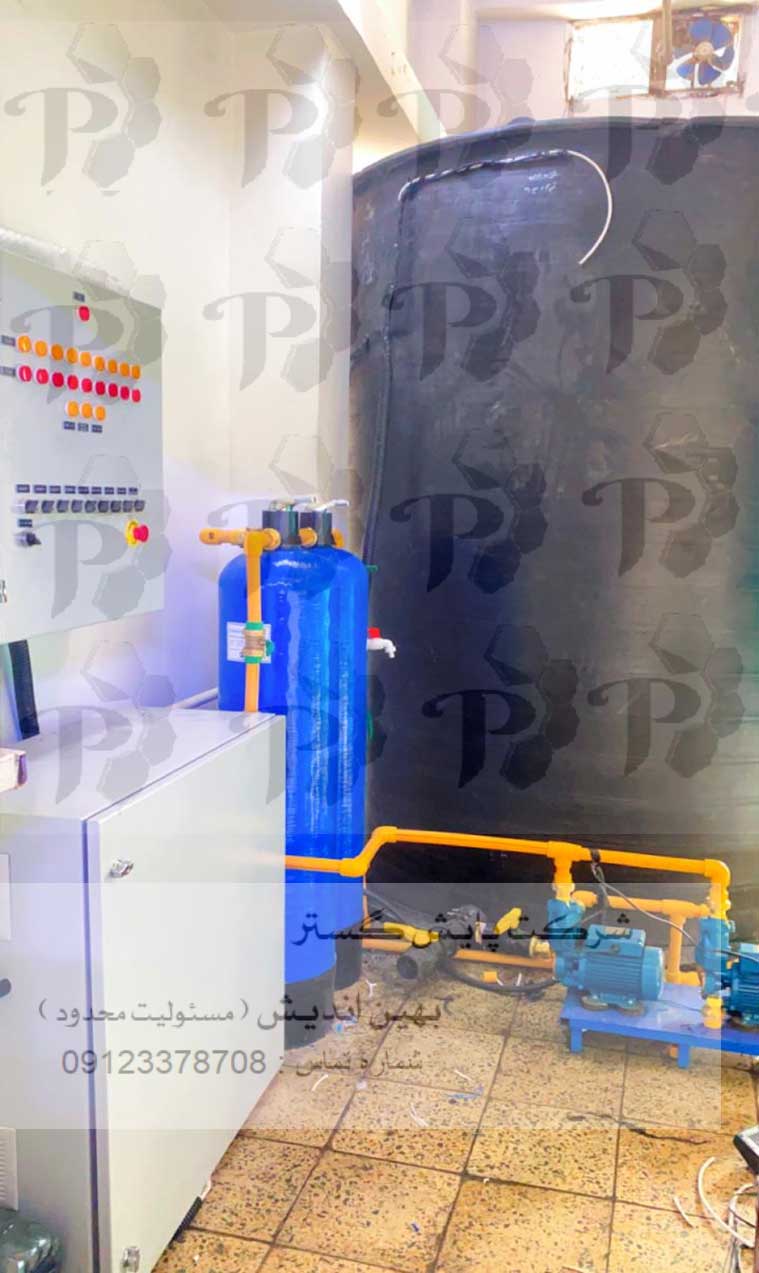
How Does the A2O Process Work?
The operation of the A2O wastewater treatment package is based on the controlled passage of the wastewater through three biological zones. The design of the tank volumes, the retention time, the amount of aeration, the sludge return rate, and the internal return flow must be done in proportion to the quality of the inlet wastewater and the output effluent standard.
The Anaerobic Zone
In the anaerobic section, the dissolved oxygen must be very low, and the entry of nitrate and nitrite must also be controlled as much as possible. In this environment, the conditions necessary for the activity of the bacteria effective in the biological removal of phosphorus are provided.
In this stage, part of the decomposable organic matter is consumed by the microorganisms, and the phosphorus-storing bacteria are prepared to absorb more phosphorus in the later stages.
The main functions of the anaerobic zone:
- Creating suitable conditions for starting the biological phosphorus removal cycle
- Using the decomposable organic matter present in the wastewater
- Preparing the microorganisms to absorb phosphorus in the aerobic section
- Helping stabilize the performance of the nutrient removal process
The Anoxic Zone
In the anoxic zone, free oxygen is absent or very limited; but the nitrate produced in the aerobic section enters this section through the internal return flow.
In this stage, the denitrifying bacteria use nitrate as an electron acceptor and convert it to nitrogen gas. The nitrogen gas then leaves the wastewater.
The main process in this section is denitrification.
The main functions of the anoxic zone:
- Converting nitrate to nitrogen gas
- Reducing the nitrogen present in the wastewater
- Helping reduce the nitrogen pollution load of the effluent
- Controlling compounds that can cause excessive algae growth in aquatic environments
The Aerobic Zone
In the aerobic section, the oxygen required by the microorganisms is supplied by a blower and diffuser. In this environment, aerobic bacteria are active and decompose an important part of the organic matter present in the wastewater.
Also, in this stage, ammonia and ammonium are converted to nitrite and then nitrate during the nitrification process. The produced nitrate is returned to the anoxic zone through a pump or internal return line to complete the nitrogen removal cycle.
The main functions of the aerobic zone:
- Reducing BOD and COD
- Decomposing treatable organic matter
- Carrying out nitrification
- Biological absorption of phosphorus by the active bacteria
- Preparing the return flow for nitrogen removal in the anoxic zone
The Nitrogen Removal Cycle in the A2O Package
One of the important features of the A2O wastewater treatment package is creating a controlled cycle for nitrogen removal.
In this cycle:
- Ammonia compounds enter the aerobic section.
- In the aerobic zone, ammonia is converted to nitrite and then nitrate.
- The nitrate-containing flow is transferred to the anoxic section through internal return.
- In the anoxic section, nitrate is converted to nitrogen gas.
- The nitrogen gas leaves the system, and the nitrogen load of the wastewater is reduced.
The design quality of the internal return pump, the amount of dissolved oxygen, the ratio of organic matter to nitrogen, and the operating conditions have a direct effect on the efficiency of this cycle.
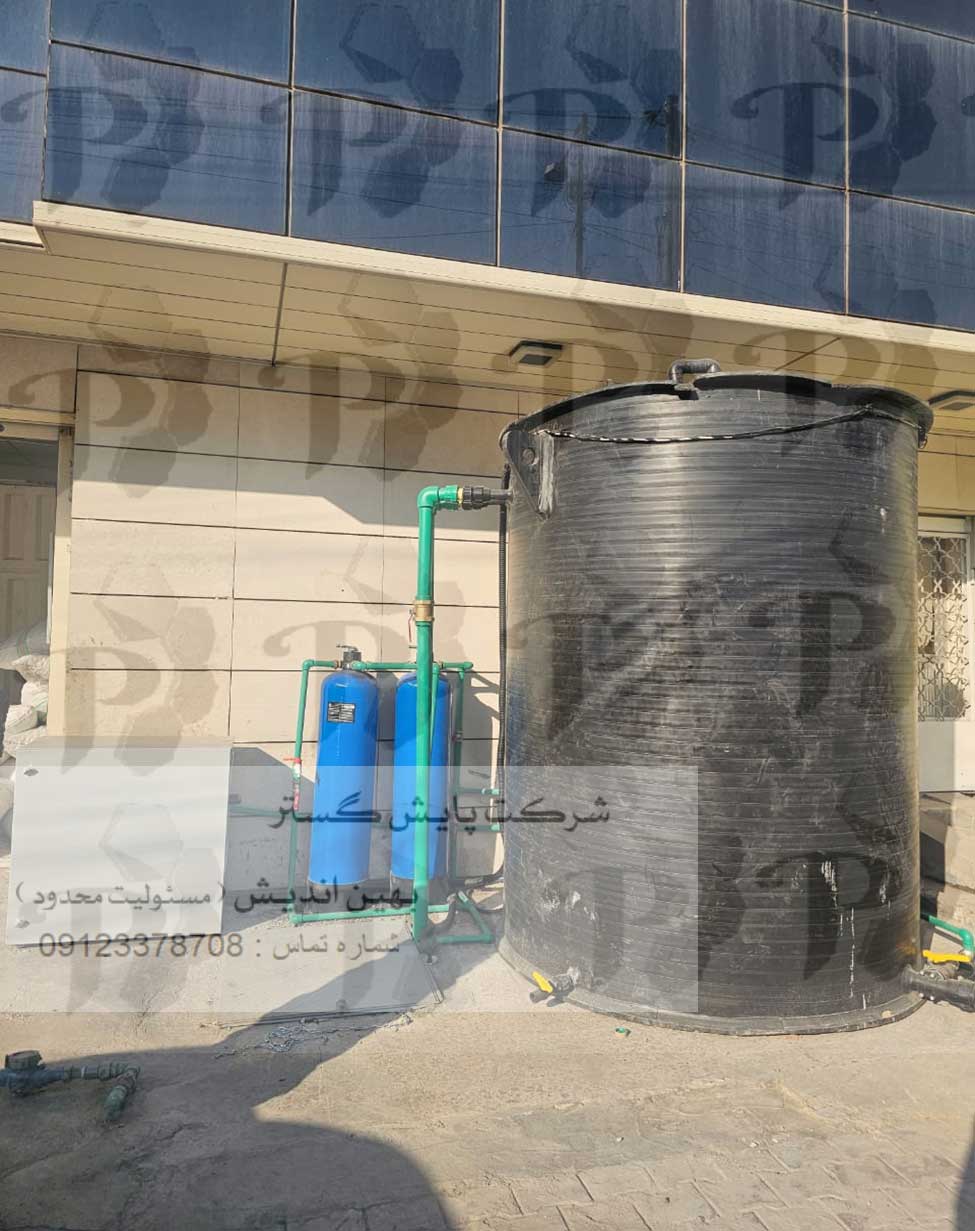
How Is Phosphorus Removed in the A2O Process?
Phosphorus removal in the A2O package depends on the correct performance of the anaerobic and aerobic zones.
In the anaerobic stage, the bacteria effective in the biological removal of phosphorus release the phosphorus stored in their cells. Then, in the aerobic stage, the same bacteria absorb a larger amount of phosphorus from the wastewater and store it within their cells.
Part of the absorbed phosphorus leaves the system along with the excess sludge. For this reason, sludge management and adjusting the operating conditions are very important in the performance of phosphorus removal.
Main Components of the A2O Wastewater Treatment Package
The equipment of the A2O package is selected according to the project capacity, the type of wastewater, the available space, and the required effluent quality. The main components of this system can include the following:
- Receiving tank or sewage pumping station
- Screen (trash rack) or pre-treatment equipment if needed
- Equalization tank for the flow rate and pollution load
- Anaerobic tank
- Anoxic tank
- Aerobic tank
- Aeration blower
- Diffuser and air distribution network
- Submersible mixer in the anaerobic and anoxic sections
- Internal return pump from the aerobic zone to the anoxic zone
- Sludge return pump
- Secondary settling tank or clarifier
- Electrical panel and control system
- Measurement and monitoring equipment
- Disinfection system if needed
- Treated effluent storage tank if needed
- Piping, inspection manhole, and venting equipment
The Role of the Internal Return Pump in the A2O Process
The internal return pump is one of the important pieces of equipment in the A2O wastewater treatment package. This pump returns the nitrate-containing flow from the aerobic section to the anoxic section so that the denitrification process is carried out.
If the internal return rate is not designed or adjusted correctly, the nitrogen removal performance can be affected. For this reason, the choice of pump, piping, flow control, and operating conditions must be done in proportion to the capacity and specifications of the wastewater.
Advantages of the A2O Wastewater Treatment Package
The A2O package can provide important advantages in suitable projects:
- Simultaneous reduction of organic matter, nitrogen, and phosphorus
- Helping improve the output effluent quality
- Suitable for projects with stricter requirements in nutrient control
- The possibility of designing as a prefabricated package or a fixed treatment plant
- The ability to be executed in various capacities
- The possibility of a buried or above-ground design according to the project conditions
- The ability to be used for domestic and sanitary wastewater and some industrial effluents after a technical review
- The ability to be equipped with an electrical panel, PLC, and process monitoring systems
- The ability to be combined with pre-treatment, disinfection, or supplementary treatment if needed
Limitations and Important Points in Choosing the A2O Process
The A2O process is not the best option for every project, and choosing it must be based on a technical study.
Some important points in choosing this method are:
- The need for precise design of the volume and order of the tanks
- The need for suitable control of aeration in the aerobic section
- The need to control the oxygen-free conditions in the anoxic section
- The importance of preventing nitrate from entering the anaerobic zone
- The need for an internal return pump and a sludge return pump
- The sensitivity of performance to severe changes in flow rate and pollution load
- The importance of the inlet wastewater quality and the ratio of organic matter to nitrogen and phosphorus
- The need for regular operation and maintenance
- A higher initial and operating cost than some simpler systems
For this reason, before choosing an A2O wastewater treatment package, the wastewater analysis, the required capacity, the output effluent standard, the project space, and the complex’s operating capability must be reviewed.
What Projects Is the A2O Wastewater Treatment Package Suitable For?
The A2O process can be considered for the following projects:
- Domestic and sanitary wastewater treatment plants
- Towns and residential complexes
- Civil construction and organizational projects
- Hotels, lodges, and tourism complexes
- Universities, schools, and large educational centers
- Hospitals and medical complexes, after a technical review
- Workshop camps with a significant population
- Urban and semi-centralized projects
- Projects where controlling nitrogen and phosphorus in the effluent is important
- Some food and manufacturing industries, after reviewing the effluent analysis and pre-treatment needs
In industrial projects, the type and concentration of pollutants, fat, chemicals, pH, flow fluctuation, and inhibitory compounds must be carefully reviewed before choosing the process.
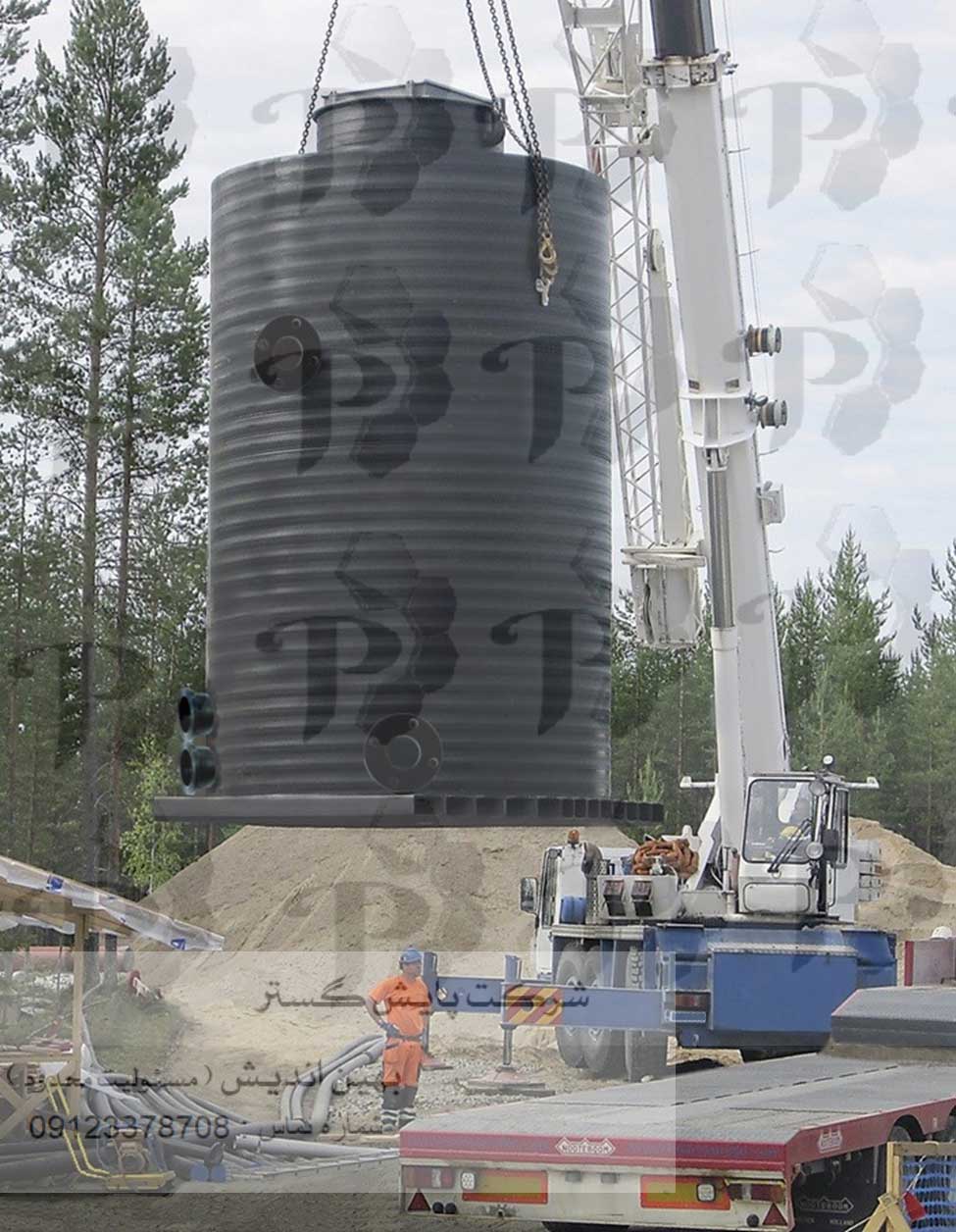
What Material Is the A2O Package Made Of?
The A2O process is a treatment method and is not limited to the material of the package body. Depending on the capacity, the installation location, the environmental conditions, and the type of project, it is possible to design and build this system in various structures, including:
- HDPE polyethylene package
- Metal tanks with a suitable coating
- Fiberglass structure
- Concrete structure for larger projects
- Modular design for future capacity expansion
In small and medium projects, a polyethylene package can be an option to consider due to its resistance to corrosion, good sealing, lower weight, and higher execution speed.
What Is the Difference Between A2O and SBR and MBBR?
All three methods — A2O, SBR, and MBBR — are used in wastewater treatment, but their structure and method of operation are not the same.
The Difference Between A2O and SBR
In the A2O process, the anaerobic, anoxic, and aerobic sections are usually designed in separate tanks or zones and continuously.
But in the SBR system, the stages of filling, aeration, settling, and discharge are carried out in one or several reactors based on a time schedule.
A2O is suitable for projects that require continuous flow and the simultaneous control of organic matter, nitrogen, and phosphorus. In contrast, SBR can be an option to consider for projects with limited space or timed operating conditions.
The Difference Between A2O and MBBR
In the A2O process, nutrient removal is carried out using separate biological zones and activated sludge.
In the MBBR system, moving media are placed inside the tank and provide a suitable surface for biofilm growth. MBBR is used in some projects to increase the biological growth surface and provide greater resistance to changes in the pollution load.
The choice between A2O, SBR, and MBBR must be made after reviewing the wastewater analysis, the flow rate, the project space, the output standard, the operating cost, and the maintenance conditions.
How Is the Capacity of the A2O Wastewater Treatment Package Determined?
The capacity of the A2O package must be chosen based on the real information of the project. The most important factors in designing the capacity are:
- The average and maximum wastewater flow rate
- The number of people or the type of use of the complex
- The quality of the inlet wastewater
- The levels of BOD, COD, TKN, ammonia, and phosphorus
- The flow fluctuation over the day and night
- The operating hours of the complex
- The space available for installation
- The groundwater level and soil conditions in buried execution
- The required standard for the output effluent
- The need for effluent reuse
- The possibility of future capacity expansion
Choosing a capacity below the real need can reduce the system’s performance, and choosing an excessive capacity also increases the execution and operating cost.
What Factors Does the Price of the A2O Wastewater Treatment Package Depend On?
The price of the A2O wastewater treatment package depends on the technical specifications of the project. The most important factors affecting the price are:
- The package capacity in cubic meters per day
- The quality and type of the inlet wastewater
- The required standard for the output effluent
- The body material and type of structure
- Whether the package is buried or above-ground
- The number and volume of the biological tanks
- The type of blower, diffuser, mixer, and pumps
- The presence of an internal return pump and a sludge return pump
- The type of electrical panel and the level of automation
- The need for monitoring equipment such as dissolved oxygen measurement or process control
- The need for disinfection, effluent storage, or supplementary treatment
- The transport, installation, piping, and project execution conditions
To provide an exact price, information such as the type of use, the required capacity, the wastewater analysis, the project location, and the expected effluent quality must be reviewed.
Design and Construction of the A2O Package by Poly Payesh
By reviewing the conditions of each project, Poly Payesh makes it possible to design and build the A2O wastewater treatment package based on the real needs of the complex.
In the design process, the following are reviewed:
- The type and quality of the inlet wastewater
- The required capacity of the project
- The available space
- The buried or above-ground execution conditions
- The output effluent standard
- The need for nitrogen and phosphorus removal
- The type of mechanical and electrical equipment
- The operation and maintenance conditions
- The possibility of future development or capacity increase
The goal is to choose a solution that, in addition to meeting the required effluent quality, is also aligned with the project’s conditions in terms of execution, maintenance, and operating cost.
To receive specialized consultation, a technical review of your project, and a price quote for the A2O wastewater treatment package, get in touch with the experts at Poly Payesh.
Frequently Asked Questions About the A2O Wastewater Treatment Package
What is an A2O wastewater treatment package?
An A2O wastewater treatment package is a biological system consisting of three zones — anaerobic, anoxic, and aerobic — that is designed to reduce organic matter, nitrogen, and phosphorus in wastewater.
What is the difference between A2O and O2A?
The correct and common name for this process is A2O or A²/O, whose stage order is anaerobic, anoxic, and aerobic. Using the title O2A can incorrectly show the order of the process.
Is the A2O package suitable for domestic wastewater?
Yes. This process can be considered for domestic and sanitary wastewater, especially in projects where controlling nitrogen and phosphorus is important.
Is A2O also used for industrial wastewater?
Depending on the type of industry and the effluent analysis, the A2O process can be part of an industrial wastewater treatment solution. In many projects, pre-treatment or supplementary units are also needed.
What does the internal return pump do in A2O?
The internal return pump transfers the nitrate-containing flow from the aerobic section to the anoxic section so that the denitrification process and nitrogen removal are carried out.
Can the A2O package produce effluent suitable for irrigation?
With correct design, proper operation, and the output effluent quality complying with the required standard, it is possible to consider reusing the effluent for purposes such as green-space irrigation.
What information is needed to request a price for the A2O package?
The type of use, the wastewater flow rate, the inlet wastewater analysis, the installation location, the available space, the need for buried or above-ground execution, and the required output effluent quality are important pieces of information for design and price estimation.