

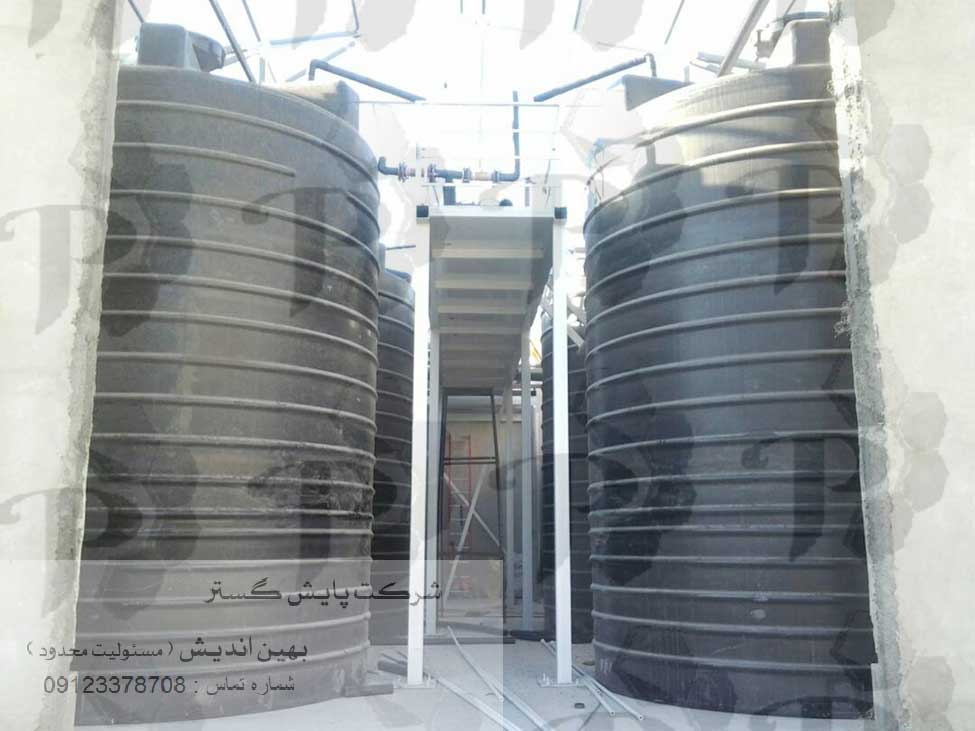
The polyethylene grease trap is one of the important pieces of wastewater pre-treatment equipment, designed to separate fat, oil, grease, and light floating materials from the wastewater of industrial kitchens, restaurants, fast-food outlets, hotels, hospitals, food industries, and service complexes.
By reducing the velocity of the wastewater flow and creating suitable conditions for gravity separation, this equipment causes the fat and oil to move to the water surface, the heavier materials to settle, and the semi-treated effluent to be transferred from the middle section of the tank to the next stage.
Poly Payesh designs and manufactures the polyethylene grease trap based on the real wastewater flow rate, the type of use of the complex, the amount of fat and oil, the installation space, the execution location, and the need for connection to a wastewater treatment package.
What Is a Polyethylene Grease Trap?
The polyethylene grease trap, also known as a grease trap, restaurant wastewater grease trap, and industrial kitchen grease trap, is an engineered tank for separating fat, oil, and grease from the wastewater flow.
In the wastewater of kitchens and food industries, there are compounds such as frying oil, meat fat, edible oils, detergents, food particles, and light floating materials. The direct entry of these materials into the sewer network or the biological treatment units can cause pipe clogging, disruption of pumps, odor generation, and reduced treatment efficiency.
By providing a suitable retention time and reducing flow turbulence, the grease trap creates conditions in which the fat and oil, due to their specific gravity being lower than water, rise to the surface of the tank. This layer is then discharged and managed periodically.
Why Is Using a Grease Trap Essential?
Fat and oil seem like simple substances, but their entry into the sewer network and treatment systems can create significant costs.
In the absence of a suitable grease trap, the fats may:
- Stick to the inner walls of the pipes.
- Cause a reduction in the effective diameter of the pipe and gradual clogging.
- Damage the wastewater pumps.
- Create odor in the tanks and manholes.
- Contaminate the surface of the aeration equipment.
- Reduce the oxygen transfer in the aeration tank.
- Damage biological processes such as activated sludge, SBR, MBBR, IFAS, and MBR.
- Increase the repair and maintenance costs of the treatment plant.
- Reduce the overall efficiency of the wastewater treatment system.
For this reason, the grease trap is usually considered one of the most important pre-treatment stages for kitchen, restaurant, and food wastewater.
How Does the Polyethylene Grease Trap Work?
The operation of the polyethylene grease trap is based on the difference in the specific gravity of the materials present in the wastewater and the creation of calm hydraulic conditions.
In a suitable design, the wastewater loses its velocity after entering the tank. In these conditions, the heavier materials move toward the bottom, the fat and oil rise to the surface, and the water with less pollution is directed from the middle section toward the outlet.
The main stages of the grease trap’s operation include the following:
1. Controlled Wastewater Inflow
The wastewater from sinks, dishwashers, floor drains, food preparation lines, and the kitchen enters the grease trap.
The inlet must be designed so that the wastewater flow does not enter the tank with high intensity; because excessive turbulence can cause the fat to mix with the water and reduce the separation efficiency.
2. Reducing the Flow Velocity and Creating Retention Time
After the wastewater enters the tank, the flow velocity decreases. This retention time allows the materials present in the wastewater to have sufficient opportunity for separation.
The more suitable the hydraulic design of the tank is, the better the separation of fat, oil, and heavy materials is carried out.
3. Separation of Fat, Oil, and Heavy Materials
At this stage:
- Fat, oil, and grease move toward the surface of the tank.
- Part of the heavier solids settle at the bottom.
- Water with less pollution remains in the middle section.
- The baffles and inner walls prevent the direct passage of fat to the outlet.
4. Accumulation of the Fat Layer at the Tank Surface
The separated fats accumulate in the upper part of the tank. This layer must be discharged at suitable time intervals.
Late discharge of the fat can cause a reduction in the effective volume of the tank, a decline in separation efficiency, and the exit of fat through the outlet route.
5. Discharge of the Semi-Treated Effluent
After passing through the internal sections of the grease trap, the effluent exits from the tank outlet and can enter the sewer network or the next treatment stage.
In projects that have a wastewater treatment package, the outlet of the grease trap is usually placed before the biological units.
Main Components of the Polyethylene Grease Trap
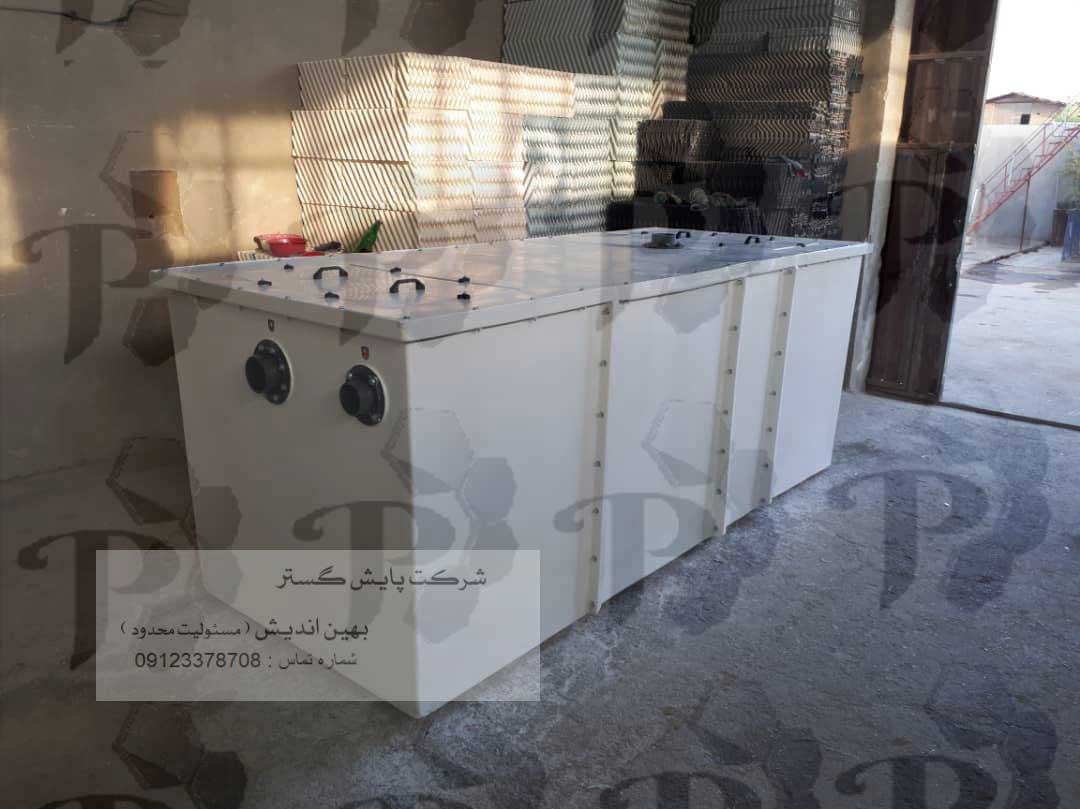
The polyethylene grease trap, depending on the capacity, the type of use, and the installation-site conditions, can include the following components:
- Polyethylene tank
- Wastewater inlet
- Effluent outlet
- Internal baffles
- Separating walls
- Flow-calming section
- Fat and oil accumulation zone
- Solids settling section
- Inspection manhole
- Fat discharge hatch
- Sludge and sediment discharge hatch
- Vent pipe
- Equipment for connection to the sewer network
- Base or anchoring system for above-ground models
- Equipment needed for buried execution if required
The Role of the Baffle in the Grease Trap
The internal baffles are one of the most important parts of the grease trap. These internal plates or walls cause the wastewater to follow a controlled path and prevent the fat collected on the surface of the tank from moving toward the outlet.
The main functions of the baffles are:
- Reducing flow turbulence
- Increasing the retention time of the wastewater
- Preventing the direct passage of fat to the outlet
- Directing the water from the middle section of the tank
- Improving the separation of fat and oil
- Helping the settling of heavy solids
Incorrect design of the baffles can reduce the performance of the entire grease trap, even if the tank volume is large.
What Locations Is the Polyethylene Grease Trap Suitable For?
The polyethylene grease trap is used in various projects, including:
- Restaurants
- Fast-food outlets
- Cafes and coffee shops
- Industrial kitchens
- Hotels and lodges
- Hospitals and medical centers
- Banquet halls and catering complexes
- Commercial complexes
- Schools, universities, and cafeterias
- Food production factories
- Dairy industries
- Slaughterhouses
- Meat and poultry processing units
- Canning factories
- Oil-extraction factories
- Food-preparation workshops
- Catering companies
- Workshop camps with a kitchen
- Industries with greasy and oily wastewater
The choice of capacity and type of grease trap for each project must be made based on the real wastewater flow rate, the amount of fat, and the type of activity of the complex.
Restaurant Grease Trap
The restaurant grease trap is designed to manage the wastewater from sinks, dishwashers, cooking lines, food preparation, dishwashing, and the kitchen floor drain.
In restaurants, fast-food outlets, and food complexes, the volume of fat and oil can increase significantly during peak activity hours. For this reason, the design of the grease trap should not be done based on the kitchen’s floor area alone.
Important information for designing a restaurant grease trap includes the following:
- The number of meal servings per day
- The number of sinks and washing equipment
- The presence of an industrial dishwasher
- The type of food served
- The amount of frying oil used
- The peak activity hours
- The approximate wastewater volume
- The possibility of buried or above-ground installation
- The presence of a wastewater treatment package downstream
Designing the Grease Trap Capacity
The capacity of the grease trap must be chosen based on the real wastewater flow rate, the amount of fat and oil, the activity hours of the complex, the type of use, and the water consumption pattern.
To choose a suitable capacity, the following are reviewed:
- The average wastewater flow rate
- The peak wastewater flow rate
- The number of sinks and dishwashers
- The number of meal servings
- The type of kitchen activity
- The amount of oil and fat used
- The presence or absence of a wastewater treatment package
- The installation location and the project’s space limitations
- The need for buried or above-ground execution
- The expected frequency of servicing and discharge
The number of meal servings can be one of the initial data points for estimation, but on its own it is not the final design criterion. Professional design must be done based on the real flow rate, the peak consumption, the operating conditions, and the required project standard.
Horizontal or Vertical Polyethylene Grease Trap?
Polyethylene grease traps can be designed as horizontal or vertical. The choice of a suitable model depends on the project space, the installation depth, the required volume, the piping route, and the operating conditions.
Horizontal Grease Trap
The horizontal grease trap is usually suitable for projects that have sufficient longitudinal space and where a higher volume or a longer retention time is needed.
Possible advantages of the horizontal model:
- The possibility of creating a longer flow path
- Suitable for higher capacities
- A suitable design for buried installation
- Access to several internal chambers
- The ability to implement multi-section systems
Vertical Grease Trap
The vertical grease trap can be considered for more limited spaces or projects that have length limitations.
Possible advantages of the vertical model:
- Occupying less surface area
- Suitable for some commercial spaces
- The possibility of installation in a utility room or limited area
- Suitable access from the top
The choice of a horizontal or vertical model must be made based on the hydraulic design and the real conditions of the project.
Buried or Above-Ground Grease Trap
The polyethylene grease trap can be executed as buried or above-ground.
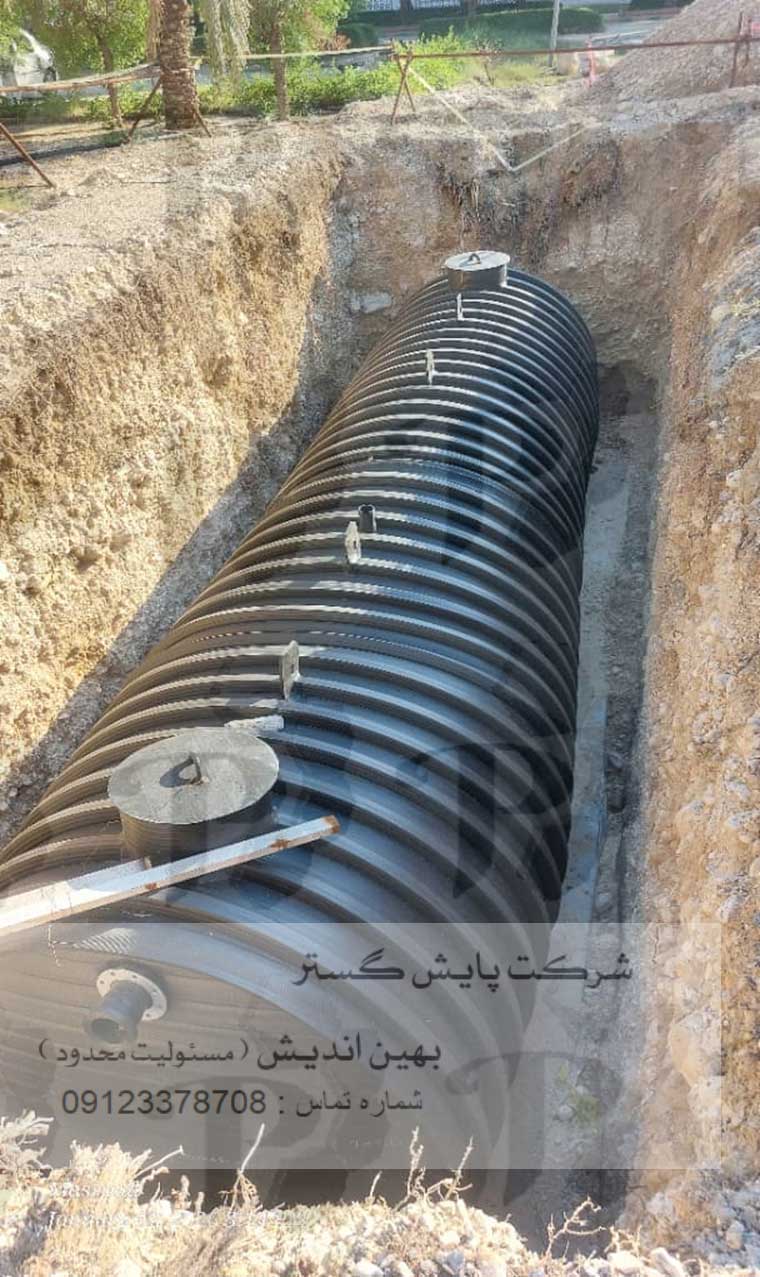
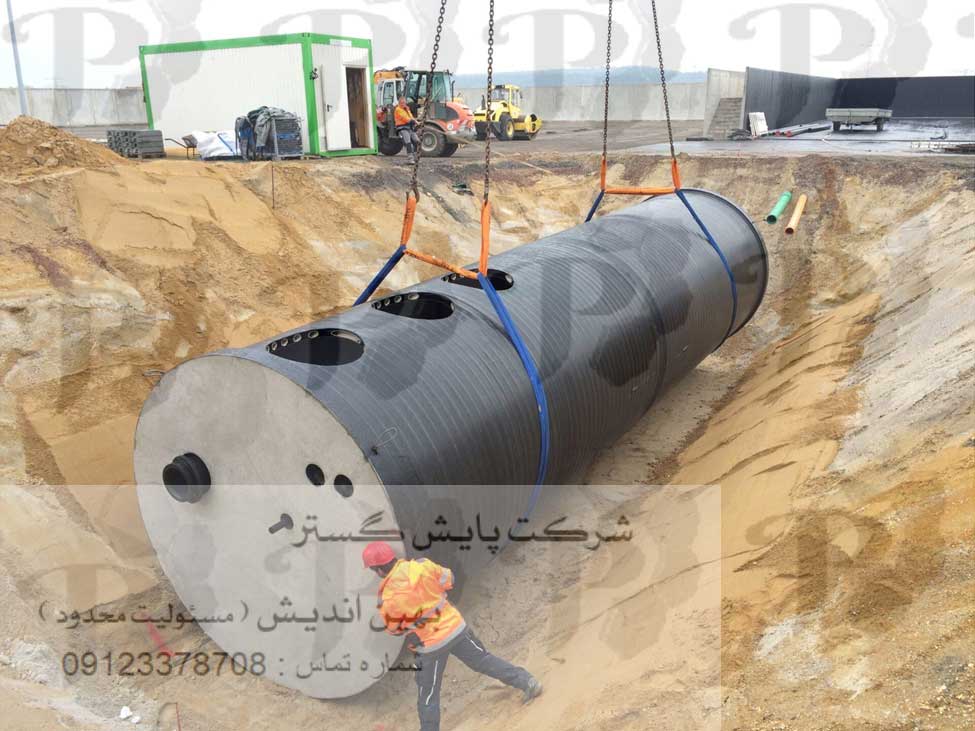
Buried Grease Trap
In the buried model, the tank is installed below ground level. This option is suitable for restaurants, hotels, commercial complexes, and projects that have surface-space limitations.
Advantages of the buried model:
- Not occupying useful surface space
- Reducing the visual impact of the equipment
- Greater protection of the tank against direct sunlight
- Suitable for outdoor areas and large projects
Above-Ground Grease Trap
In the above-ground model, the grease trap is installed on the ground surface or inside the utility space.
This model can be considered under the following conditions:
- The lack of possibility for excavation
- A high groundwater level
- The need for faster access for servicing
- Temporary projects
- Executive limitations in the area
- The use of smaller grease traps in commercial kitchens
Advantages of the Polyethylene Grease Trap
The polyethylene grease trap can have the following advantages in suitable projects:
- Suitable resistance to corrosion
- Resistance in humid environments
- No rusting
- Lower weight than some metal or concrete structures
- Easier transport and handling
- The ability to be built in various capacities
- Suitable sealing when correctly manufactured and installed
- Suitable for buried or above-ground installation
- Reducing the entry of fat and oil into the treatment system
- Helping prevent pipe clogging
- Protecting the downstream pumps and equipment
- Reducing the fat and oil load in the wastewater treatment package
- The possibility of custom design suited to the project’s flow rate
- Relatively simple repair and maintenance
Limitations of the Grease Trap
The polyethylene grease trap is a pre-treatment unit and is not, on its own, a substitute for a wastewater treatment package or a DAF system.
Important points in choosing and operating the grease trap are:
- For emulsified oils or very fine oily materials, it may not be sufficient.
- In industrial wastewaters with high fat content, DAF or supplementary chemical processes may be needed.
- It needs periodic discharge of fat and sludge.
- The entry of a lot of detergents can make fat separation more difficult.
- A high wastewater temperature may cause the fat to melt and pass more easily through the system.
- Choosing a capacity below the need causes a decline in efficiency and the exit of fat from the tank.
- Incorrect installation or an unlevel tank can disrupt the hydraulic performance.
- In buried models, the soil conditions, the groundwater level, and the applied loads must be reviewed.
The Difference Between a Grease Trap and an Industrial Oil Separator
A grease trap and an industrial oil separator are not always the same equipment.
A grease trap is usually designed for the wastewater of kitchens, restaurants, food industries, and wastewater containing edible fats and grease.
But an industrial oil separator is used more for separating mineral oils, fuel, hydrocarbons, and industrial oils from wastewater or contaminated runoff.
Therefore:
- Grease trap: suitable for edible fat and oil, restaurant wastewater, and food industries
- Industrial oil separator: suitable for mineral oils, fuel, and hydrocarbons
- DAF: suitable for wastewaters with dispersed fat, emulsion, high TSS, and requiring coagulation and flotation
For oil, petrochemical, repair-shop, car-wash, or hydrocarbon-containing industry projects, the type of equipment must be chosen based on the wastewater analysis.
The Difference Between a Grease Trap and DAF
A grease trap is a simpler, mainly gravity-based unit designed for separating free fat and oil.
But DAF, or dissolved air flotation, is a more advanced physical–chemical process that, using microbubbles, coagulation, and flocculation, can also largely separate dispersed fats, emulsified oils, suspended solids, and colloidal particles.
In summary:
- Grease trap: suitable for removing free fat and oil
- DAF: suitable for more advanced separation of fat, TSS, and colloidal particles
- The choice between them: depends on the type of wastewater, the amount of fat, the flow rate, the required output quality, and the project conditions
The Position of the Grease Trap in the Wastewater Treatment Package
The grease trap is usually installed at the beginning of the treatment line and before the main biological units.
This equipment can be placed before the following processes:
- Activated sludge wastewater treatment package
- EAAS wastewater treatment package
- SBR wastewater treatment package
- MBBR wastewater treatment package
- IFAS wastewater treatment package
- MBR wastewater treatment package
- DAF system
- Equalization tank
- Sewage pumping station
Placing the grease trap at the beginning of the route can prevent the entry of fat and oil into the sensitive equipment and reduce the operating cost of the entire system.
Maintenance and Discharge of the Grease Trap
The grease trap needs periodic inspection and discharge for correct operation.
The service schedule must be set based on the amount of fat produced, the type of activity of the complex, the tank volume, and the working hours.
The main maintenance actions are:
- Periodic inspection of the level of accumulated fat
- Discharging the fat layer before the tank fills up
- Discharging the sediments settled at the bottom
- Checking the performance of the inlet and outlet
- Checking the baffles and internal walls
- Ensuring there is no clogging in the piping route
- Cleaning the inspection hatches
- Checking for leaks or damage to the tank body
- Recording the date of servicing and discharge
- Checking the odor and operating conditions
A delay in discharge and servicing can cause a decline in efficiency, the exit of fat from the tank, and odor generation.
Price of the Polyethylene Grease Trap
The price of the polyethylene grease trap depends on various factors, and an exact price cannot be provided without reviewing the project’s specifications.
The most important factors affecting the price are:
- The capacity of the grease trap
- Whether the tank is horizontal or vertical
- Whether it is buried or above-ground
- The type of use of the project
- The number of chambers
- The type and number of internal baffles
- The diameter and length of the tank
- The number of manholes and inspection hatches
- The type of inlet and outlet
- The need for auxiliary equipment
- The conditions of the installation location
- The need for a chassis or supporting base
- The transport and project execution conditions
- The need for connection to a wastewater treatment package
For an exact price quote, it is better to provide the experts with information such as the type of business, the number of meal servings, the approximate wastewater flow rate, the installation location, the available space, and the need for buried or above-ground execution.
Design and Construction of the Grease Trap by Poly Payesh
Poly Payesh designs the polyethylene grease trap based on the real information of the project.
In the design stage, the following are reviewed:
- The type of use of the complex
- The amount of fat and oil in the wastewater
- The average and peak wastewater flow rate
- The activity hours of the complex
- The number of sinks and washing equipment
- The number of meal servings in restaurants and industrial kitchens
- The need for connection to a wastewater treatment package
- The available space
- The possibility of buried or above-ground execution
- The soil conditions and groundwater level
- The possibility of access for servicing and discharge
- The need for capacity expansion in the future
The goal of the design is to choose a grease trap that, in addition to suitable FOG separation, is also aligned with the project’s conditions in terms of installation, operation, servicing, and long-term costs.
To receive specialized consultation, a capacity review, and a price quote for the polyethylene grease trap, get in touch with the experts at Poly Payesh.
Frequently Asked Questions About the Polyethylene Grease Trap
What is a polyethylene grease trap?
A polyethylene grease trap is a pre-treatment tank designed to separate fat, oil, grease, and light floating materials from wastewater.
What locations is a grease trap needed for?
Restaurants, fast-food outlets, cafes, hotels, industrial kitchens, hospitals, food industries, slaughterhouses, and complexes with greasy wastewater usually need a grease trap.
Is a grease trap a substitute for a wastewater treatment package?
No. A grease trap is a pre-treatment unit and is used for separating fat and oil. For complete wastewater treatment, biological or supplementary units may be needed.
How often should a grease trap be discharged?
The discharge time depends on the tank volume, the type of activity, the amount of fat produced, and the working hours of the complex. The grease trap must be inspected periodically and discharged before the fat layer fills up.
Is a grease trap suitable for food industry wastewater?
Yes. In food industries, industrial kitchens, dairies, slaughterhouses, and meat processing units, a grease trap can be used as part of pre-treatment. In projects with high fat content or emulsified oil, DAF or supplementary units may also be needed.
What is the difference between a grease trap and DAF?
A grease trap is used for the gravity separation of free fat and oil, but DAF is a more advanced process for separating dispersed fats, suspended solids, and colloidal particles.
Is a horizontal or a vertical grease trap better?
The choice of a horizontal or vertical model depends on the required capacity, the installation-site space, the execution conditions, the piping route, and the project’s hydraulic design.
What information is needed to request a price for a grease trap?
The type of business, the number of meal servings or the activity volume, the wastewater flow rate, the amount of fat, the installation location, the available space, whether it is buried or above-ground, and the need for connection to a wastewater treatment package are important pieces of information for design and pricing.