

The activated sludge wastewater treatment package is one of the most well-known and widely used biological wastewater treatment methods. In this process, aerobic microorganisms consume the decomposable organic matter present in the wastewater in a controlled environment and help reduce the pollution load.
The activated sludge process is known by the English name Activated Sludge Process (ASP). In one of the common arrangements of this method, called Conventional Activated Sludge (CAS), the wastewater enters the aeration tank after pre-treatment. In this tank, the oxygen required by the microorganisms is supplied by a blower and diffuser. Then the mixture of water and sludge enters the secondary clarifier, and the sludge is separated from the effluent.
Part of the settled sludge is returned to the aeration tank to maintain the population of active microorganisms, and the other part leaves the system as excess sludge.
By reviewing the type of wastewater, the design flow rate, the pollution load, the project space, the required output effluent standard, and the operating conditions, Poly Payesh designs and builds the activated sludge wastewater treatment package to suit the needs of each complex.
What Is the Activated Sludge System?
The activated sludge system is an aerobic biological process for treating wastewater. In this method, the microorganisms are present in suspension in the aeration tank and, in contact with the wastewater, consume and decompose part of the organic matter.
The combination of microorganisms, absorbed organic matter, and fine suspended particles forms structures called biological flocs. After leaving the aeration tank, these flocs settle in the secondary clarifier and are separated from the treated water.
In a standard activated sludge process, controlling the aeration, the sludge concentration, the settling quality, the sludge return rate, and the excess sludge disposal is very important. For this reason, the choice of equipment and correct operation of the system have a direct role in the quality of the output effluent.
What Is the Difference Between ASP and CAS?
ASP stands for Activated Sludge Process and generally refers to the family of wastewater treatment processes based on activated sludge.
CAS stands for Conventional Activated Sludge and is considered one of the conventional arrangements of the activated sludge process. In the CAS system, after the initial stages, the wastewater enters the aeration tank, then settles in the secondary clarifier, and part of the settled sludge is returned to the aeration tank.
In simple terms:
- ASP: the general term for the activated sludge process
- CAS: one of the common, continuous models of activated sludge
How Does the Activated Sludge Wastewater Treatment Package Work?
In the activated sludge process, the wastewater enters a controlled aerobic environment. In this environment, the microorganisms feed on the organic matter present in the wastewater and convert it into more stable compounds, microbial biomass, water, and carbon dioxide gas.
The overall process of the system usually includes the following stages:
- Receiving and pre-treating the wastewater
- Equalizing the flow rate and pollution load if needed
- Wastewater entering the aeration tank
- Supplying oxygen and the activity of the microorganisms
- Formation of biological flocs
- Secondary settling
- Returning the activated sludge to the aeration tank
- Disposal of excess sludge
- Disinfection or supplementary treatment if needed
- Discharge or storage of the effluent in accordance with the project standard
Operating Stages of the Activated Sludge Wastewater Treatment Package
1. Wastewater Pre-treatment
Pre-treatment is the first important stage in protecting the activated sludge system. This section prevents the entry of coarse materials, sand, fat, fibers, plastic, disruptive solids, and pollutants that can damage the equipment.
Depending on the type of wastewater, the pre-treatment section can include the following:
- Manual or mechanical screen (trash rack)
- Grit chamber
- Grease trap
- Equalization tank
- pH adjustment
- Coagulation and flocculation unit
- DAF system for greasy wastewaters or those with high suspended solids
- Storage tank or sewage pumping station
In industrial wastewaters, pre-treatment is more important; because the entry of oil, chemicals, acid, base, solvents, heavy metals, or toxic substances can reduce the activity of the microorganisms.
2. Equalization Tank
In projects where the wastewater flow rate or the pollution load changes at different hours, using an equalization tank is essential or very useful.
The equalization tank helps even out the inlet flow, reduce hydraulic shock, reduce fluctuation of the organic load, and create more stable conditions for the aeration tank.
This section is especially important for the following projects:
- Hotels and lodges
- Large residential complexes
- Hospitals
- Restaurants and industrial kitchens
- Food industries
- Workshops and factories with intermittent wastewater production
- Projects with severe changes in water-usage hours
3. Aeration Tank
The aeration tank is the most important part of the activated sludge wastewater treatment package. In this tank, the wastewater comes into contact with the activated sludge and oxygen.
Air is usually supplied by a blower and distributed into the wastewater through fine-bubble diffusers or other aeration systems.
In this stage, the aerobic microorganisms become active and consume part of the decomposable organic matter.
The main role of the aeration tank includes the following:
- Reducing decomposable organic matter
- Helping reduce BOD
- Reducing part of the decomposable COD
- Controlling odors caused by anaerobic conditions
- Providing a suitable environment for microorganism growth
- Forming and maintaining the activated sludge
- Preparing the flow for entering the secondary clarifier
The aeration duration, the tank volume, the blower capacity, the diffuser type, the amount of dissolved oxygen, and the sludge concentration must be determined based on an engineered design.
4. Formation of Biological Floc
In the aeration tank, the microorganisms gradually gather together and form structures called flocs.
Flocs are a combination of bacteria, absorbed organic matter, suspended particles, and biological materials that have the ability to settle.
The quality of the biological flocs has a great effect on the performance of the secondary clarifier and the clarity of the output effluent.
Weak, dispersed floc, or floc with poor settling, can cause sludge to exit along with the effluent and reduce the output quality.
5. Secondary Clarifier
After the aeration tank, the mixture of wastewater and activated sludge enters the secondary clarifier.
In this tank, the flow calms down, and the biological flocs settle by gravity. The clearer water exits from the upper part, and the sludge is collected in the lower part of the tank.
The main functions of the secondary clarifier are:
- Separating the activated sludge from the effluent
- Reducing suspended solids in the output
- Preparing the effluent for disinfection or supplementary treatment
- Providing the sludge needed for return to the aeration tank
- Collecting the excess sludge for management and disposal
The design quality of the clarifier, the way the flow enters, the retention time, the condition of the activated sludge, and the sludge return rate all have a direct effect on the performance of this section.
6. Return Activated Sludge (RAS)
Part of the sludge settled at the bottom of the secondary clarifier is returned to the aeration tank. This flow is called Return Activated Sludge (RAS).
Returning the activated sludge maintains the population of beneficial microorganisms in the aeration tank and keeps the biological process stable.
The role of RAS in the activated sludge system includes the following:
- Maintaining a suitable concentration of activated sludge in the aeration tank
- Preventing a decline in the microorganism population
- Helping stabilize the treatment process
- Controlling part of the operating conditions
- Reducing the likelihood of a decline in effluent quality under stable conditions
The sludge return rate must be adjusted according to the project capacity, the sludge quality, the clarifier conditions, and the process design.
7. Waste Activated Sludge (WAS)
Not all of the settled sludge should be returned to the aeration tank. Part of the sludge must be removed from the system in a controlled way so that the volume of activated sludge does not increase excessively.
This flow is called Waste Activated Sludge (WAS).
Excess sludge disposal is important for controlling the following:
- Preventing an excessive increase in MLSS
- Controlling the sludge age
- Maintaining the biological balance
- Preventing settling problems
- Reducing the likelihood of sludge exiting along with the effluent
- Managing the volume of sludge produced
The excess sludge can enter a sludge storage tank, a thickening unit, dewatering, or a suitable disposal route.
8. Disinfection and Supplementary Treatment
The output effluent from the secondary clarifier may need disinfection or supplementary treatment, depending on the project standard.
The common disinfection methods are:
- Chlorination
- UV disinfection
- Using suitable disinfectants
- Combined methods appropriate to the project
To achieve higher effluent quality, the following supplementary equipment may also be considered:
- Sand filter
- Carbon filter
- Disc filter
- Ultrafiltration
- Membrane
- RO system
- Adsorption or chemical treatment units
- Effluent storage tank
Reusing the effluent for green-space irrigation or specific purposes can only be decided after reviewing the output quality and its compliance with the relevant standards.
Main Components of the Activated Sludge Wastewater Treatment Package
A conventional activated sludge package, depending on the capacity and conditions of the project, can include the following equipment:
- Screen (trash rack)
- Grit chamber
- Grease trap
- Equalization tank
- Wastewater transfer pump
- Aeration tank
- Aeration blower
- Fine-bubble diffusers
- Air distribution network
- Secondary clarifier
- RAS sludge return pump
- WAS excess sludge disposal pump
- Sludge storage tank
- Disinfection system
- Effluent storage tank
- Electrical panel
- PLC and control system if needed
- Level sensor, pressure gauge, flow meter, and instrumentation equipment
- Inspection manhole
- Inlet, outlet, and vent piping
- Pumping station if gravity inflow of wastewater is not possible
Important Parameters in Designing an Activated Sludge System
Designing an activated sludge wastewater treatment package is not done based on tank volume alone. The proper performance of the system depends on a set of engineering parameters.
MLSS
MLSS refers to the amount of mixed liquor suspended solids in the aeration tank. This parameter indicates the total concentration of activated sludge and suspended particles present in the reactor.
Controlling MLSS is important in the process performance, the aeration condition, the settling, and the effluent quality.
MLVSS
MLVSS is the part of the mixed solids that indicates the share of active organic and biological materials. This index helps in the approximate evaluation of the active microbial population in the aeration tank.
F/M Ratio
The food-to-microorganism ratio (F/M ratio) is one of the important operating indices of the activated sludge system.
In simple terms, this ratio indicates how much organic load is available to the microbial population present in the tank. Improper adjustment of this ratio can affect sludge growth, settling, and treatment efficiency.
Hydraulic Retention Time (HRT)
HRT is the duration for which the wastewater remains in the treatment unit. This time is determined based on the flow rate, the tank volume, and the design goal.
An improper retention time can mean the wastewater does not have enough time for biological treatment or that the cost of implementing the system is more than the real need.
Solids Retention Time (SRT)
SRT, or the sludge age, indicates the duration for which the biological solids and activated sludge remain in the process.
Controlling SRT is important for the stability of the process, the growth of microorganisms, sludge management, and the possibility of carrying out some biological reactions such as nitrification.
Dissolved Oxygen (DO)
The dissolved oxygen in the aeration tank is one of the most important operating parameters.
A lack of oxygen can cause a decline in the activity of aerobic microorganisms, reduced efficiency, odor generation, and disruption of the process.
On the other hand, more aeration than needed can also increase electricity consumption and operating cost.
Advantages of the Activated Sludge Wastewater Treatment Package
With correct design and operation, the activated sludge system can have important advantages:
- A well-known process usable at various scales
- Suitable for domestic and sanitary wastewater
- The ability to be used for some biodegradable industrial wastewaters
- Reducing decomposable organic matter
- The ability to be designed to reduce BOD and COD
- The possibility of combination with pre-treatment and supplementary treatment
- The ability to be executed in large treatment plants or prefabricated packages
- The possibility of using a control system, PLC, and instrumentation
- The ability to be developed into more advanced processes
- The possibility of being designed for nitrogen removal in suitable arrangements
- Good access to the main equipment such as the blower, pump, and diffuser
- The possibility of design with metal, polyethylene, fiberglass tanks, or a concrete structure
Limitations and Challenges of the Activated Sludge System
The activated sludge system is not the best option for every project and must be chosen according to the real conditions.
Some limitations are:
- The need for stable aeration and electricity
- The need for a secondary clarifier in conventional arrangements
- The production of excess sludge
- The need to control the sludge quality and settling
- Sensitivity to the entry of toxic substances, excess oil, acid, base, or solvents
- The need for periodic operation and servicing
- Performance dependence on the condition of the blower, diffuser, pump, and control equipment
- The possibility of a decline in efficiency in case of severe fluctuation in flow rate or pollution load
- The need for suitable pre-treatment in some industries
- Occupying more space than some more compact processes
- The need for management, dewatering, or disposal of excess sludge
The Difference Between Conventional Activated Sludge and Extended Aeration (EAAS)
In conventional activated sludge, the design is usually done for a specific loading and retention time, and the system includes an aeration tank, a secondary clarifier, RAS, and WAS.
In extended aeration or EAAS, the aeration time and sludge age are usually considered greater than in conventional activated sludge. EAAS is widely used, especially in small and medium projects, domestic and sanitary packages, and complexes outside the urban sewer network.
For more information, see the “EAAS Wastewater Treatment Package” page.
The Difference Between Conventional Activated Sludge and SBR
In the conventional activated sludge system, the wastewater flow is transferred continuously from the aeration tank to the secondary clarifier.
But in SBR, the stages of filling, reaction, settling, and effluent decanting are carried out cyclically and on a time schedule in one or several reactors.
In summary:
- Conventional activated sludge: a continuous process with a secondary clarifier
- SBR: an intermittent, cyclical process with settling inside the reactor
For further reading, see the “SBR Wastewater Treatment Package” page.
The Difference Between Conventional Activated Sludge and IFAS
In the conventional activated sludge system, the microorganisms operate mainly in suspension in the aeration tank.
But in IFAS, in addition to the suspended activated sludge, media for forming biofilm are also placed inside the reactor. This structure can be considered for some projects, especially upgrading existing treatment plants or increasing biological capacity in limited space.
For further reading, see the “IFAS Wastewater Treatment Package” page.
The Difference Between Conventional Activated Sludge and MBBR
In the conventional activated sludge process, the main part of the treatment is carried out by suspended microorganisms.
But in MBBR, the main part of the treatment is based on the biofilm formed on floating, moving media.
In summary:
- Conventional activated sludge: suspended growth of microorganisms
- MBBR: attached growth of microorganisms on moving media
For further reading, see the “MBBR Wastewater Treatment Package” page.
The Difference Between Conventional Activated Sludge and MBR
In conventional activated sludge, the separation of sludge and water is done in the secondary clarifier.
But in MBR, the activated sludge process is combined with membrane filtration. The membrane is responsible for separating the treated water from the sludge and suspended solids.
MBR is usually suitable for projects that need higher output effluent quality, less space, and the possibility of considering water recycling.
For further reading, see the “MBR Wastewater Treatment Package” page.
The Difference Between Conventional Activated Sludge and A2O
Conventional activated sludge is used more for reducing organic matter and basic biological treatment.
But the A2O process includes anaerobic, anoxic, and aerobic zones and is designed for projects where, in addition to organic matter, controlling nitrogen and phosphorus is also important.
For more information, see the “A2O Wastewater Treatment Package” page.
Applications of the Activated Sludge Wastewater Treatment Package
The activated sludge wastewater treatment package can be used in various projects, including:
- Residential complexes
- Villa towns
- Office buildings
- Towers and construction projects
- Hotels and lodges
- Schools and educational centers
- Workshop camps
- Civil construction projects
- Towns and semi-centralized complexes
- Tourism complexes
- Hospitals and medical centers, after a technical review
- Factories and industrial units with biodegradable wastewater
- Food industries after implementing suitable pre-treatment
- Projects that need a continuous biological treatment system
- Large urban and industrial treatment plants
In industrial wastewater, choosing the activated sludge process must be done after a careful review of the COD, BOD, TSS, fat, oil, pH, temperature, salinity, inhibitory materials, and the output effluent standard.
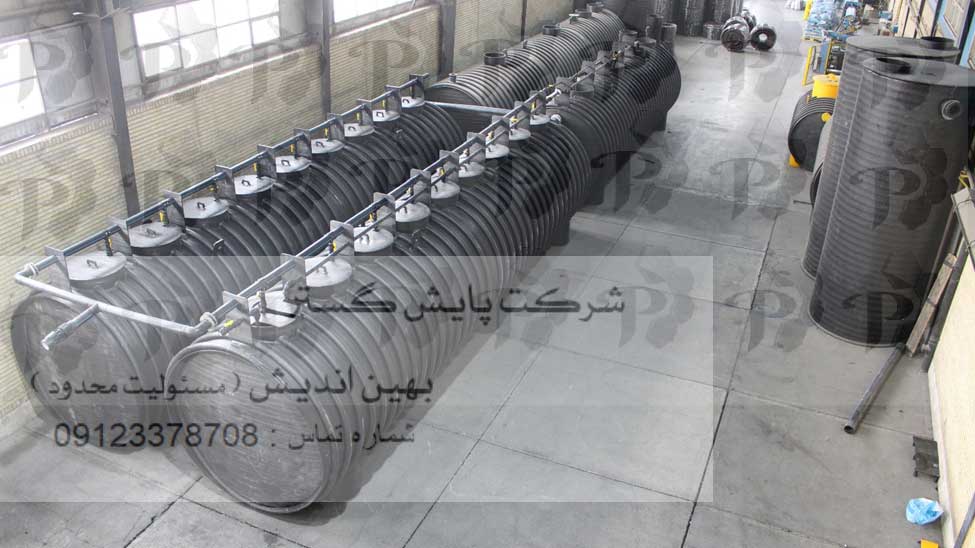
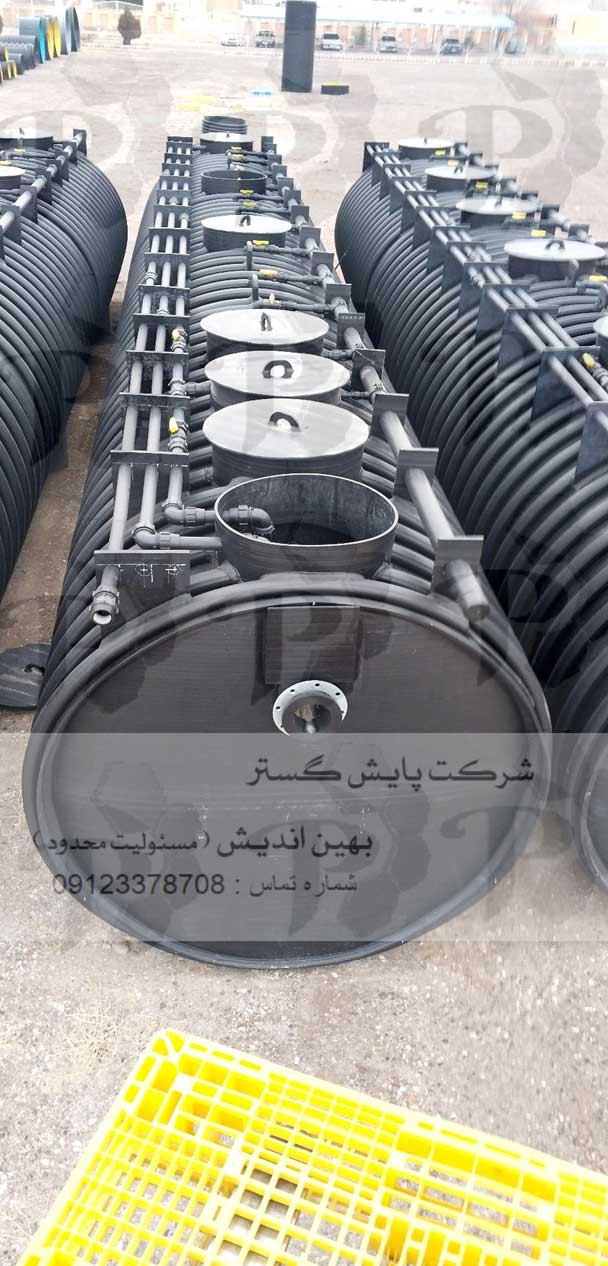
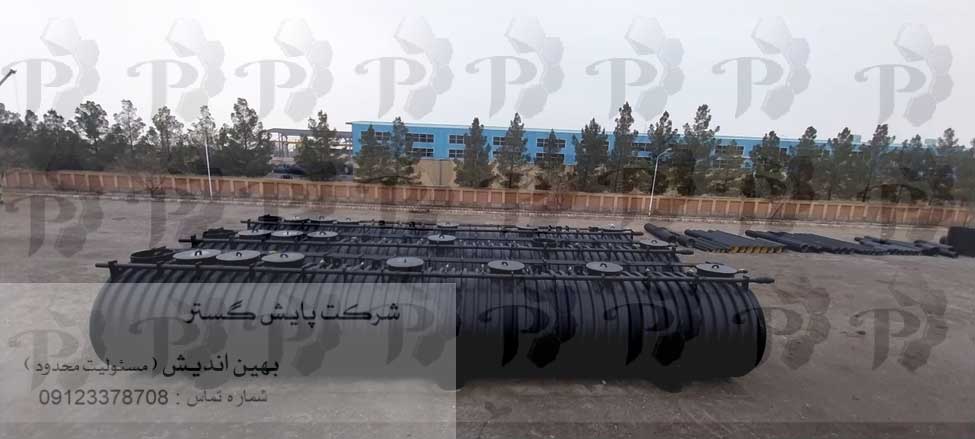
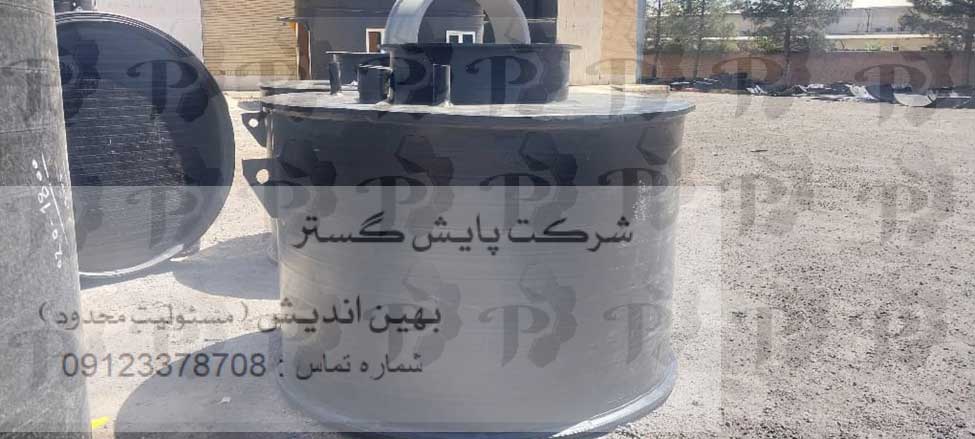
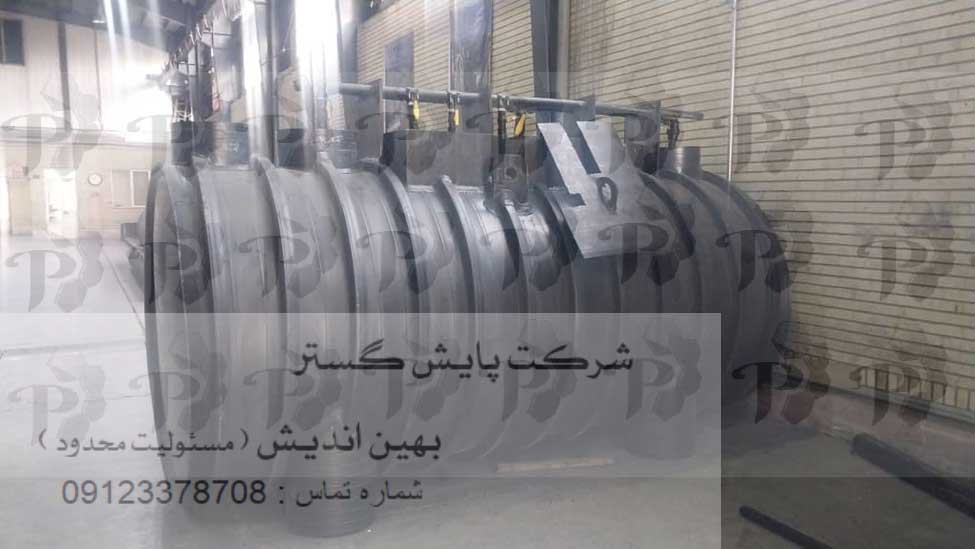
Polyethylene Activated Sludge Package
The activated sludge wastewater treatment package can be designed and executed with a polyethylene body in suitable projects.
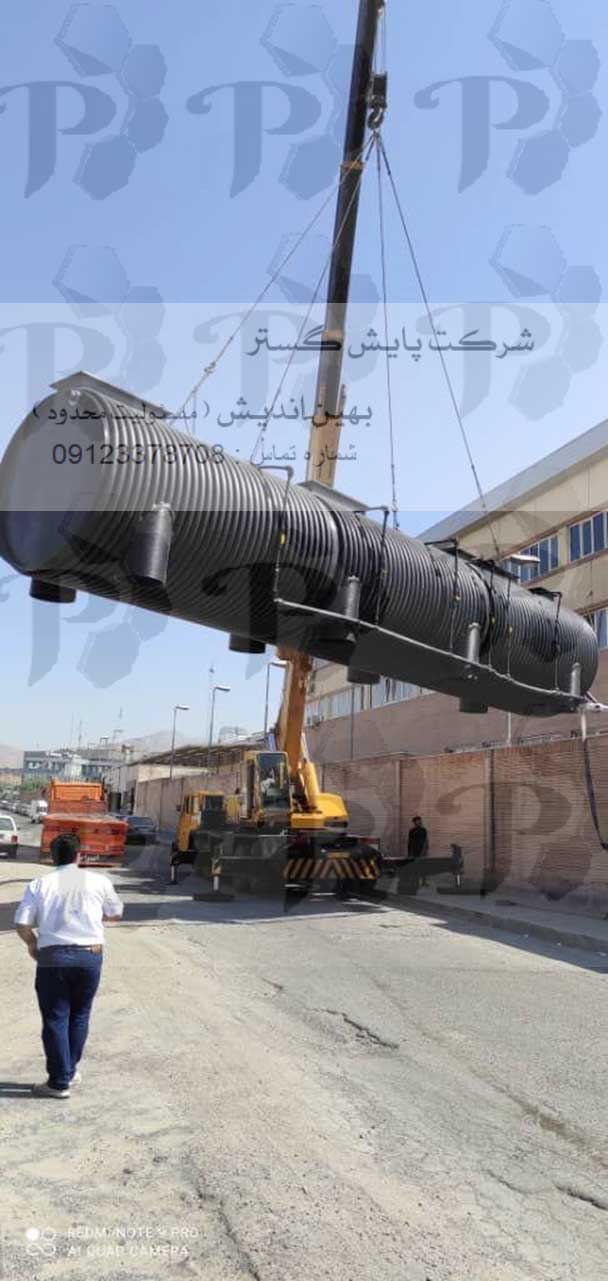
Polyethylene tanks, if chosen correctly, can have advantages such as resistance to corrosion, lower weight, easier transport, and a suitable installation speed.
The polyethylene package can be executed as buried or above-ground; but the choice of installation location must be done according to the soil conditions, the groundwater level, the applied loads, the need for structural anchoring, the available space, and access for repairs and operation.
For more information, see the “Polyethylene Wastewater Treatment Package” page.
Design of the Activated Sludge Wastewater Treatment Package
Designing an activated sludge package must be done based on the real data of the project. The most important information required for the design is:
- The average and maximum wastewater flow rate
- The type of use or industry
- The number of people using it
- The levels of BOD, COD, and TSS
- The amount of fat, oil, and grease
- The pH and its fluctuations
- The temperature of the wastewater
- The amount of ammonia and nitrogen compounds
- The presence of toxic or inhibitory substances
- The required quality of the output effluent
- The need for disinfection or supplementary treatment
- The space available for installation
- The need for buried or above-ground execution
- The electrical and operating conditions
- The possibility of increasing capacity in the future
Based on this information, the aeration tank volume, the blower capacity, the diffuser type, the clarifier volume, the sludge return rate, the sludge disposal equipment, and the supplementary units are chosen.
How Is the Capacity of the Activated Sludge Wastewater Treatment Package Determined?
The capacity of the activated sludge package is not determined only by the number of people or the building’s floor area. The following factors are effective in determining the capacity:
- The daily wastewater flow rate
- The peak flow and instantaneous fluctuation
- The type of use of the project
- The amount of pollution load
- The inlet BOD and COD
- The quality of the wastewater
- The need for nitrogen removal
- The required quality of the output effluent
- The available space
- The operating conditions
- The possibility of future development
Choosing a capacity below the real need can cause a decline in efficiency, an increase in the loading of the aeration tank, and a reduction in the output effluent quality. Choosing a capacity above the need may also increase the investment and operating cost.
What Factors Does the Price of the Activated Sludge Wastewater Treatment Package Depend On?
The price of the activated sludge package depends on the technical specifications of the project, and an exact figure cannot be provided without reviewing the real information.
The most important factors affecting the price are:
- The package capacity
- The type and quality of the wastewater
- The levels of BOD, COD, and TSS
- The body material of the tanks
- Whether the system is buried or above-ground
- The volume of the aeration tank
- The blower capacity and diffuser type
- The design of the secondary clarifier
- The type of RAS and WAS pumps
- The need for an equalization tank
- The need for a screen, grease trap, DAF, or pH adjustment
- The type of electrical panel and the level of automation
- The need for a PLC and instrumentation
- The disinfection equipment
- The sludge storage or dewatering equipment
- The need for supplementary treatment
- The transport, installation, piping, and commissioning conditions
To receive an exact estimate, it is better to provide the technical team with information such as the flow rate, the type of use, the wastewater analysis, the project location, the installation space, and the required effluent quality.
Design and Construction of the Activated Sludge Package by Poly Payesh
By reviewing the real conditions of the project, Poly Payesh designs the activated sludge wastewater treatment package to suit the type of wastewater and the operator’s needs.
In the technical review stage, the following are evaluated:
- The type of wastewater: domestic, sanitary, or industrial
- The flow rate and flow fluctuation
- The pollution load of the wastewater
- The need for pre-treatment
- The need for aeration and the blower capacity
- The space available for installation
- The possibility of buried or above-ground execution
- The need for a clarifier and sludge management
- The required quality of the output effluent
- The need for disinfection or supplementary treatment
- The operation and maintenance conditions
- The possibility of future capacity expansion
The goal of the design is to choose a system that, in addition to meeting the required effluent quality, is also aligned with the project’s conditions in terms of execution cost, energy consumption, maintenance, and access to equipment.
To receive specialized consultation, a technical review of your project, and a price quote for the activated sludge wastewater treatment package, get in touch with the experts at Poly Payesh.
Frequently Asked Questions About the Activated Sludge Wastewater Treatment Package
What is the activated sludge system?
The activated sludge system is an aerobic biological process in which microorganisms decompose the organic matter of the wastewater in the aeration tank. The activated sludge is then separated from the effluent in the secondary clarifier.
What is ASP?
ASP stands for Activated Sludge Process and refers to the wastewater treatment process based on activated sludge.
What is CAS?
CAS stands for Conventional Activated Sludge and is one of the conventional, continuous arrangements of the activated sludge process.
What is the function of the aeration tank?
The aeration tank provides an environment for the contact of wastewater, oxygen, and microorganisms so that the decomposable organic matter is reduced.
What does the secondary clarifier do?
The secondary clarifier separates the activated sludge from the effluent. The clearer water exits from the upper part, and the settled sludge is managed for return or disposal.
What is RAS?
RAS stands for Return Activated Sludge and refers to the part of the settled sludge that is returned to the aeration tank to maintain the microorganism population.
What is WAS?
WAS stands for Waste Activated Sludge and refers to the excess sludge that is removed from the system to control the amount of activated sludge and maintain the balance of the process.
Is the activated sludge package suitable for industrial wastewater?
For some biodegradable industrial wastewaters, the activated sludge system can be suitable. In industries with a lot of fat, chemicals, heavy metals, high salinity, or inhibitory materials, pre-treatment or supplementary processes may be essential.
Is the output effluent reusable?
With suitable design, correct operation, disinfection, and supplementary treatment if needed, reusing the effluent for applications such as green-space irrigation can be considered. The final decision must be made based on the output effluent quality and the required standard.
What information is needed to request a price for the activated sludge package?
The wastewater flow rate, the type of use, the wastewater analysis, the levels of BOD and COD, the amount of TSS, fat, and oil, the installation space, the need for buried or above-ground execution, and the required output effluent quality are important pieces of information for design and price estimation.