

The buried polyethylene tank is an underground storage tank designed for installation below the ground surface. In addition to the internal pressure of the fluid, this type of tank must also perform well against soil pressure, surface loads, ground settlement, geotechnical conditions, and, in some projects, the buoyancy force of groundwater.
The buried tank can be used for storing water, firefighting water, effluent, rainwater, wastewater, process fluids, and some chemicals compatible with polyethylene. The final choice of tank must be made based on the type of fluid, the burial depth, the soil conditions, the groundwater level, and the installation location.
Poly Payesh designs the buried polyethylene tank by reviewing the real conditions of the project, the type of loading, and the operating need.
What Is a Buried Polyethylene Tank?
A buried polyethylene tank refers to a tank that is installed completely or partially below the ground surface. In this model, the soil around the tank is not just an external load; it forms part of the structural behavior of the entire system.
For this reason, the design of the buried tank must simultaneously consider the tank body, the quality of the bed, the surrounding soil, the backfilling method, the compaction, the groundwater level, and the loads on the ground surface.
Using an ordinary surface tank instead of a buried tank, without a structural review, can cause deformation, body damage, leakage, or performance decline in the long term.
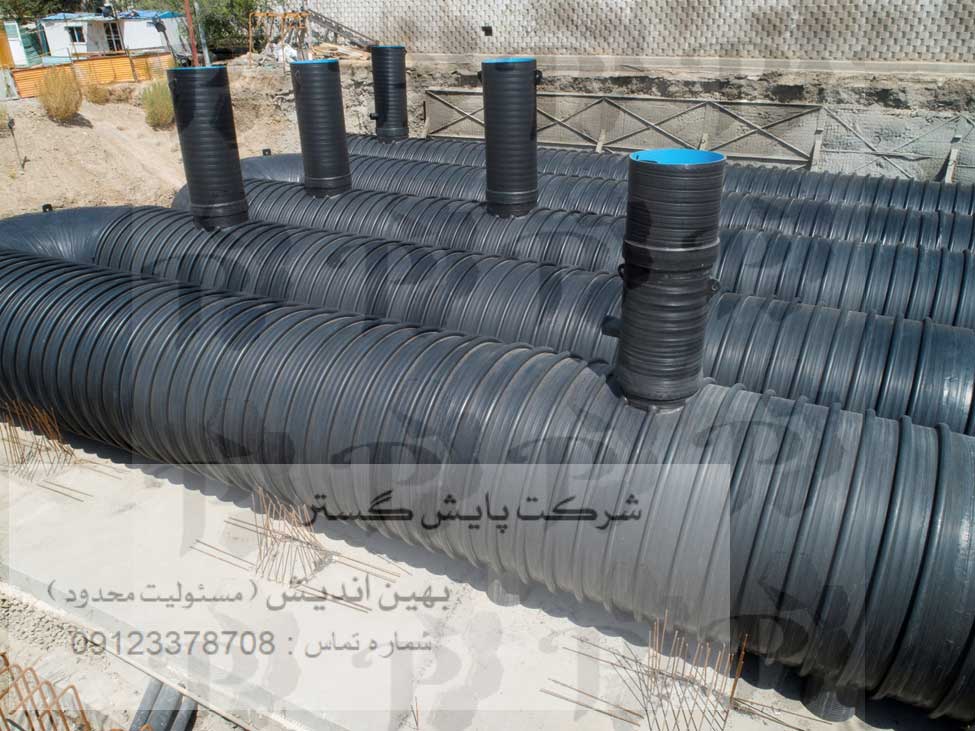
Applications of the Buried Polyethylene Tank
The buried polyethylene tank can be used in the following projects:
- Firefighting water storage
- Non-potable water storage tank
- Storing water needed for civil construction projects
- Rainwater collection tank
- Treated-effluent storage tank
- Equalization tank in treatment plants
- Wastewater and sanitary-fluid tank
- Storage tank in industries and factories
- Urban and industrial infrastructure
- Agricultural and irrigation projects
- Projects without sufficient surface space
- Projects that require the tank to be out of sight
For storing chemicals, the material’s compatibility with polyethylene, the concentration, the temperature, and the storage conditions must be reviewed separately.
The Most Important Factor in Designing the Buried Tank: Soil and Structure
The buried tank must be designed in interaction with the soil around it. The most important applied forces include the following:
- Lateral soil pressure
- The load caused by the burial depth
- Surface and traffic loads
- Soil settlement or displacement
- The hydrostatic pressure of the fluid inside the tank
- The groundwater level
- The buoyancy force under flooding conditions
- The load caused by equipment, flooring, or adjacent structures
For this reason, a greater burial depth does not always mean choosing a larger or thicker tank; rather, the type of body, the ring stiffness, and the details of the bed and backfilling must also be consistent with the project conditions.

Ring Stiffness of the Buried Polyethylene Tank
Ring stiffness is one of the most important indicators in the design of buried tanks. This feature shows the extent to which the tank body can resist the external pressures caused by soil, surface load, and installation conditions.
In buried design, the goal is for the deformation of the body to remain within the permissible range and for the tank not to undergo local buckling, structural damage, or instability in the long term.
Engineered structures such as corrugated, spiral, or reinforced bodies can, depending on the project design, be used to increase the structural strength.
Buried Tank: Horizontal or Vertical?
The buried polyethylene tank can be designed in a horizontal or vertical form.
Buried Horizontal Tank
The horizontal model is usually suitable for projects that have sufficient longitudinal space and where medium or high capacities are needed. This model can be used in industrial, civil construction, and infrastructure projects.
Buried Vertical Tank
The vertical model is suitable for projects that have footprint limitations. In this model, the execution depth is greater, and the soil conditions, the groundwater level, and the surface loads must be reviewed more carefully.
The choice between these two models must be made based on engineering design, not just the empty space available at the project site.
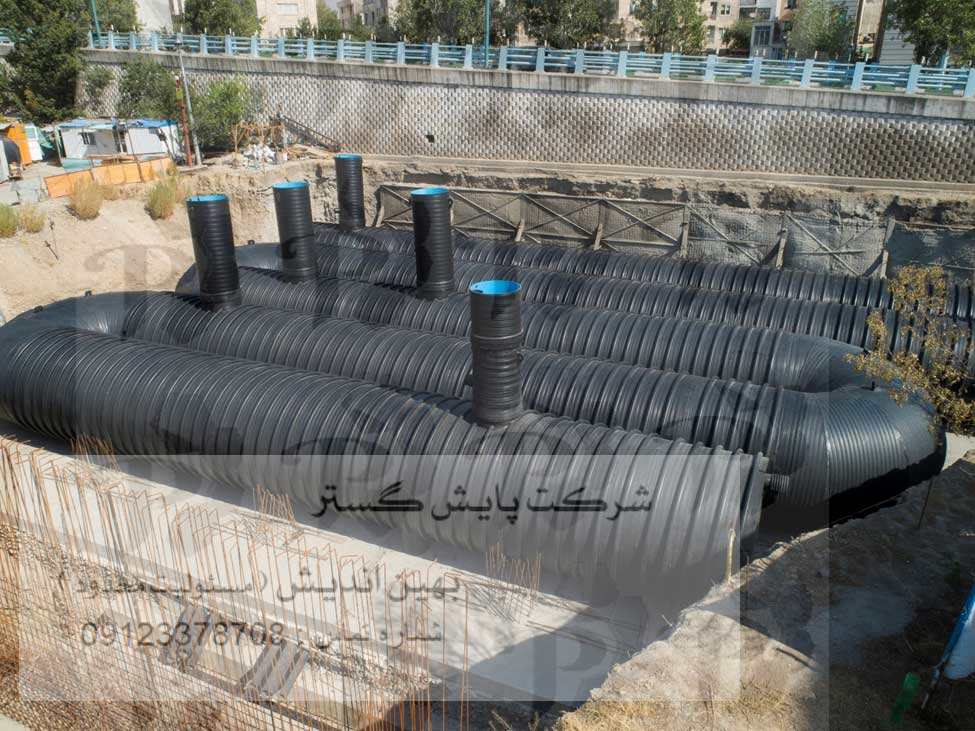
Installation of the Buried Polyethylene Tank
The installation of the buried tank must be done according to the project’s execution design. The general steps can include the following:
Site Preparation
The installation location must be reviewed in terms of leveling, access, the piping route, the distance from buildings, and the presence of underground utilities.
Excavation
The pit must have sufficient space for positioning the tank, executing the bed, installing the pipes, and staged backfilling. The pit walls must also be stabilized if needed.
Bed Execution
The bottom of the pit must be level, stable, and free of stones, debris, and sharp objects. The type of bed must be consistent with the soil conditions and the tank design.
Installing and Leveling the Tank
The tank must be moved with suitable equipment and placed in position without impact. Then the level, the location of the nozzles, and the route of the fittings must be checked.
Connecting the Pipes
The inlet, outlet, vent, and fittings must be installed without applying extra stress to the body. In some projects, the use of flexible fittings can be considered.
Staged Backfilling
The backfilling around the tank must be done with suitable materials and in stages. The presence of large stones or direct impact can damage the body.
Groundwater Level Control
In areas where the groundwater is high, the possibility of tank buoyancy must be reviewed. Structural anchoring, a concrete slab, a supporting structure, or special execution details may be needed.
Traffic Load on the Buried Tank
The buried tank should not be placed under the passage route of vehicles, forklifts, or heavy machinery without a structural review.
In projects where there is a traffic load, the following may be needed:
- A protective concrete slab
- A load-transfer structure
- Increased ring stiffness
- A change in the depth or installation location
- A special design for the bed and backfilling
- Providing a suitable distance between the crown of the tank and the traffic surface
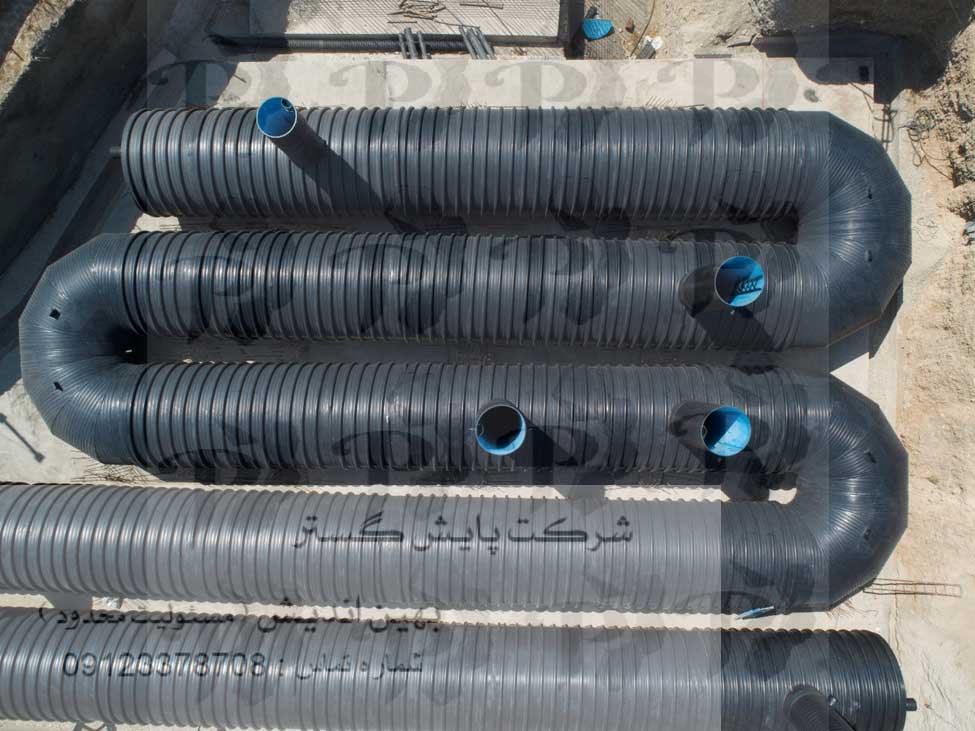
Advantages of the Buried Polyethylene Tank
- Keeping the project’s surface space free
- Protecting the tank against direct sunlight
- Suitable for urban, industrial, and civil construction projects
- The ability to store fluids without occupying the usable space of the yard
- Suitable resistance to corrosion
- Lower weight than many concrete tanks
- Reduced execution time in suitable projects
- The ability to connect to treatment systems, pumps, and process lines
- The ability to be designed in various capacities and forms
- Suitable for storing water, effluent, and process fluids
Price of the Buried Polyethylene Tank
The price of the buried tank depends on the following factors:
- The tank capacity
- The horizontal or vertical form
- The body structure
- The required ring stiffness
- The burial depth
- The soil type
- The groundwater level
- The possible traffic load
- The number and diameter of the nozzles
- The number of manholes
- The need for structural anchoring
- The need for a base, slab, or special execution details
- The transport and installation conditions
To receive consultation, a site-conditions review, and a price quote for the buried polyethylene tank, get in touch with the experts at Poly Payesh.
Frequently Asked Questions About the Buried Polyethylene Tank
Can any polyethylene tank be buried?
No. A buried tank must be designed for soil pressure, execution conditions, and external loads.
What is the most important factor in choosing a buried tank?
The soil conditions, the burial depth, the groundwater level, the traffic load, and the type of fluid are among the most important factors.
Can a buried tank be installed under a vehicle route?
Only with a suitable structural design and the provision of a protective structure or a load-transfer slab.
Can a buried tank be executed in ground with a high groundwater level?
Yes, but the possibility of buoyancy force must be reviewed and, if needed, suitable anchoring designed.