

Sewage Pumping Station; Design and Construction of Sewage Lift Stations
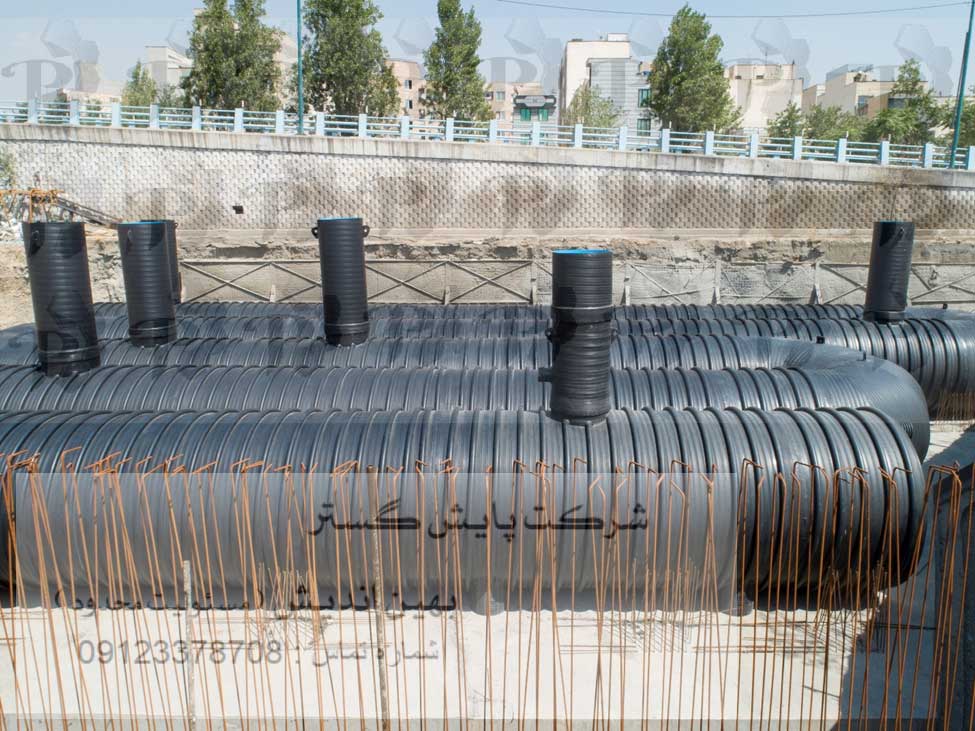
A sewage pumping station, or sewage lift station, is an engineered system for the temporary collection, level control, and pressurized conveyance of wastewater to the main network, the treatment plant, or the next unit in the process.
This equipment is used when gravity conveyance of wastewater is not possible—for example, when the wastewater level of the building or project is lower than the transmission line, the distance to the treatment plant is long, the route has an elevation difference, or the topographic conditions do not allow the natural movement of wastewater.
A pumping station is not just a simple tank. Its correct operation depends on the choice of wet-well volume, the pump’s flow rate and head, the type of wastewater, the level-control system, the electrical panel, the valves, the pressurized pipeline route, and the operating conditions.
Poly Payesh designs and builds sewage pumping stations based on the project’s real flow rate, the pumping height, the length of the transmission line, the type of wastewater, the available space, buried or above-ground conditions, and the need for automation.
What Is a Sewage Pumping Station?
A sewage pumping station, also known by the following names, is a pressurized wastewater conveyance system:
- Sewage lift station
- Sewage pump chamber
- Sewage pump house
- Sewage pumping sump
- Sewage Pumping Station
- Lift Station
- Wet Well Pump Station
The main function of this system is to receive wastewater from the collection network, store it briefly in the wet well, and convey the wastewater in a controlled manner to a higher level or the desired route using a pump.
In many projects, wastewater first enters the wet well by gravity. As the wastewater level rises, a sensor or float signals the electrical panel and the pump or pumps are activated. The wastewater is then directed through the discharge line to the treatment plant, a septic tank, a wastewater treatment package, or the main transmission network.
When Is a Sewage Pumping Station Needed?
A lift station becomes necessary when wastewater cannot move naturally and by gravity. The most important conditions are:
- The building’s wastewater level being lower than the disposal network or treatment plant
- An elevation difference along the transmission route
- A long wastewater transmission line
- The project being located on sloping ground
- The treatment plant being built at a higher level than the point where wastewater is generated
- The presence of a basement, underground parking, or floors below the municipal sewer network
- The need to convey wastewater to an above-ground septic tank
- The need to convey wastewater to a wastewater treatment package
- Industrial, workshop, mining, and civil projects
- Residential complexes, hotels, hospitals, and service centers
- Towns and projects without a suitable sewer network
- Intermediate stations and urban infrastructure projects
In such conditions, incorrect design of the pumping station can cause overflow, wastewater backflow, premature pump failure, increased energy consumption, and disruption of the treatment plant’s performance.
How Does a Sewage Pumping Station Operate?
A standard pumping station usually operates automatically and in stages.
1. Wastewater Enters the Wet Well
Wastewater enters the wet well from the building, the sub-network, a manhole, or the collection lines.
The wet well must be water-tight, have suitable resistance to the corrosive wastewater environment, and be designed to receive the project’s variable flow rates.
2. Temporary Storage and Flow-Fluctuation Control
The wet well acts as a hydraulic buffer. That is, it manages the momentary fluctuations of the wastewater flow to some extent so that the pumps enter operation on a defined schedule.
This is especially important in projects with variable consumption, such as a hotel, residential complex, restaurant, hospital, workers’ camp, or factory.
3. Monitoring the Wastewater Level
The wastewater level inside the tank is monitored by control equipment. This equipment can include the following:
- Mechanical float
- Hydrostatic level sensor
- Ultrasonic sensor
- Pressure transmitter
- Radar sensor in special projects
- High-level switch and overflow alarm
Level control must be designed so that the pumps enter operation neither too early nor too late.
4. Pump Start Command
When the wastewater level reaches the defined point, the electrical panel or PLC issues the command to start the main pump.
In larger projects, the system can bring the pumps into operation on an alternating basis so that the pumps’ running hours are balanced and the wear on any one pump does not increase excessively.
5. Pressurized Wastewater Pumping
Submersible pumps draw the wastewater from the wet well and convey it toward the destination through the discharge line.
The destination can include the following:
- The main wastewater transmission network
- The next manhole
- A septic tank
- A wastewater treatment package
- An equalization tank
- An industrial treatment plant
- A storage tank or another process unit
6. Automatic Shutdown and Preparation for the Next Cycle
As the wastewater level drops to the defined limit, the pump shuts off. The system then remains ready for new wastewater to enter and for the next cycle to repeat.
If the level drops too far, the system must prevent the pump from running dry. If the level rises abnormally, a warning alarm is also activated.
Main Components of a Sewage Pumping Station
A sewage lift station can, depending on the project’s capacity and conditions, include the following components:
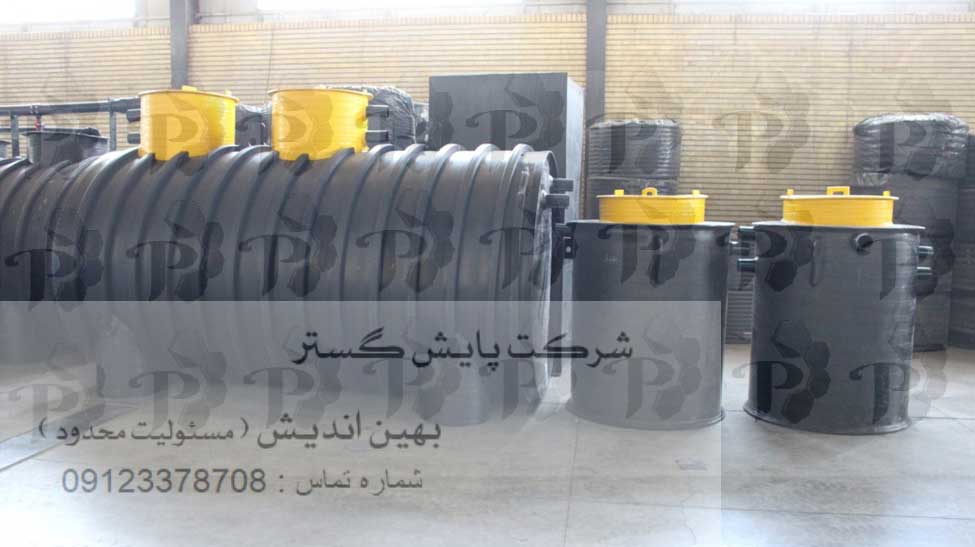
Wet Well
The wet well is the place where wastewater temporarily collects before pumping. This section must have the following characteristics:
- Proper water-tightness
- Resistance to corrosion and moisture
- Resistance to the materials present in the wastewater
- A volume suited to the flow rate and the number of pump start-ups
- Suitable access for servicing
- A well-designed floor to reduce sediment buildup
- The ability to install the pump, guide rail, and level-measurement equipment
- Provision for ventilation and venting
Submersible Sewage Pumps
The pump is the main heart of the pumping station. Sewage pumps are usually selected so that they can handle solid particles, fibers, suspended solids, and the corrosive conditions of wastewater.
When selecting a pump, the following must be examined:
- The required flow rate
- Total dynamic head
- The length and diameter of the discharge line
- Friction loss along the route
- The elevation difference
- The type of wastewater
- The presence of solid particles or fibers
- The pump’s solids-passage diameter
- Motor power
- The permitted number of starts per hour
- The need for a standby pump
- The type of electrical supply available on the project
Guide Rail System and Automatic Coupling
In many pumping stations, the submersible pump is installed on a guide rail so that the pump can be removed for servicing without the operator entering the tank directly.
Advantages of the guide rail and automatic coupling:
- Increased maintenance safety
- Reduced pump servicing time
- Easier installation and removal of the pump
- Reduced need for a person to enter a confined space
- Proper sealing of the connection point between the pump and the outlet line
Discharge Piping and Valves
The discharge line conveys the pumped wastewater to the destination. This section can include the following equipment:
- Pressurized outlet pipe
- Check valve (non-return valve)
- Isolation (gate) valve
- Air valve
- Flanges and fittings
- Vibration damper if needed
- Line drain or flushing valve
- Pressure gauge and monitoring equipment
- Isolation valve for independent servicing of each pump
The check valve is very important, because it prevents wastewater from flowing back into the wet well after the pump shuts off.
Level Control System
The level control system is responsible for detecting the wastewater level and sending the appropriate command to the electrical panel.
This section can include:
- Multi-stage floats
- Continuous level sensor
- High-level alarm
- Very-high-level alarm
- Dry-run protection
- Minimum and maximum level control
- Sending alerts to the monitoring system
Electrical Panel and PLC
The electrical panel is the controlling part of the pumping station. Depending on the level of automation, it can offer the following features:
- Automatic starting and stopping of the pumps
- Alternating pump control
- Defining a main pump and a standby pump
- Overload protection
- Phase-failure and voltage-fluctuation protection
- Dry-run protection
- High-level alarm
- Running-hours control for each pump
- Fault logging
- Display of pump status
- The ability to connect to a PLC
- The ability to connect to a BMS or SCADA
- Sending SMS or online alerts, in equipped projects
Manhole and Access Cover
A manhole is essential for inspection, servicing, pump removal, equipment control, and safe access to the tank.
The cover dimensions must be selected to suit the pump dimensions, the internal equipment, and the maintenance conditions.
Venting System and Odor Control
Wastewater can produce unpleasant and corrosive gases. Proper venting is essential to prevent pressure buildup, control odor, and ventilate the interior space of the station.
In sensitive projects, depending on the operating conditions, the use of odor-control equipment such as a carbon filter, biofilter, or ventilation system can also be considered.
Types of Sewage Pumping Stations by Tank Material
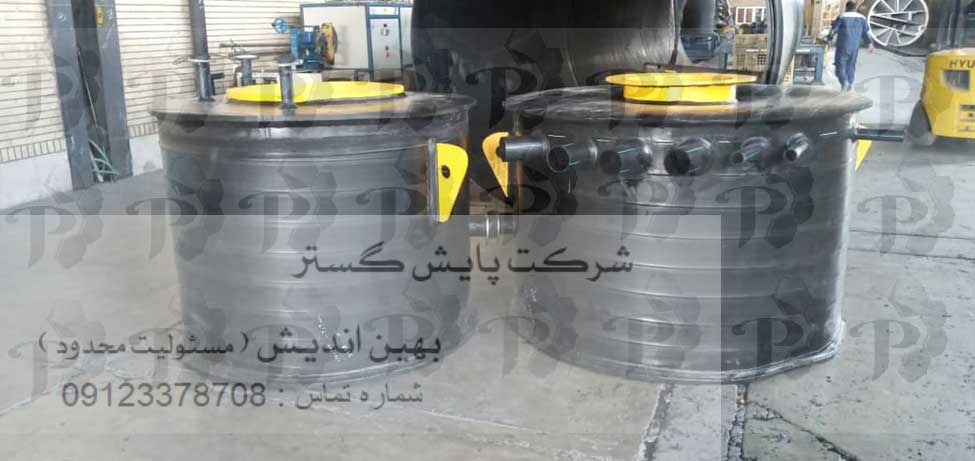
Polyethylene Pumping Station
A polyethylene pumping station can be used for many residential, commercial, service, villa, workshop, and light-industrial projects.
Its advantages can include the following:
- Good resistance to corrosion
- Lower weight
- Easier transport and installation
- Proper water-tightness when built and installed correctly
- Suitable for humid environments
- The ability to be designed in various forms
- The possibility of buried or above-ground installation to suit the project
- Compatibility with many wastewater treatment packages
Fiberglass Pumping Station
A fiberglass tank can be considered in some projects, especially corrosive environments and medium-sized industrial projects.
The choice of FRP must be based on the type of resin, the build quality, the burial conditions, external loads, the likelihood of impact, and the type of wastewater.
Concrete Pumping Station
A concrete station is usually used in large urban projects, heavy industries, high flow rates, and conditions requiring large volume or depth.
This model can have high mechanical strength, but execution time, civil-works costs, water-tightness, formwork, structural weight, and the quality of the concrete work are very important in it.
Horizontal or Vertical Polyethylene Pumping Station?
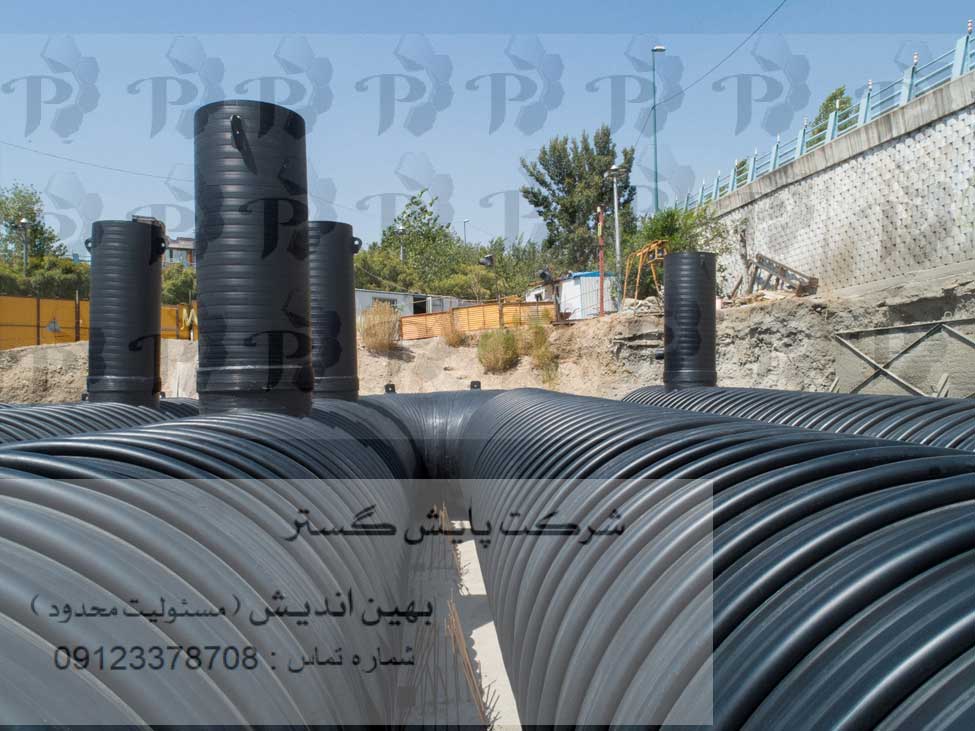
A polyethylene pumping station can be designed either horizontally or vertically, depending on the project conditions.
Vertical Pumping Station
The vertical model is usually suitable for limited spaces and projects that require greater depth and a smaller footprint.
This model is widely used in villas, buildings, urban projects, and some small industrial sites.
Horizontal Pumping Station
The horizontal model can be considered for projects that have more longitudinal space available or that require higher capacity and a special arrangement of equipment.
The choice of horizontal or vertical form must be based on the flow rate, the tank volume, the inlet depth, the site space, the groundwater level, the possibility of servicing, and the execution conditions.
Capacity Design of a Sewage Pumping Station
The capacity of a pumping station is not limited to the tank volume alone. Professional design must examine the following:
- Average wastewater flow rate
- Peak wastewater flow rate
- Consumption fluctuation at different hours
- The type of project use
- The number of users or consuming units
- Pumping height
- The length of the discharge line
- Friction loss in the pipe and fittings
- Total dynamic head
- The number of pumps
- The need for a standby pump
- The permitted number of pump starts per hour
- The useful volume of the wet well
- The retention time of the wastewater in the tank
- The likelihood of sedimentation
- The need for a tank flushing system
- Emergency power conditions
- The possibility of future project expansion
What Is Pump Head and Why Is It Important?
Pump head represents the energy required to convey wastewater from the pumping point to the destination.
The total head usually consists of several parts:
- The elevation difference between the wastewater level and the destination
- Friction loss in the pipe
- Losses caused by elbows, valves, and fittings
- The pressure required at the destination
- Special conditions of the transmission line
If the head is not calculated correctly, the pump may be unable to convey the wastewater to the destination or, conversely, may work more than needed, causing increased power consumption, wear, and operating costs.
Pump Arrangement in a Pumping Station
The number of pumps is determined based on the capacity and importance of the project.
One Pump
For small, low-sensitivity projects, a single pump may be used, but if the pump fails, the system will have no backup.
One Main Pump + One Standby Pump
This arrangement is a more reliable option in many projects. One pump operates as the main pump, and the second pump enters operation in case of failure, servicing, or an increase in flow rate.
Two Main Pumps + One Standby Pump
For more important projects, higher flow rates, hospitals, large complexes, industries, and infrastructure projects, using an arrangement of two main pumps and one standby pump can be considered.
Sewage Pumping Station and Wastewater Treatment Package
In many projects, the pumping station is placed before the wastewater treatment package and is responsible for conveying wastewater to the subsequent sections at a controlled flow rate.
This is very important in the following systems:
- Activated sludge wastewater treatment package
- EAAS wastewater treatment package
- SBR wastewater treatment package
- MBBR wastewater treatment package
- IFAS wastewater treatment package
- MBR wastewater treatment package
- A2O wastewater treatment package
- DAF system
- Equalization tank
- Above-ground septic tank
The goal is the controlled entry of wastewater into the treatment plant and the prevention of severe hydraulic shocks.
The Difference Between a Sewage Pumping Station and a Septic Tank
A pumping station and a septic tank are both tanks, but their functions are completely different.
A septic tank is used for the primary treatment of wastewater, the sedimentation of solids, the separation of fats, and the anaerobic decomposition of part of the organic matter.
A pumping station is designed for the pressurized conveyance of wastewater, and its main function is level control, activating the pumps, and delivering the wastewater to its destination.
In short:
- Septic tank: primary treatment
- Pumping station: conveyance and hydraulic control of wastewater
In some projects, these two pieces of equipment can be used in a single process line, one after the other.
Advantages of a Standard Pumping Station
- The ability to convey wastewater along routes without a gravity slope
- Preventing wastewater overflow in the network
- Reducing the likelihood of wastewater backflow into the building
- Controlled conveyance of wastewater to the treatment plant
- The ability to use a standby pump
- Smart control of the tank level
- Reduced damage caused by the pump running dry
- Better management of flow-rate fluctuations
- Reduced need for extensive changes to the site’s elevation
- The ability to be installed in industrial, urban, and building projects
- The ability to connect to a monitoring and automation system
- The ability to be designed in various capacities
Important Operation and Maintenance Points
For stable operation of the pumping station, periodic maintenance is essential. The most important measures are:
- Periodic inspection of the pumps
- Checking the performance of the float or level sensor
- Inspecting the electrical panel and its protections
- Testing the high-level alarm
- Checking the check valve and the valves
- Inspecting the discharge line
- Checking the vent and ventilation system
- Checking for sediment and material buildup on the wet-well floor
- Periodic flushing of the tank if needed
- Checking for abnormal pump vibration and noise
- Logging the running hours of each pump
- Checking the performance of the standby pump
- Reviewing the sealing of the connections
- Checking the emergency power in sensitive projects
What Factors Does the Price of a Sewage Pumping Station Depend On?
The price of a sewage pumping station depends on the project’s specifications, and an exact price cannot be given without a technical review.
The most important factors affecting the price include the following:
- Wastewater flow rate
- Peak flow rate
- Total pumping head
- The number of pumps
- The type and brand of pump
- Motor power
- The diameter and material of the discharge line
- The volume and material of the wet well
- Whether it is buried or above-ground
- The tank type: polyethylene, fiberglass, or concrete
- The type of level-control system
- The presence of a PLC and the level of automation
- The need for a standby pump
- The type of valves and fittings
- The need for a guide rail and automatic coupling
- The need for an odor-control system
- The need for emergency power
- Soil conditions and installation depth
- Groundwater level
- Transport, installation, and commissioning
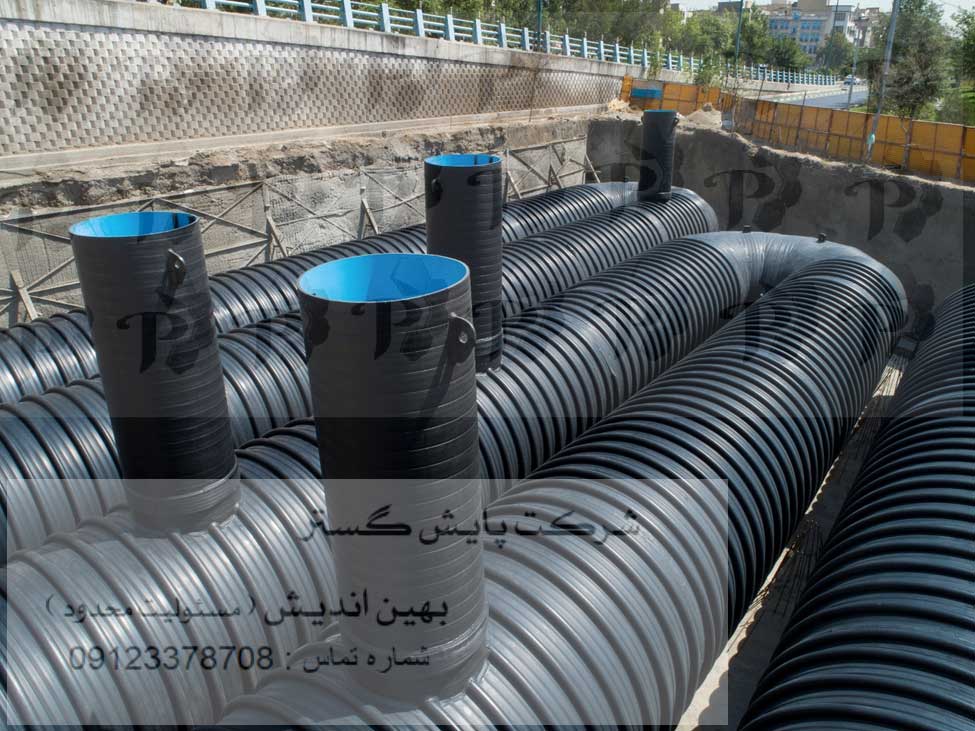
Design and Construction of Pumping Stations by Poly Payesh
To design a sewage pumping station, Poly Payesh reviews the project’s technical information so that the system is selected based on the real need.
In the initial review, the following are evaluated:
- The type of wastewater: domestic, sanitary, or industrial
- The average and peak wastewater flow rate
- The height and length of the transmission route
- The wastewater’s destination
- The site conditions and ground topography
- The possibility of gravity conveyance or the need for pumping
- The available space
- The installation depth
- The groundwater level
- The need for buried or above-ground installation
- The type of electrical supply available
- The need for emergency power
- The level of automation required
- The number of pumps and the need for a standby
- The need to connect to a septic tank or a wastewater treatment package
- The possibility of future capacity expansion
The goal is to design a system that, in terms of capacity, energy consumption, service access, safety, equipment durability, and operating cost, is aligned with the project’s conditions.
Frequently Asked Questions About Sewage Pumping Stations
What is a sewage pumping station?
A sewage pumping station, or lift station, is a system for the temporary collection and pressurized conveyance of wastewater to the treatment plant, a transmission line, or a higher level.
When do we need a sewage lift station?
When wastewater cannot be conveyed by gravity due to an elevation difference, the lack of a suitable slope, a long route, or topographic conditions.
What is the difference between a pumping station and a septic tank?
A septic tank is used for the primary treatment of wastewater, whereas a pumping station is designed for the pressurized conveyance of wastewater.
Does a pumping station need a standby pump?
In important projects, using a standby pump is recommended so that the conveyance of wastewater does not stop when the main pump fails or is being serviced.
What is a wet well?
The wet well is the section where wastewater collects before pumping, in which the submersible pumps and level-control equipment are installed.
What is the PLC used for in a pumping station?
A PLC can control the starting and stopping of the pumps, alternating operation, dry-run protection, the high-level alarm, standby-pump management, and fault logging.
Is a polyethylene pumping station suitable for burial?
It can be installed if it is designed to suit the soil pressure, groundwater level, installation depth, and the project’s structural conditions.
What information is needed to request a price for a pumping station?
The wastewater flow rate, the pumping head, the length of the discharge line, the type of wastewater, the project location, buried or above-ground conditions, the type of electrical supply, the need for a standby pump, and the wastewater’s destination are important pieces of information for design and pricing.