

The polyethylene drainage pipe is one of the most important pieces of equipment in drainage systems, groundwater management, and soil moisture control, and it is specially designed for collecting and conveying excess water in civil construction, agricultural, and infrastructure projects.
These pipes are usually manufactured from high-density polyethylene (HDPE) and, due to their high strength, suitable flexibility, and long lifespan, have become a suitable replacement for traditional drainage systems such as clay and concrete pipes.
How the Polyethylene Drainage Pipe Works
This system works based on collecting water through lateral perforations and transferring it to the outlet routes.
The operating mechanism is as follows:
1. Water Infiltration into the Pipe
The excess water present in the soil enters the pipe through the built-in perforations.
2. Collection of Subsurface Flow
The pipes transfer the collected water from saturated areas to the discharge points.
3. Conveyance to the Outlet Route
The drained water is directed to channels, an absorption well (soakaway), or disposal systems.
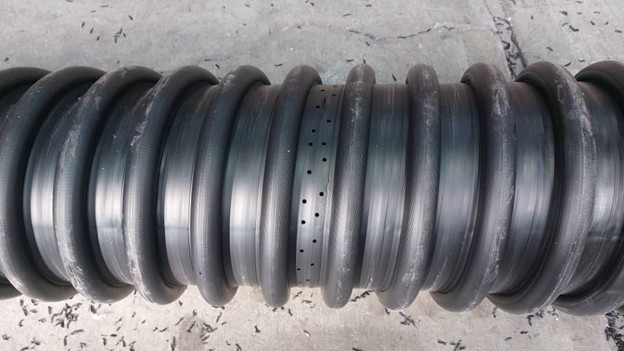
Applications of the Polyethylene Drainage Pipe
This product is used in a wide range of projects:
- Drainage of agricultural lands
- Groundwater control in buildings
- Drainage around foundations and retaining walls
- Road construction and highway projects
- Sports fields and artificial turf
- Tunnels and underground structures
- Landscaping and green spaces
The Importance of Drainage in Civil Construction Projects
The lack of a suitable drainage system can cause serious problems, including:
- Increased hydrostatic pressure on structures
- Ground settlement and reduced soil stability
- Moisture penetration into the building foundation
- Destruction of asphalt and road subgrade
- Reduced useful life of structures
For this reason, using a standard drainage pipe is considered an engineering requirement in civil construction and building projects.
Technical Structure of the Polyethylene Drainage Pipe
Drainage pipes are manufactured from high-density polyethylene (HDPE) and have the following features:
- High resistance to soil pressure
- Suitable flexibility on uneven ground
- Resistance to the chemicals present in the soil
- Long lifespan (more than several decades)
- Fast, easy installation
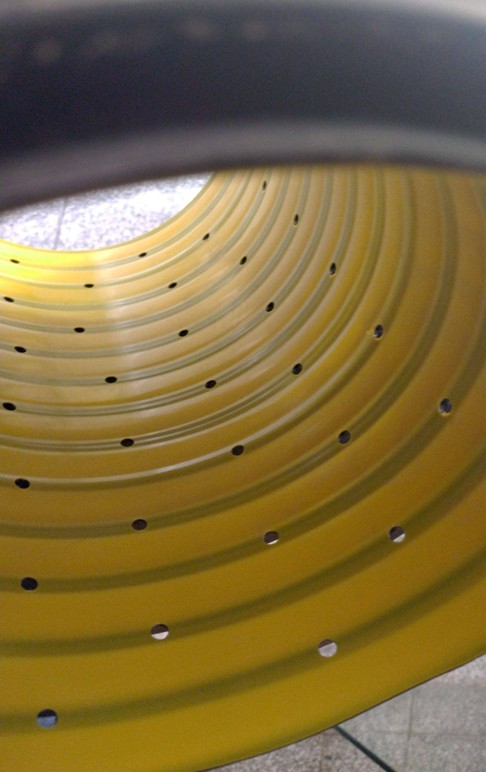
Types of Polyethylene Drainage Pipe
1. Perforated Drainage Pipe
In this type, perforations are made on the surface of the pipe so that water enters the pipe.
Application:
- Drainage of agricultural lands
- Around buildings
- Road construction projects
2. Semi-Perforated Drainage Pipe
The perforations are located only in a specific part of the pipe.
Advantage:
- Better control of the water flow
- Suitable for more precise engineering projects
3. Plain (Unperforated) Drainage Pipe (Plain HDPE Pipe)
In some projects, an unperforated pipe is used to transfer the collected water.
Application:
- Transferring drained water
- The system’s outlet routes
Types of Drainage Pipe Structure
1. Single-Wall Drainage Pipe
- Lighter
- Suitable for light projects
- High flexibility
2. Double-Wall Drainage Pipe (Corrugated HDPE)
- Very high mechanical strength
- Suitable for heavy soil loads
- Widely used in civil construction and road construction projects
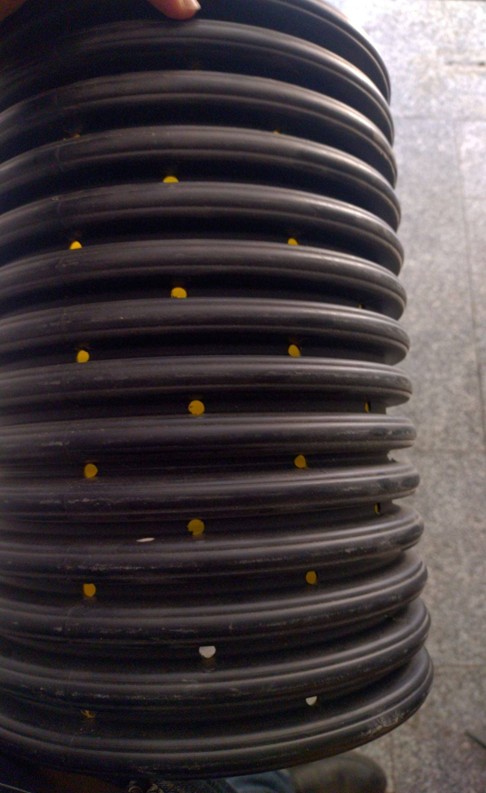
Advantages of the Polyethylene Drainage Pipe
Technical Advantages:
- High resistance to soil pressure
- No corrosion or rusting
- Stable long-term performance
- Chemical resistance against acidic and alkaline soils
Execution Advantages:
- Fast, easy installation
- Light weight and easy transport
- The ability to be executed over long routes
- High flexibility on indirect routes
Economic Advantages:
- Reduced maintenance costs
- Increased useful life of structures
- Reduced repair costs caused by moisture
The Role of Geotextile in the Drainage System
In many projects, the drainage pipe is used together with geotextile.
The role of geotextile:
- Preventing soil from entering the pipe
- Increasing the lifespan of the drainage system
- Preventing the clogging of the perforations
- Increasing the drainage efficiency
Designing the Drainage System
The design of the drainage pipe is done based on the following factors:
- The soil type (clay, sandy, loamy)
- The moisture level and the groundwater level
- The ground slope
- The type of project use
- The volume of incoming water
Problems of Not Using Suitable Drainage
If a standard drainage system is not implemented:
- Water accumulation under structures
- Reduced soil strength
- Cracking in buildings
- Destruction of asphalt and flooring
- Increased repair costs
The Place of the Drainage Pipe in Civil Construction Projects
The drainage pipe is one of the most important components of subsurface water management and plays a key role in the following projects:
- Building construction
- Dam construction
- Road construction
- Agriculture
- Urban landscaping
The polyethylene drainage pipe is one of the vital pieces of equipment in subsurface water management, which, using a durable HDPE structure and an engineered perforation design, makes it possible to collect and convey excess water.
By reducing soil moisture and preventing water accumulation, this system plays an important role in increasing the lifespan of structures and the stability of civil construction projects.