

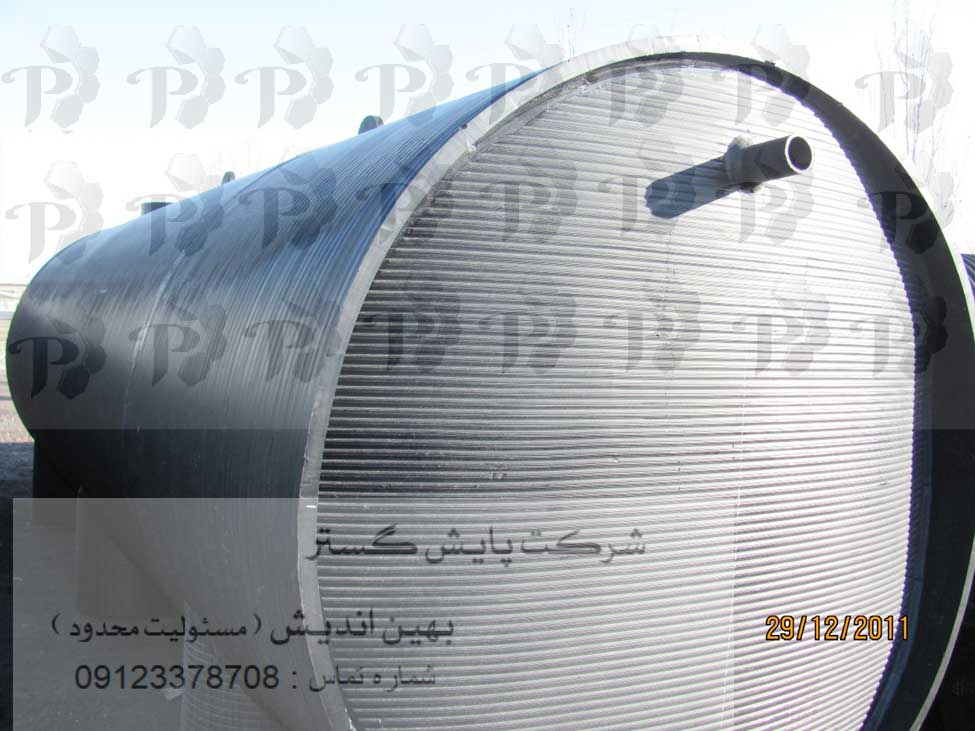
The above-ground polyethylene tank is a surface-mounted or overground storage tank that, without being buried in the soil, is installed on the ground, on a concrete foundation, a metal base, or an industrial platform.
This model is suitable for projects where excavation is difficult or costly, the groundwater level is high, the project is temporary or semi-permanent, quick access is needed, or the operator must directly monitor the tank’s condition.
In an above-ground tank, no soil pressure is applied to the body; however, the body must be resistant to the internal pressure of the fluid, sunlight, temperature changes, impact, vibration, cyclic loading, and open-environment conditions.
What Is an Above-Ground Polyethylene Tank?
An above-ground polyethylene tank is a structure for storing fluid on the ground surface. This tank can be horizontal, vertical, or, in some projects, cubic.
In this type of installation, the choice of tank does not depend on the volume alone. The installation location, the quality of the foundation, UV radiation, the piping route, the anchoring method, the wind conditions, the vibration of adjacent equipment, and the type of fluid must also be reviewed.
The above-ground tank is used for storing water, firefighting water, agricultural water, process fluids, effluent, liquid raw materials, and some chemicals compatible with polyethylene.
Applications of the Above-Ground Polyethylene Tank
- Storing water in factories and manufacturing units
- Agricultural and irrigation water tank
- Greenhouse water tank
- Firefighting water storage
- Process tank for industries
- Storing water for temporary civil construction projects
- Treated-effluent storage tank
- Projects without the possibility of excavation
- Industrial sites and workshops
- Mines and temporary camps
- Areas with a high groundwater level
- Liquid raw-material storage tank
- Water and wastewater treatment systems
Advantages of the Above-Ground Polyethylene Tank
- Elimination of excavation work
- Faster installation in many projects
- Easy access for inspection and repairs
- Suitable for temporary or expandable projects
- The possibility of relocation under certain conditions
- Suitable for industrial sites and workshops
- Reduced execution costs related to excavation
- The ability to visually monitor the level and condition of the tank
- Suitable resistance to corrosion
- No rusting
- The ability to connect to a pump system and automation
- The possibility of installation on a base, chassis, or platform
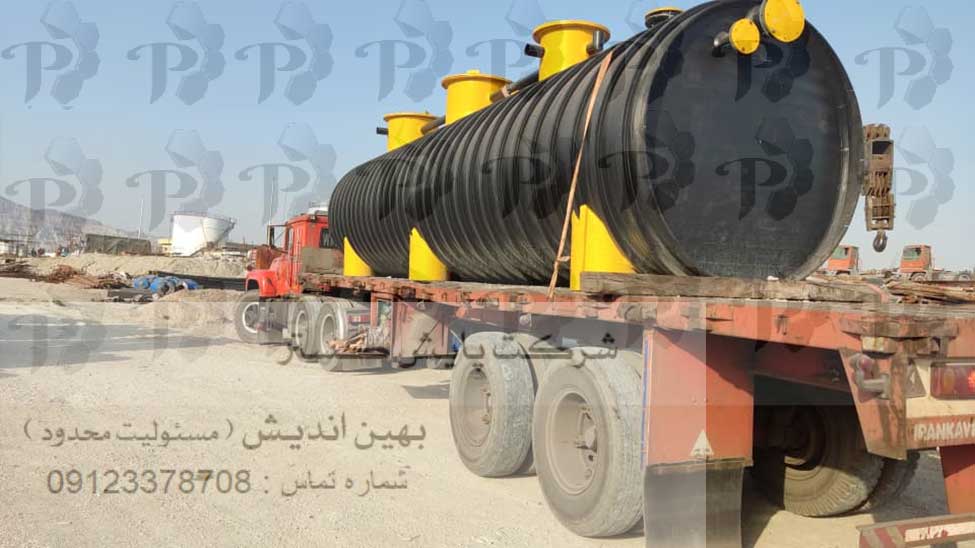
The Most Important Design Points for the Above-Ground Tank
Internal Hydrostatic Pressure
As the tank fills, the fluid pressure becomes greater in the lower sections. The body, the bottom, the fittings, and the bases must be designed for the condition of the tank being full.
Sunlight and UV
In the open air, the tank body is exposed to sunlight. The type of raw material, UV-resistant additives, and the installation conditions must be reviewed for long-term outdoor use.
Temperature Changes
Polyethylene behaves differently under temperature changes. Thermal expansion and contraction, especially in large tanks, must be taken into account in the design of the fittings, bases, and piping.
Cyclic Loading
In tanks that are constantly filled and emptied, there are stresses caused by cyclic loading. This is important in the choice of body, material grade, fittings, and operating method.
Installation Location
The surface beneath the tank must be completely level, uniform, and free of sharp points or depressions. Installing the tank on an unsuitable surface can cause stress concentration and deformation of the body.
Main Components of the Above-Ground Polyethylene Tank
- Main tank body
- Inlet nozzle
- Outlet nozzle
- Inspection manhole
- Vent
- Overflow
- Drain valve
- Base or chassis, if needed
- Connection to a pump and piping
- Level sensor or float
- Electrical panel and pump control system
- Overflow protection equipment
- Safety equipment appropriate to the type of fluid
Installation of the Above-Ground Polyethylene Tank
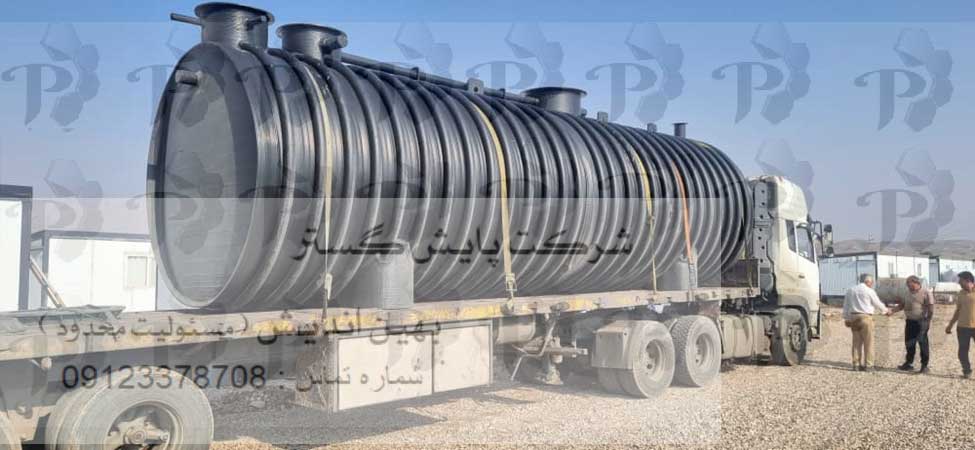
For the correct installation of the above-ground tank, the following must be observed:
- Executing a level, durable foundation or floor
- Complete leveling check before filling the tank
- Preventing contact of the body with sharp objects
- Using a suitable chassis or base for horizontal models
- Preventing the transfer of the pipes’ weight to the nozzles
- Using flexible fittings if needed
- Providing an overflow route and emergency discharge
- Protecting the tank against impact and collision with machinery
- Reviewing direct sunlight and environmental conditions
- Providing a suitable vent
- Ensuring safe access for inspection and servicing
- Suitable anchoring of the tank in special conditions such as strong wind or vibration
The Difference Between Above-Ground and Buried Tanks
In a buried tank, the soil pressure, the surface load, and the geotechnical conditions are the main design factors.
In an above-ground tank, the tank is installed on the surface, and the design focus is on the internal pressure of the fluid, the environmental conditions, UV, temperature, the base, the chassis, and the anchoring method.
The above-ground tank is a suitable option for projects where quick access, easy installation, and the elimination of excavation work are important.
Above-Ground Tank: Horizontal or Vertical?
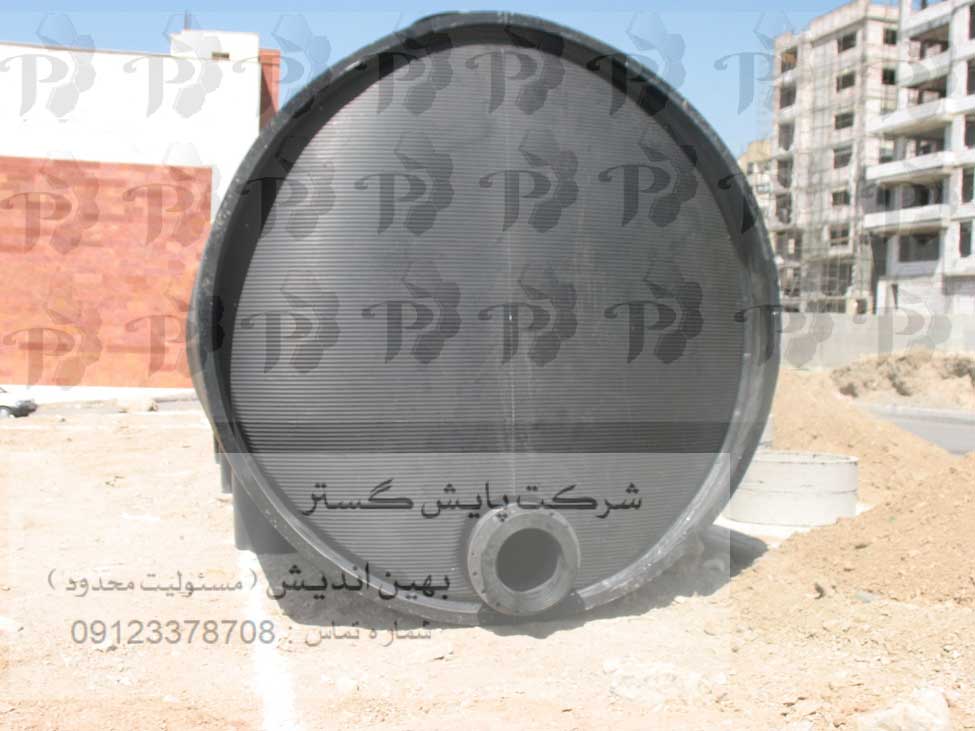
The above-ground tank can be horizontal or vertical.
The horizontal model is suitable for projects that have height limitations, need to be installed on a chassis, or have suitable longitudinal space available.
The vertical model is suitable for storing a larger volume in a sma