

An MBBR wastewater treatment package is one of the biological methods of wastewater treatment that, by using floating media and the formation of a biofilm, helps reduce organic matter and, with proper design, the nitrogen compounds present in the wastewater.
MBBR stands for Moving Bed Biofilm Reactor. In this process, special polymer media are placed inside the treatment tank and, through aeration or mechanical mixing, move continuously in the wastewater. Microorganisms grow on the surface of these media and form a biological layer called a biofilm.
The MBBR package is suitable for projects that require stable biological treatment, a smaller footprint, the possibility of increasing capacity, or upgrading an existing treatment plant. This system can be designed and built for domestic and sanitary wastewater and some biodegradable industrial wastewaters, after a careful review of the effluent analysis.
By reviewing the type of wastewater, the inlet flow rate, the pollution load, the usable space, the operating conditions, and the output effluent standard, Poly Payesh designs and builds the MBBR wastewater treatment package to suit the real need of each project.
What Is the MBBR System?
The MBBR system is a biological treatment process based on the attached growth of microorganisms. In this method, instead of the entire microbial population operating suspended in the wastewater, the main part of the biological activity takes place on the surface of special media.
MBBR media are usually made of durable polymers, are lightweight, and remain floating and moving in the reactor tank. The internal and external surface of these media creates a suitable environment for the growth of bacteria.
When the wastewater comes into contact with the media, the microorganisms present in the biofilm consume and decompose part of the decomposable organic matter and, if the necessary conditions are available, the nitrogen compounds.
Because of the large biological surface area within a given tank volume, MBBR can be a suitable option for projects with space limitations or a need to increase treatment capacity.
How Does an MBBR Wastewater Treatment Package Work?
The MBBR process works on the basis of continuous contact between the wastewater, oxygen or anoxic conditions, the biological media, and the biofilm-forming microorganisms.
In a conventional design, the main operating stages of the system include the following:
- Receiving and pre-treating the wastewater
- Equalizing the flow rate and pollution load if needed
- Entry of the wastewater into the MBBR reactor
- Movement and mixing of the media
- Growth and activity of the biofilm on the media
- Reduction of organic matter and target compounds
- Separation of particles and sludge detached from the biofilm
- Disinfection or supplementary treatment if needed
- Discharge or storage of the treated effluent
The final structure of the package is determined according to the type of wastewater, the capacity, the output standard, and the project’s conditions.
Operating Stages of the MBBR Package
1. Receiving Wastewater and Initial Pre-treatment
The wastewater first enters the receiving or pre-treatment section. In many projects, the use of the following equipment can be considered before entering the MBBR reactor:
- Screen (trash rack)
- Grit chamber
- Grease trap
- Equalization tank
- pH-adjustment tank
- Coagulation and flocculation unit
- DAF system for greasy wastewaters or those with high TSS
The purpose of pre-treatment is to prevent coarse materials, excessive fat, damaging particles, or inhibitory substances from entering the biological reactor.
In industrial wastewaters, pre-treatment is very important; because the entry of oil, fat, solvents, corrosive chemicals, or toxic substances can reduce the biofilm’s performance.
2. Equalization Tank
In many projects, an equalization tank is considered before the MBBR reactor. This tank helps reduce flow-rate fluctuations, even out the pollution load, and better control the entry of wastewater into the reactor.
The equalization tank is especially important in projects where the wastewater flow rate varies greatly at different hours of the day or where the inlet pollution load fluctuates.
3. Entry of the Wastewater into the MBBR Reactor
After passing through the initial stages, the wastewater enters the MBBR reactor tank. In this tank, the floating media are present and the main part of the biological treatment takes place on their surface.
The MBBR reactor can be aerobic, anoxic, or a combination of several reactors with different conditions. The choice of this arrangement depends on the treatment goal.
For example:
- In an aerobic reactor, the goal can be reducing organic matter and carrying out nitrification.
- In an anoxic reactor, the goal can be helping denitrification and removing nitrogen.
- In some designs, a combination of aerobic and anoxic reactors is used to reach the required effluent quality.
4. Movement of the Biological Media
The MBBR media must move properly inside the tank so that their surface is in contact with the wastewater and the microorganisms.
In aerobic reactors, this movement is usually created with the help of air injected by a blower and diffuser. In anoxic reactors, submersible mixers may be used to mix the media.
The correct movement of the media is very important, because it makes it possible for:
- The surface of the media to be in uniform contact with the wastewater.
- The biofilm to have proper growth.
- The accumulation or settling of the media to be prevented.
- Oxygen transfer in the aerobic zone to improve.
- Part of the excess biofilm to be controlled naturally.
5. Formation of the Biofilm on the Media
The biofilm is a layer of microorganisms that grows on the surface of the media. This layer includes bacteria and other microorganisms that play a role in the treatment process.
As the wastewater passes among the media, organic matter and decomposable compounds reach the surface of the biofilm. The microorganisms use these materials as a source of energy and food, and in this way part of the wastewater’s pollution is reduced.
In the aerobic reactor, the oxygen required by the bacteria is supplied by the blower and diffuser. With proper design, these conditions can help reduce BOD, decomposable COD, and ammonia.
6. Controlling Biofilm Growth
The biofilm on the media does not remain permanently at a fixed thickness. As the biological layer gradually grows, part of the excess biofilm is detached due to the contact, mixing, and movement of the media.
This phenomenon helps naturally control the thickness of the biofilm. The particles detached from the biofilm leave the reactor along with the effluent and are collected in the subsequent settling or separation unit.
Proper control of the pollution load, aeration, mixing speed, the media fill percentage, and the retention time of the wastewater has a direct effect on the quality and stability of the biofilm.
7. Particle Separation and Secondary Settling
After the MBBR reactor, the effluent usually enters a secondary settling unit, a clarifier, a lamella, or a suitable separation system.
In this stage, suspended particles, sludge detached from the biofilm, and remaining solids are separated from the effluent. The clearer effluent leaves from the upper part and the sludge collected in the lower part of the tank is managed.
In pure MBBR, the return of activated sludge, as in conventional activated sludge systems, is not the main part of the process. Nevertheless, depending on the combined design of the treatment plant or the presence of other stages, sludge management or return equipment may also be provided in the project.
8. Disinfection and Supplementary Treatment
If the required quality of the output effluent needs a reduction in microbial contamination or the further removal of particles, the effluent enters the disinfection or supplementary treatment stage after separation.
Common disinfection methods are:
- Chlorination
- UV disinfection
- Using disinfecting agents suitable for the project
In projects with stricter output standards, the following equipment may also be added to the system:
- Sand filter
- Carbon filter
- Microfiltration
- Ultrafiltration
- MBR system
- RO system
- Supplementary chemical treatment units
Main Components of the MBBR Wastewater Treatment Package
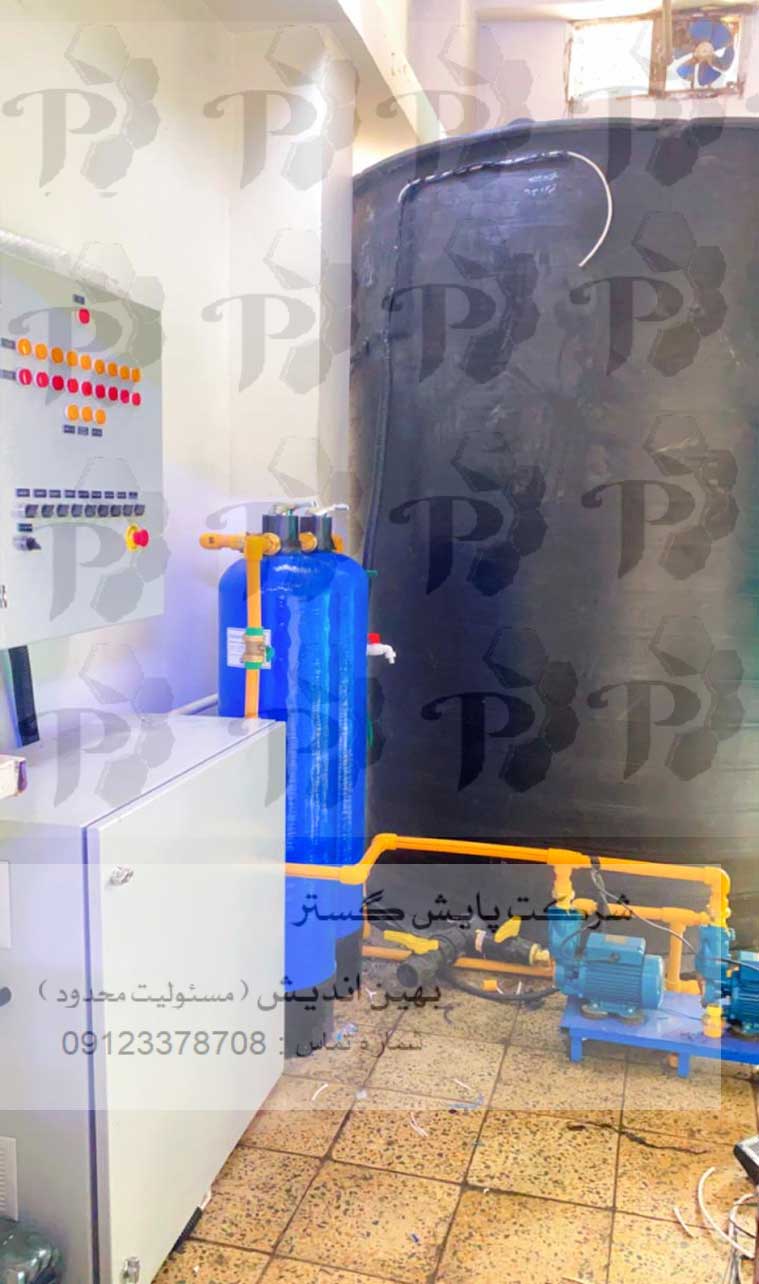
The main equipment of the MBBR package is selected according to the capacity, the type of wastewater, the treatment goal, and the operating conditions. A conventional package can include the following equipment:
- Screen or pre-treatment unit
- Equalization tank
- Wastewater transfer pump
- MBBR tank or reactor
- MBBR biological media
- Mesh or media-retention system
- Aeration blower
- Fine-bubble diffusers
- Air piping and distribution network
- Submersible mixer for anoxic sections, if needed
- Clarifier or secondary settling tank
- Sludge discharge pump
- Disinfection system
- Effluent storage tank if needed
- Electrical panel and control equipment
- PLC system and instrumentation if needed
- Level sensor, flow meter, pressure gauge, and monitoring equipment
- Inspection manhole, vent, and inlet and outlet piping
- Pumping station, if gravity entry of wastewater is not possible
The Role of the Media in the MBBR Package
The media is the most important component of the MBBR process. These polymer pieces have a suitable specific surface area and create an environment for the formation and maintenance of the biofilm.
The characteristics of suitable MBBR media include the following:
- Sufficient surface area for the growth of microorganisms
- Low weight and buoyancy
- Resistance to corrosion and the chemicals commonly found in wastewater
- The ability to move properly in the tank
- Mechanical stability
- A design suitable for preventing clogging
- Compatibility with the aeration and mixing system
The type of media, the specific surface area, the tank fill percentage, the design of the retention mesh, and the mixing conditions must be selected based on technical calculations.
Using unsuitable media or choosing a fill percentage without design can cause a drop in efficiency, disruption of media movement, and operating problems.
Advantages of the MBBR Wastewater Treatment Package
The MBBR package can have important advantages in suitable projects:
- Increasing the surface area for the growth of microorganisms within a given reactor volume
- A more compact design compared to some conventional biological systems
- Suitable for projects with space limitations
- The possibility of using it to upgrade some existing treatment plants
- Good stability of the biofilm against short-term inlet fluctuations
- The possibility of designing for the reduction of organic matter and nitrogen compounds
- The ability to be used for domestic and sanitary wastewater and some biodegradable industrial wastewaters
- No need for the return of activated sludge as a main part of the process in pure MBBR
- The possibility of being designed as a prefabricated package
- The ability to be installed buried or above-ground according to the project’s conditions
- The possibility of combining with DAF, SBR, MBR, A2O, or supplementary treatment units
- The ability to be equipped with a control and automation system
Limitations and Important Points in Choosing MBBR
The MBBR package is not the best option for all types of wastewater. Choosing this process must be based on a careful review of the project’s conditions.
The most important points are:
- The design of the media and the tank fill percentage is very important.
- Aeration in the aerobic reactor must meet the oxygen demand and the media mixing.
- In anoxic reactors, mixing must be carried out without the entry of extra oxygen.
- In greasy, oily, or high-TSS wastewaters, suitable pre-treatment is essential.
- For wastewaters containing toxic, saline, acidic, alkaline, or inhibitory substances, a careful review of the analysis is mandatory.
- The media-retention mesh must be designed correctly so that the media do not escape from the reactor.
- Particles detached from the biofilm must be managed in a suitable settling or separation unit.
- Operation and servicing of the blower, diffuser, pumps, and control equipment must be carried out periodically.
- Effluent reuse can only be decided after reviewing the output quality and its compliance with the relevant standard.
The Difference Between MBBR and IFAS
MBBR and IFAS both use media to form a biofilm, but their process structure is not the same.
In the MBBR system, the process is designed mainly on the basis of the moving media and the biofilm formed on them. Activated sludge may be present in the reactor to a limited extent, but the main focus of the process is the biofilm on the media.
In IFAS, media are added to an existing activated sludge system or an activated sludge design. In this method, both the suspended microorganisms in the activated sludge and the biofilm on the media play a main role simultaneously.
In short:
- MBBR: the main focus is on attached growth on the moving media
- IFAS: a combination of the suspended growth of activated sludge and the attached growth on the media
The choice between MBBR and IFAS must be based on the condition of the wastewater, the required capacity, the available space, the possibility of upgrading the treatment plant, and the required effluent quality.
The Difference Between MBBR and Extended Aeration (EAAS)
In the extended aeration or EAAS system, treatment is carried out mainly using suspended activated sludge. In this method, the main population of microorganisms is suspended in the wastewater and operates with long-term aeration.
But in MBBR, the microorganisms grow mainly on the floating media. This difference can make MBBR an option worth considering for projects with a tank-volume limitation or a need to increase the biological growth surface area.
Nevertheless, the final choice must be based on the wastewater analysis, the capacity, the output standard, the project space, the energy cost, and the operating conditions.
The Difference Between MBBR and SBR
In MBBR, the wastewater usually passes continuously through the reactors containing the media, and the treatment process is carried out on the basis of the moving biofilm.
In the SBR system, the stages of filling, aeration, settling, and discharge are carried out on a timed basis in one or several tanks.
MBBR can be suitable for projects that require a continuous flow and the use of biological media, whereas SBR is an option worth considering for some projects with limited space or cyclic operation.
The Difference Between MBBR and MBR
MBBR and MBR are two different processes.
In MBBR, the separation of solids is usually carried out with settling or conventional separation equipment, and the main treatment is based on the biofilm on the media.
In MBR, a membrane is used to separate the sludge and the treated water. This method can produce a higher quality of output effluent, but it usually has a higher investment cost, greater operating requirements, and greater maintenance sensitivity.
In some projects, MBBR can be designed as pre-treatment before MBR or as part of a combined system.
Applications of the MBBR Wastewater Treatment Package
The MBBR package can be used in various projects, including:
- Residential complexes
- Villas and garden villas
- Hotels and lodges
- Office buildings
- Schools and educational centers
- Hospitals and medical centers, after reviewing the type of wastewater
- Workers’ camps
- Civil projects
- Towns and semi-centralized complexes
- Food industries, after reviewing the wastewater analysis
- Manufacturing industries with biodegradable wastewater
- Light chemical industries, after technical evaluation
- Projects with space limitations
- Treatment plants needing a capacity increase
- Projects needing the reduction of organic matter or nitrogen
In industrial wastewaters, choosing MBBR must be done after reviewing parameters such as COD, BOD, TSS, fat, oil, pH, ammonia, salinity, inhibitory substances, and the output standard.
Polyethylene MBBR Package
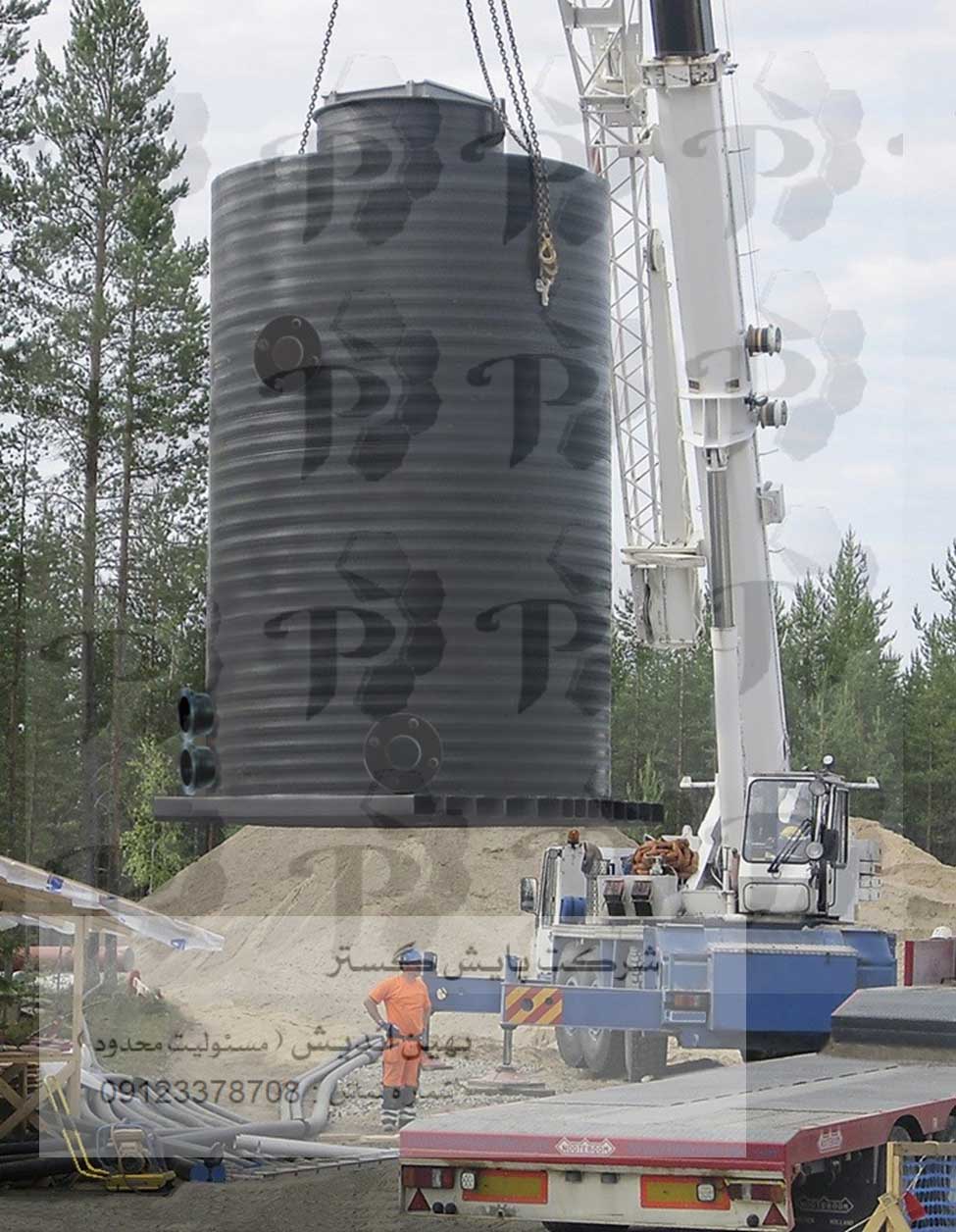
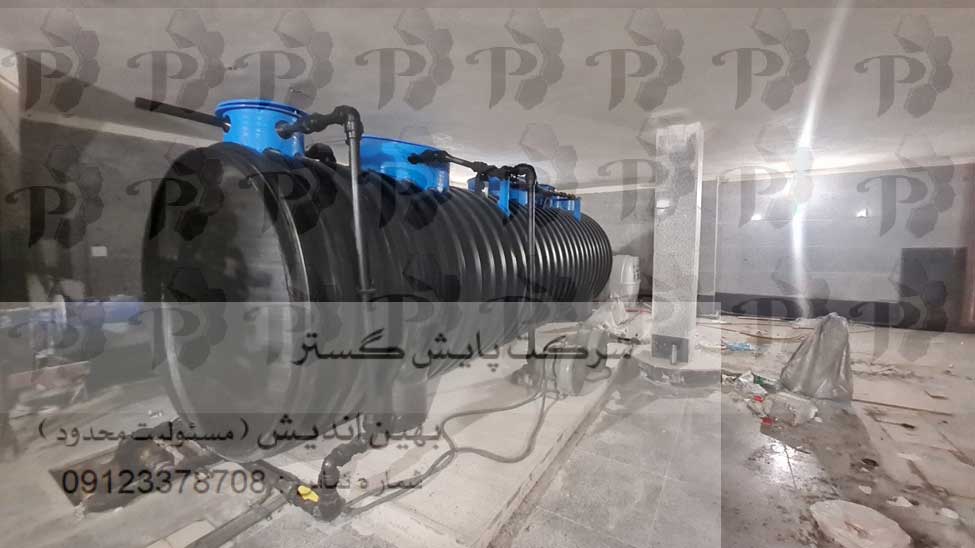
An MBBR wastewater treatment package can be designed and built with a polyethylene body. In suitable projects, using polyethylene tanks has advantages such as resistance to corrosion, lower weight, easier transport, and good execution speed.
The polyethylene package can be installed buried or above-ground. The choice of installation location must be based on the soil conditions, the groundwater level, the applied loads, ventilation, access for operation, and the structural requirements.
For more information, see the page “Polyethylene Wastewater Treatment Package.”
Design of the MBBR Wastewater Treatment Package
The correct design of an MBBR package depends on a careful review of the project’s information. The most important data required are:
- The average and maximum wastewater flow rate
- The type of use or industry
- The levels of BOD, COD, and TSS
- The amount of ammonia and nitrogen
- The amount of fat, oil, and grease
- The pH and its fluctuations
- The temperature of the wastewater
- The biodegradability percentage of the wastewater
- The need for nitrogen removal
- The standard required for the output effluent
- The space available for installation
- The operating conditions and access to electricity
- The need for buried or above-ground installation
- The possibility of future capacity expansion
Based on this information, the tank volume, the type of media, the fill percentage, the blower capacity, the number of diffusers, the solids-separation equipment, the disinfection system, and the supplementary units are selected.
How Is the Capacity of the MBBR Wastewater Treatment Package Determined?
The capacity of the MBBR package is not determined based on the number of people or the building’s area alone. Various factors play a role in the capacity design:
- The inlet wastewater flow rate
- The wastewater pollution load
- The type of project use
- The level of decomposable BOD and COD
- The need for nitrification or denitrification
- The required quality of the output effluent
- The fluctuation of the flow rate and pollution load
- The space available for installation
- The type of media and its effective surface area
- The usable volume of the tank
- The capacity of the aeration system
- The operation and maintenance conditions
Choosing a capacity lower than the real need can cause a drop in performance, and over-design also increases the project’s execution and operating cost.
What Factors Does the Price of the MBBR Wastewater Treatment Package Depend On?
The price of the MBBR package depends on the technical specifications of the project, and an exact figure cannot be given without reviewing the project’s information.
The most important factors affecting the price are:
- The design capacity of the package
- The type and quality of the inlet wastewater
- The body material of the tank
- The number of reactors and the volume of the tanks
- The type, volume, and fill percentage of the media
- The blower capacity and the type of diffuser
- The presence of an equalization tank or pre-treatment
- The need for a grease trap, DAF, pH adjustment, or coagulation and flocculation
- The type of clarifier or solids-separation system
- The disinfection system
- The electrical panel, PLC, and instrumentation equipment
- Buried or above-ground conditions
- The sludge equipment and pumps
- The transport, installation, piping, and commissioning conditions
- The need for supplementary treatment or effluent reuse
To request an exact price, information such as the flow rate, the wastewater analysis, the type of use, the project location, the installation space, and the required output effluent quality must be reviewed.
Design and Construction of the MBBR Package by Poly Payesh
By reviewing the technical conditions of each project, Poly Payesh designs and builds the MBBR wastewater treatment package to suit the real need of the complex.
In the design stage, the following are evaluated:
- The type of wastewater and the inlet quality
- The level of the pollution load and its fluctuations
- The capacity required for the project
- The type of media and how it is retained
- The aeration capacity and mixing equipment
- The need for pre-treatment or supplementary treatment
- The installation location and the available space
- The possibility of buried or above-ground installation
- The type of operation required
- The output effluent standard
- The conditions for future project expansion
The goal of the design is to provide a system that, in addition to achieving the required quality, is also aligned with the project’s conditions in terms of operation, maintenance, energy consumption, and execution costs.
To receive specialized consultation, a technical review of your project, and a price quote for the MBBR wastewater treatment package, get in touch with the experts at Poly Payesh.
Frequently Asked Questions About the MBBR Wastewater Treatment Package
What is MBBR?
MBBR stands for Moving Bed Biofilm Reactor. This process is a biological treatment method in which microorganisms grow on floating, moving media.
What type of wastewater is the MBBR package suitable for?
This package can be suitable for domestic and sanitary wastewater and some biodegradable industrial wastewaters. The final choice must be made after reviewing the wastewater analysis.
What does the MBBR media do?
The media provides a suitable surface for the growth of the biofilm. This biofilm plays a role in reducing organic matter and, with proper design, reducing some nitrogen compounds.
Does MBBR need return sludge?
In pure MBBR, the return of activated sludge, as in a conventional activated sludge system, is not the main part of the process. But in combined systems or special treatment-plant arrangements, sludge management or return may exist in other sections.
What is the difference between MBBR and IFAS?
In MBBR, the main focus is on the biofilm on the moving media. In IFAS, media are added to an activated sludge process, and both suspended and attached growth play a main role.
Is MBBR suitable for upgrading an old treatment plant?
Yes. In some existing treatment plants that face a shortage of capacity or a space limitation, MBBR can be proposed as one of the options worth considering for upgrading the treatment capacity.
Is the output effluent of MBBR reusable?
With proper design, correct operation, the use of disinfection, and supplementary treatment if needed, reuse of the effluent for purposes such as green-space irrigation can be considered. The final decision must be made based on the output quality and the intended standard.
What information is needed to request a price for the MBBR package?
The type of use, the wastewater flow rate, the effluent analysis, the levels of BOD and COD, the amount of TSS, fat, and ammonia, the installation space, buried or above-ground conditions, and the required output effluent quality are important pieces of information for design and price estimation.