

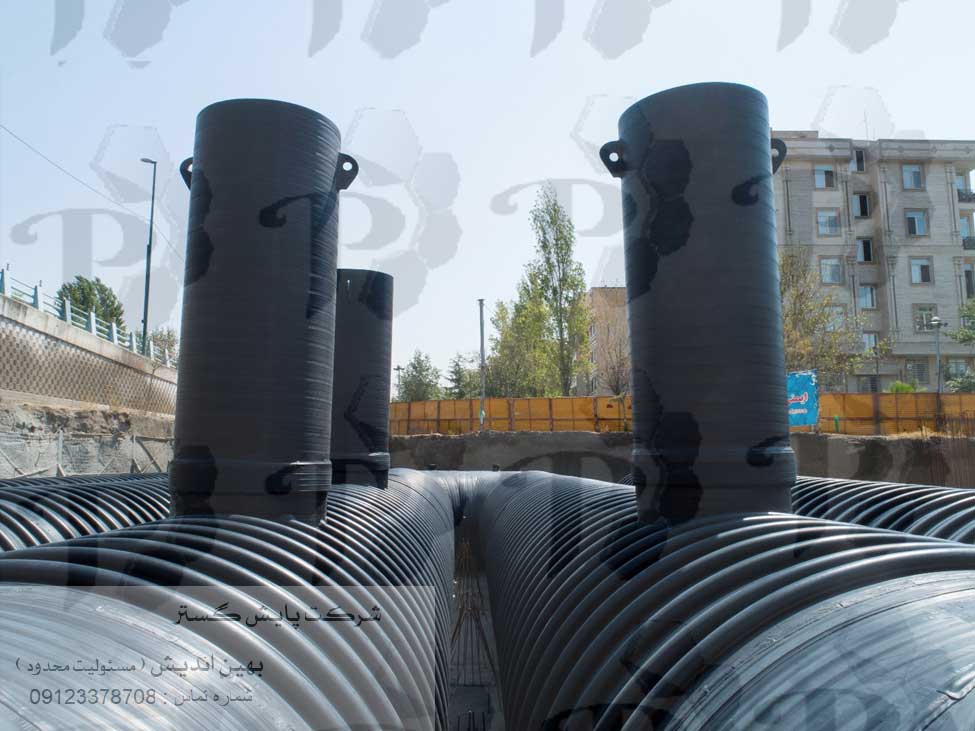
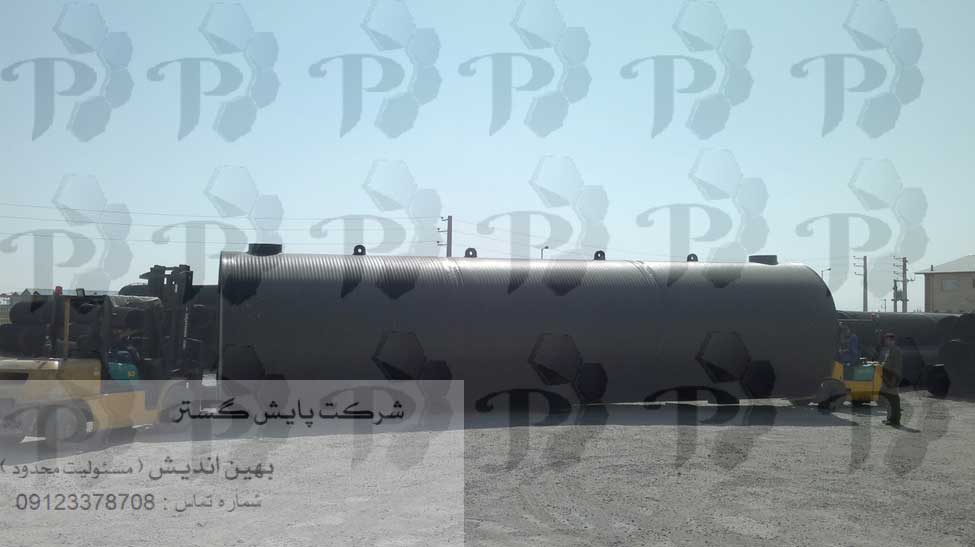
The horizontal polyethylene septic tank is a prefabricated tank for the primary treatment of domestic and sanitary wastewater that, by being positioned lying down, provides more longitudinal space for the settling process, the separation of floating materials, and anaerobic digestion.
This model is suitable for projects that have sufficient longitudinal space, need higher capacities, or where the tank needs to be designed in a horizontal arrangement. The horizontal septic tank can be executed as buried, semi-buried, or above-ground depending on the project conditions; but the installation method must be determined separately based on the soil, the groundwater level, the environmental loads, and the site space.
Poly Payesh designs the horizontal septic tank by reviewing the wastewater flow rate, the number of users, the type of use, the installation location, and the need for connection to an absorption well (soakaway) or a wastewater treatment package.
What Is a Horizontal Septic Tank?
A horizontal septic tank is a primary treatment tank whose longitudinal axis is positioned horizontally. After entering the tank, the wastewater encounters a reduction in flow velocity. As a result, part of the solids settle at the bottom, the fats and lighter materials are positioned at the surface, and the middle section of the wastewater is directed to the outlet as semi-treated effluent.
In the oxygen-free space inside the tank, part of the organic matter is decomposed by anaerobic bacteria. This process helps relatively reduce the sludge volume and the pollution load; but a septic tank on its own is not a substitute for a complete wastewater treatment package.
The effluent leaving the horizontal septic tank must usually enter an absorption well (soakaway), a supplementary treatment system, the sewer network, or a wastewater treatment package.
How Does a Horizontal Septic Tank Work?
The operation of the horizontal polyethylene septic tank is based on three main processes:
- Settling of solids at the bottom of the tank
- Flotation of fat, oil, and light materials at the surface
- Anaerobic digestion of part of the organic matter
Raw wastewater enters the initial section of the tank through the inlet. The flow velocity decreases in this section so that the heavier materials have the opportunity to settle. At the same time, fat, oil, foam, and lighter materials rise to the surface and form a layer called scum.
The remaining wastewater from the middle section of the tank is transferred to the next stage through a controlled outlet. The design of the inlet, outlet, baffles, and flow path must be such that the bottom sludge and the fat layer are not transferred to the outlet.
Advantages of the Horizontal Polyethylene Septic Tank
The horizontal septic tank can have the following advantages in suitable projects:
- Suitable for medium and high capacities
- Better use of the project’s longitudinal space
- The possibility of a multi-section design in one tank
- Suitable access to the inspection manholes along the tank
- The possibility of buried, semi-buried, or above-ground execution suited to the project
- Suitable resistance of the polyethylene body to corrosion
- Suitable sealing when properly manufactured and installed
- Lower weight than many concrete structures
- Faster transport and execution in suitable projects
- The ability to connect to an absorption well (soakaway) or a wastewater treatment package
- The ability to be built in various capacities
- A relative reduction of the pollution load before entering the next treatment stages
Main Components of the Horizontal Septic Tank
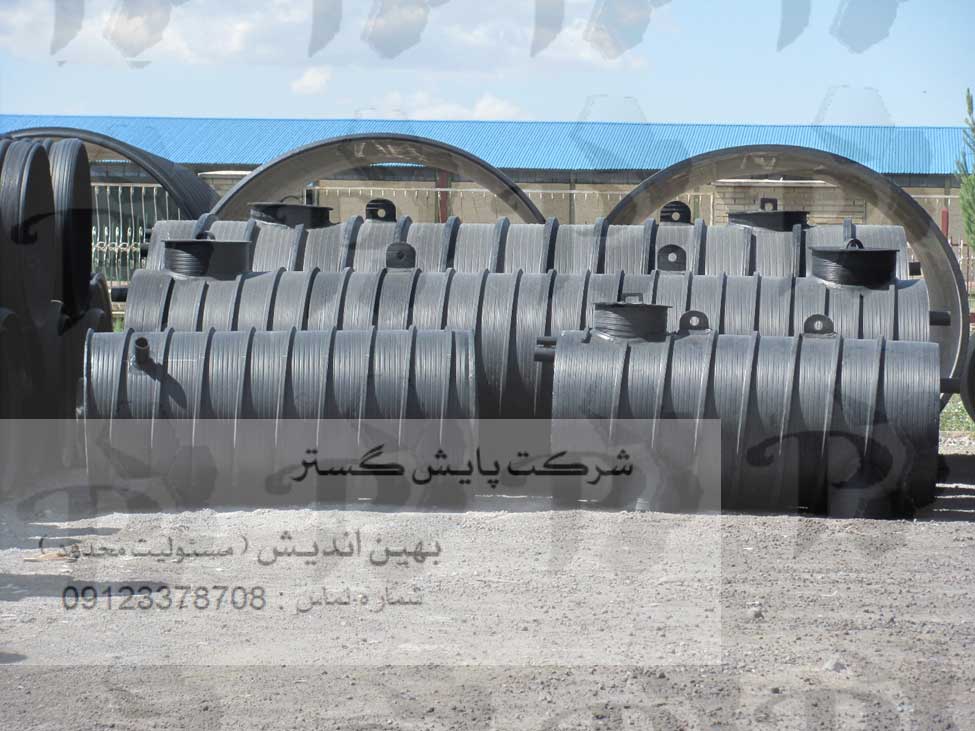
An engineered horizontal septic tank can include the following components:
Wastewater Inlet
The inlet is responsible for the controlled transfer of wastewater from the building network or the project site into the tank. Using an elbow, a diffuser, or a suitable inlet arrangement helps reduce turbulence and prevent disturbing the layers inside the tank.
Settling Chamber
In this section, the settleable particles, solids, and part of the organic matter collect at the bottom of the tank and form the sludge layer.
Anaerobic Zone
In the oxygen-free sections of the tank, anaerobic bacteria decompose part of the organic matter. In this process, gases are also produced, which must be discharged safely through the vent system.
Scum and Fat Layer
Materials lighter than water, such as fat, oil, foam, and part of the floating materials, accumulate at the surface of the tank. A suitable design of the baffles and outlet prevents this layer from moving toward the outlet.
Effluent Outlet
The outlet must draw from the middle layer of the tank to prevent the exit of bottom sludge and surface fat. The output effluent can be transferred to an absorption well (soakaway), a supplementary treatment unit, or a wastewater treatment package.
Inspection Manhole
The manhole is essential for inspection, sludge discharge, tank servicing, and checking the performance of the inlet and outlet. The number and location of the manholes in a horizontal septic tank must be consistent with the length and capacity of the tank.
Vent Pipe
The vent is responsible for discharging the produced gases, controlling the internal pressure, and reducing the possibility of odor returning to the building.
What Projects Is the Horizontal Septic Tank Suitable For?
The horizontal septic tank can be used in the following projects:
- Villas and garden villas
- Residential complexes
- Office buildings
- Civil construction projects
- Workshops and workshop camps
- Hotels and lodges
- Schools and educational centers
- Tourism complexes
- Factories and light industries
- Projects outside the range of the urban sewer network
- Villa towns
- Projects with suitable longitudinal space
The Difference Between Horizontal and Vertical Septic Tanks
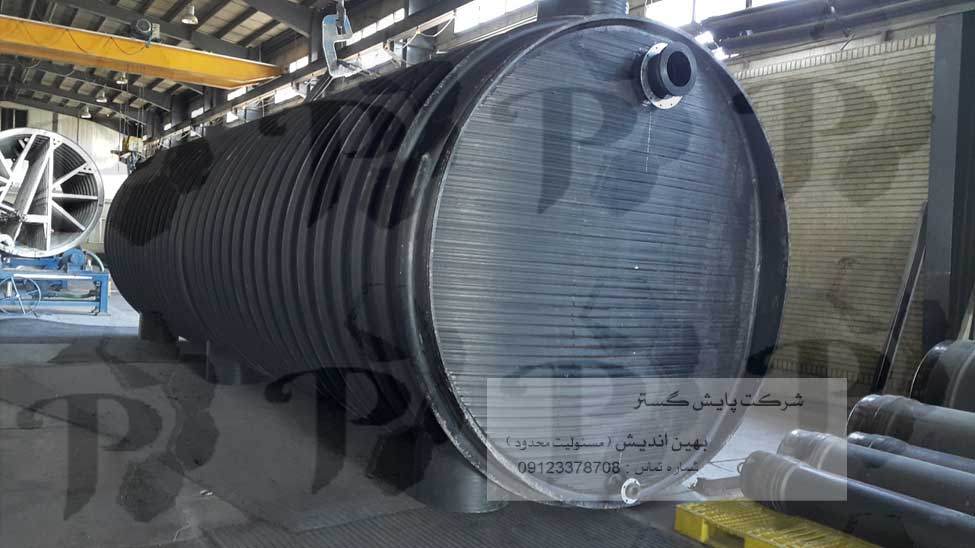
Horizontal and vertical septic tanks are similar in terms of primary treatment performance; but the body form, the required space, and the execution conditions differ.
In a horizontal septic tank, the longitudinal footprint is greater, but the overall height of the tank will be less. This model can be a suitable option for projects that have suitable longitudinal space or need a higher capacity.
In a vertical septic tank, the footprint is smaller, but the tank’s height is greater. The vertical model is more suitable for limited plots, narrow spaces, and projects where using a large length is not possible.
To review the other model, see the “Vertical Polyethylene Septic Tank” page.
Horizontal Septic Tank: Buried or Above-Ground?
The horizontal septic tank can be designed both as buried and above-ground.
In buried execution, the soil conditions, the groundwater level, the installation depth, the surface loads, the backfilling method, and the structural strength of the body are important.
In above-ground execution, the tank is installed on the surface or semi-surface and must be protected against sunlight, impact, temperature changes, and outdoor operating conditions.
To review the details, see the “Buried Septic Tank” and “Above-Ground Septic Tank” pages.
Important Points for Installing a Horizontal Septic Tank
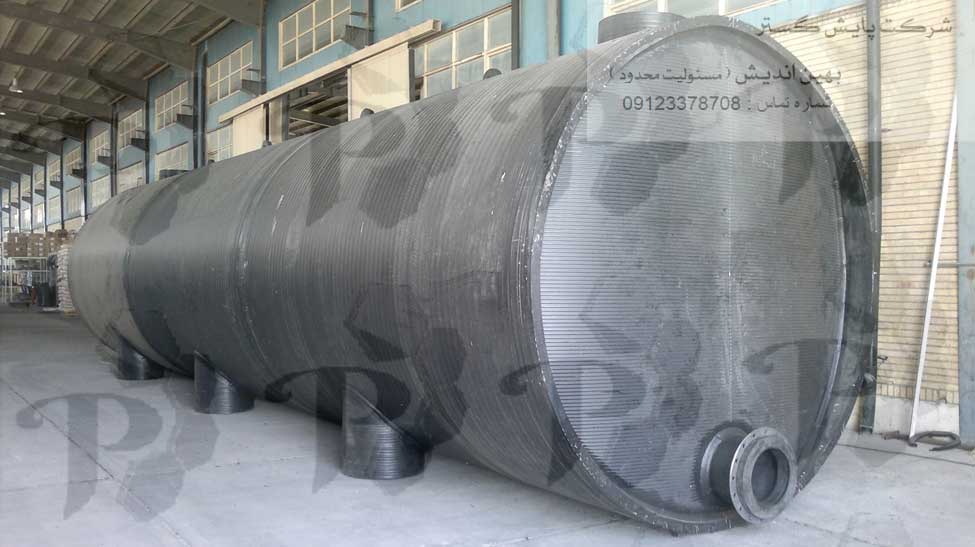
The installation of a horizontal septic tank must be done according to the execution method. The most important points are:
- Preparing a level, stable bed
- Preventing the tank from contacting rocks and sharp objects
- Executing a suitable bed appropriate to the soil conditions
- Checking the tank’s level before connecting the pipes
- Suitable sealing of the inlet, outlet, and vent
- Providing accessible manholes for servicing
- Preventing direct impact during handling
- Reviewing the groundwater-level conditions in buried execution
- Providing structural protection if there is traffic load
- Backfilling around the tank in stages according to the execution plan
- Suitable access for periodic sludge discharge
How Is the Capacity of a Horizontal Septic Tank Determined?
The capacity of a horizontal septic tank is not determined based on the number of people alone. For an accurate design, the following must be reviewed:
- The number of users or residents
- The type of use of the project
- The daily flow rate and the peak wastewater flow rate
- The degree of fluctuation in water consumption
- The volume needed for settling and sludge storage
- The required retention time
- The type of inlet wastewater
- The need for connection to an absorption well (soakaway) or supplementary treatment
- The space available for installation
- The buried or above-ground conditions
- The periodic discharge and maintenance schedule
In industrial projects or special uses, the capacity must be chosen based on the real flow rate and the wastewater analysis, not merely the number of people.
Price of the Horizontal Polyethylene Septic Tank
The price of the horizontal septic tank depends on various factors:
- The tank capacity
- The diameter and length of the septic tank
- The body structure
- The number of manholes
- The type of inlet and outlet
- Internal equipment such as baffles and fittings
- Whether the project is buried or above-ground
- The transport conditions and installation location
- The need to execute fittings, a vent, or a chassis
- The need for structural reinforcement in special projects
- The soil conditions and bed execution
For an accurate estimate, it is better to review information such as the number of people, the type of use, the installation location, the approximate capacity, the buried or above-ground conditions, and the wastewater outlet route.
To receive consultation, a capacity review, and a price quote for the horizontal polyethylene septic tank, get in touch with the experts at Poly Payesh.
Frequently Asked Questions About the Horizontal Septic Tank
What is a horizontal septic tank?
A horizontal septic tank is a primary wastewater treatment tank that is designed lying down and is used for settling solids, separating fat, and relatively reducing the pollution load of the wastewater.
Is a horizontal or a vertical septic tank better?
Neither is better for all projects. The choice between the horizontal and vertical models depends on the available space, the required capacity, the installation conditions, the type of soil, the execution depth, and the operating needs.
Is a horizontal septic tank suitable for burial?
If a suitable body is chosen, the structural design is correct, and the bed and backfilling are properly executed, a horizontal septic tank can be executed as buried.
Does a horizontal septic tank perform complete wastewater treatment?
No. A septic tank performs primary treatment, and to reach a higher effluent quality, a wastewater treatment package, disinfection, or supplementary treatment may be needed.
How often should a septic tank be discharged?
The discharge time depends on the tank capacity, the number of users, the type of wastewater, and the amount of sludge produced. Periodic inspection of the manhole and a regular service schedule are essential.