

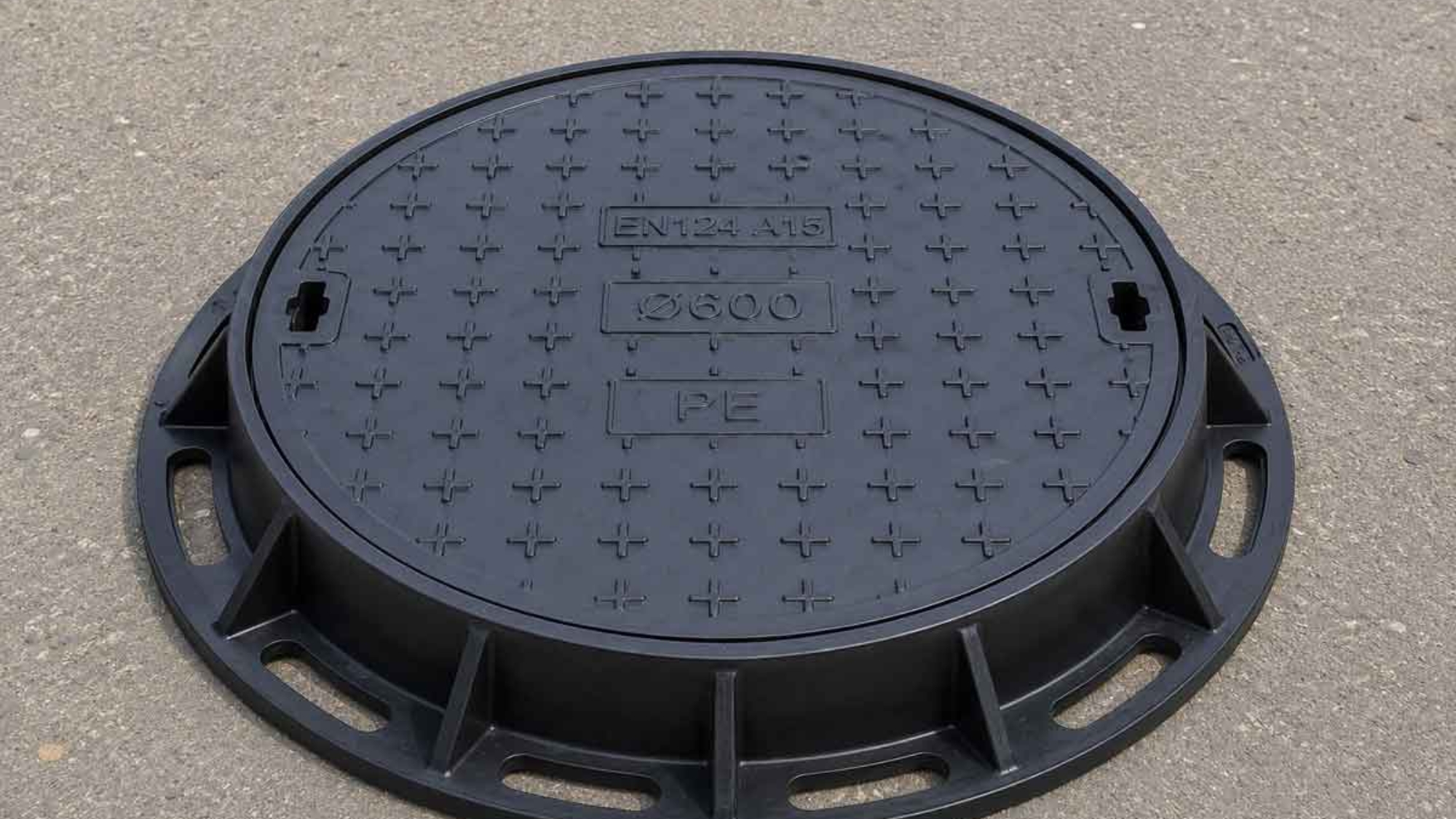
A polyethylene manhole is one of the most important components of a sewage, stormwater, and buried transmission-line network, used for access to, inspection, control, repair, and maintenance of pipelines. In designing any sewer network, simply laying the pipework is not enough; the system must also allow for periodic inspection, clearing of blockages, flushing of lines, flow control, changing the pipe route, and access to branches—and the manhole is designed for exactly this purpose. Today, the use of polyethylene manholes—thanks to their high water-tightness, corrosion resistance, and fast installation—has rapidly replaced traditional concrete manholes and has become the first choice of many engineers and contractors in urban and industrial projects.
What Is a Manhole Used For?
A manhole is essentially an access chamber in the sewer network through which an operator or maintenance equipment can reach the underground lines. This structure is installed at various points in the network, including where lines change direction, where the pipe diameter changes, where the slope changes, at branch connection points, along long routes, and at flushing and inspection points. Without these access points, even a sewer network with high-quality pipe laying will face serious operational problems in the long term, because there would be no way to directly control the flow and the internal condition of the lines.
Why Is a Manhole Essential in a Sewer Network?
Without a manhole, if problems such as blockage, sediment, breakage, or obstruction of the network occur, access to the underground lines becomes very difficult and the cost of resolving these problems increases significantly. A manhole makes it possible to inspect, dredge, flush the network, clear blockages, and repair the lines, and this very feature dramatically increases the useful life of the entire sewer network. In urban projects where access to the ground surface is limited, correct spacing of manholes also has a direct impact on the speed and cost of maintenance operations.
How Is a Polyethylene Manhole Made?
Polyethylene manholes are usually made of high-density polyethylene (HDPE) using engineered PE80 and PE100 materials. These manholes can be produced in spiral, corrugated, or solid-wall structures, each selected depending on the burial depth, soil pressure, and project budget. Correct selection of the structure type at the design stage directly affects the service life and structural stability of the manhole in the long term.
Main Components of a Polyethylene Manhole
The main body is the structure that withstands soil pressure and burial loads and must have sufficient resistance to soil pressure, moisture, corrosion, and traffic load.
Pipe inlets and outlets are the points where the sewer pipes connect to the manhole body; correct design of these connections is very important, because the network’s water-tightness, prevention of leakage, and structural stability depend on it.
The bench or flow channel (Bench / Channel) is the path designed in the floor of the manhole to correctly guide the flow; proper design of this section reduces sediment, prevents flow stagnation, and improves hydraulic performance.
The riser or access shaft is the vertical part of the manhole that provides access from ground level, and its height must be designed to suit the project’s burial depth.
The manhole cover can be made of polyethylene, cast iron, or composite depending on the installation location; in projects with traffic load, the cover must have high strength to prevent subsidence or breakage.
Types of Polyethylene Manholes
Each type of manhole is designed for specific network conditions. The table below shows the functional differences between these types.
| Manhole Type | Main Application |
|---|---|
| Inspection manhole | Inspection and maintenance of the network |
| Junction manhole | At the connection point of several pipelines |
| Direction-change manhole | At points where the angle of the sewer lines changes |
| Drop manhole | When there is a large elevation difference between lines |
| Pumping manhole | At sewage lift and pumping stations |
Why Has the Polyethylene Manhole Replaced the Concrete Manhole?
In the past, most sewer networks used concrete manholes, but today, in many projects, the polyethylene manhole has replaced concrete systems.
Problems with Concrete Manholes
Concrete manholes usually face problems such as cracking, leakage, corrosion caused by sewer gases, heavy weight, difficult installation, and long installation time. The hydrogen sulfide gas present in wastewater can gradually deteriorate the concrete, and this chemical erosion sharply increases the cost of repairing and rebuilding the network in the long term.
The table below briefly shows the difference between these two options.
| Feature | Concrete Manhole | Polyethylene Manhole |
|---|---|---|
| Water-tightness | Weaker, prone to leakage | Very high |
| Corrosion resistance | Vulnerable to sewer gases | Resistant to moisture, acid, and chemicals |
| Weight and transport | Heavy and difficult | Light and portable |
| Installation speed | Time-consuming | Fast, usually ready to install |
Advantages of the Polyethylene Manhole
Complete water-tightness is one of the most important advantages of the polyethylene manhole, and this feature prevents wastewater leakage, groundwater infiltration, and environmental contamination.
Corrosion resistance — polyethylene has very high resistance to moisture, acids, chemicals, and sewer gases, and this feature makes it suitable for the corrosive environments of domestic and industrial wastewater.
Lower weight — the polyethylene manhole is much lighter than concrete, which makes it easier to transport, faster to install, and reduces execution costs.
Fast installation — in many projects, execution time is very important; the polyethylene manhole is usually installed ready-made and does not require heavy execution operations.
Long service life — if designed and installed correctly, the polyethylene manhole has a very long life and remains resistant to destructive environmental factors.
Custom design capability — one of the important advantages of polyethylene systems is design flexibility; the manhole can be designed to suit the pipe diameters, burial depth, project conditions, and traffic load.
Buried Manhole Design
A manhole is considered a buried structure, and its design requires careful examination of the project conditions.
The Most Important Design Parameters
The most important parameters that must be considered in manhole design include burial depth, soil pressure, traffic load, groundwater level, soil type, and pipe diameters. If proper structural design is not carried out, the manhole may suffer deformation, settlement, failure, or leakage, and this can affect the entire performance of the sewer network.
Traffic Load on a Manhole
In projects where the manhole is located on a vehicle route, the design must be carried out to suit the traffic load. In these conditions, it may be necessary to use a concrete slab, structural reinforcement, or a more resistant cover so that the manhole remains stable against the dynamic pressures caused by passing vehicles.
The Polyethylene Manhole in the Domestic Sewer Network
In domestic sewer networks, the manhole plays a very important role in operation and maintenance. These systems are used in residential complexes, villas, towns, industrial projects, and urban networks, and because of the great variety of execution conditions in these projects, the ability to custom-design a polyethylene manhole becomes especially important.
Price of a Polyethylene Manhole
The price of a manhole depends on various factors, including the manhole diameter, depth, type of structure, number of inlets and outlets, design pressure, traffic load, and type of cover. For this reason, pricing must be based on the real conditions of the project, and comparing prices without considering these parameters can lead to a wrong decision for the client.
Conclusion
A polyethylene manhole is one of the most important pieces of equipment in a sewer network and buried lines, used for access to, inspection, maintenance, and control of the network. Today, the use of polyethylene manholes—thanks to their complete water-tightness, high corrosion resistance, suitable weight, and fast installation—has rapidly replaced traditional concrete manholes. Correct manhole design must be based on the burial depth, soil pressure, traffic load, and the project’s execution conditions to ensure stable performance and a suitable service life for the network; ultimately, the choice of the manhole’s type, structure, and suitable price must always be made to suit the real needs of each project—not based on a single standard for all conditions.