

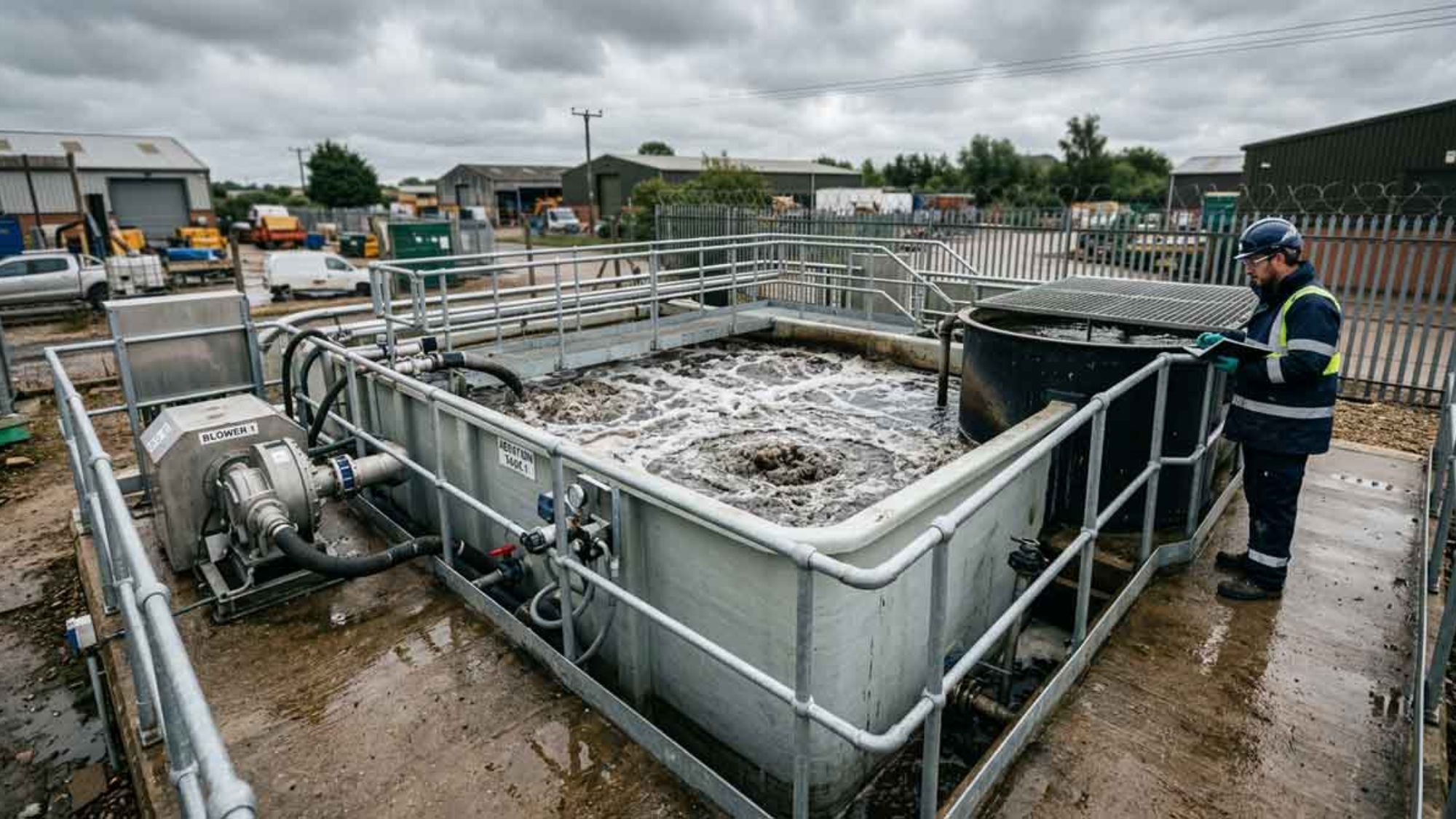
A wastewater treatment package is an engineered system for treating domestic and sanitary wastewater that, using physical, biological, and sometimes chemical processes, reduces the pollutants in the wastewater and produces higher-quality effluent. Today, with the growth of construction, the increase in villas, residential complexes, and civil projects, and the absence of a municipal sewer network in many areas, using a wastewater treatment package has become one of the most common methods of managing domestic wastewater. Unlike a septic tank, which reduces only part of the wastewater’s pollution, a wastewater treatment package is a more complete system and can achieve much higher efficiency in removing pollutants.
What Pollutants Are in Domestic Wastewater?
Domestic wastewater contains various compounds such as organic matter, suspended solids, fats and oils, detergents, bacteria, viruses, and nitrogen and phosphorus compounds, which—if discharged directly—can cause severe environmental pollution. The main goal of a wastewater treatment package is to reduce these pollutants to standard levels.
Stages of a Wastewater Treatment Package
A wastewater treatment package usually consists of several main stages, each performing a specific function in the treatment process. The table below introduces these stages in order.
| Stage | Function |
|---|---|
| Raw wastewater inlet | Wastewater enters the package from the collection network or the pump chamber |
| Preliminary screening | Coarse materials are removed so they do not damage the pumps and equipment |
| Equalization tank | The wastewater flow is evened out and hydraulic shock is prevented |
| Aeration | Aerobic bacteria are activated, and organic matter, BOD, and COD are reduced |
| Sedimentation | Activated sludge settles and clearer water rises to the top of the tank |
| Final disinfection | With chlorine, UV, or disinfectants, bacteria and viruses are reduced |
Domestic wastewater enters the wastewater treatment package through the collection network, and in many projects, if there is no suitable elevation difference, it first enters the pump chamber and is then conveyed to the package. Next, in the equalization tank, flow fluctuations are controlled—an issue that is especially important in villa and building projects with variable water consumption.
Aeration: The Heart of the Wastewater Treatment System
The most important part of a wastewater treatment package is the aeration tank, where air is introduced into the wastewater using an aeration blower, diffuser, or other oxygen-transfer systems. This aeration activates aerobic bacteria that consume the organic matter in the wastewater and reduce BOD, COD, odor, and organic matter; in fact, the main process of domestic wastewater treatment takes place at this stage.
The blower is responsible for supplying the air the bacteria need, generating dissolved oxygen, and preventing the system from becoming anaerobic; if aeration is not carried out properly, treatment efficiency drops, odor develops, and the activated sludge dies off. The diffuser is responsible for transferring air into the wastewater, and the finer the air bubbles, the better the oxygen transfer and the lower the energy consumption. In this same tank, a mass of bacteria and microorganisms called activated sludge forms, which is the most important biological part of the system and plays the main role in removing pollutants.
Sedimentation Tank and Final Disinfection
After aeration, the wastewater enters the sedimentation tank, where the activated sludge settles and clearer water rises to the upper section; part of this sludge is also returned to the aeration tank to maintain the bacterial population. In the final stage, the effluent is disinfected using chlorine, UV, or disinfectants to reduce bacteria, viruses, and other pathogens.
Output of the Wastewater Treatment Package
Depending on the type of system and the quality of the design, the effluent can be used for landscape irrigation, discharge to a soakaway, discharge to surface waters, or limited reuse; this very versatility of the effluent is one of the reasons for the popularity of the wastewater treatment package over simpler methods.
The Most Important Wastewater Treatment Package Technologies
Among the common technologies, the Extended Aeration system is very widely used because of its high stability, while the SBR system performs all treatment stages in a single tank on a timed basis and usually has a control PLC and automation. The EASS system is considered an optimized version of extended aeration with higher efficiency and stability, and the MBBR system uses floating media for bacterial growth.
Polyethylene Wastewater Treatment Package: Buried or Above-Ground?
Today, many projects use a polyethylene wastewater treatment package, because these systems are completely water-tight, highly corrosion-resistant, suitable for burial, lighter in weight, and faster to install than metal and concrete systems. In villa projects, the buried model is usually more popular because it does not occupy surface space; but with the above-ground model, note that the wastewater must either be higher than the package by gravity or be conveyed to the system by a pump chamber.
Important Factors in Designing a Wastewater Treatment Package
The design of a wastewater treatment system must be based on the number of users, the wastewater flow rate, the required effluent quality, operating conditions, project space, burial conditions, groundwater level, and the type of technology, because ignoring any of these parameters can severely reduce the system’s final efficiency.
Conclusion
A wastewater treatment package is a complete system for treating domestic wastewater that reduces the pollutants in the wastewater using biological processes, aeration, sedimentation, and disinfection. Equipment such as the blower, diffuser, aeration tank, activated sludge, and disinfection system play the main role in the treatment process, and today the use of buried and above-ground polyethylene wastewater treatment packages has become one of the best solutions for managing domestic wastewater in villa, building, and civil projects.