

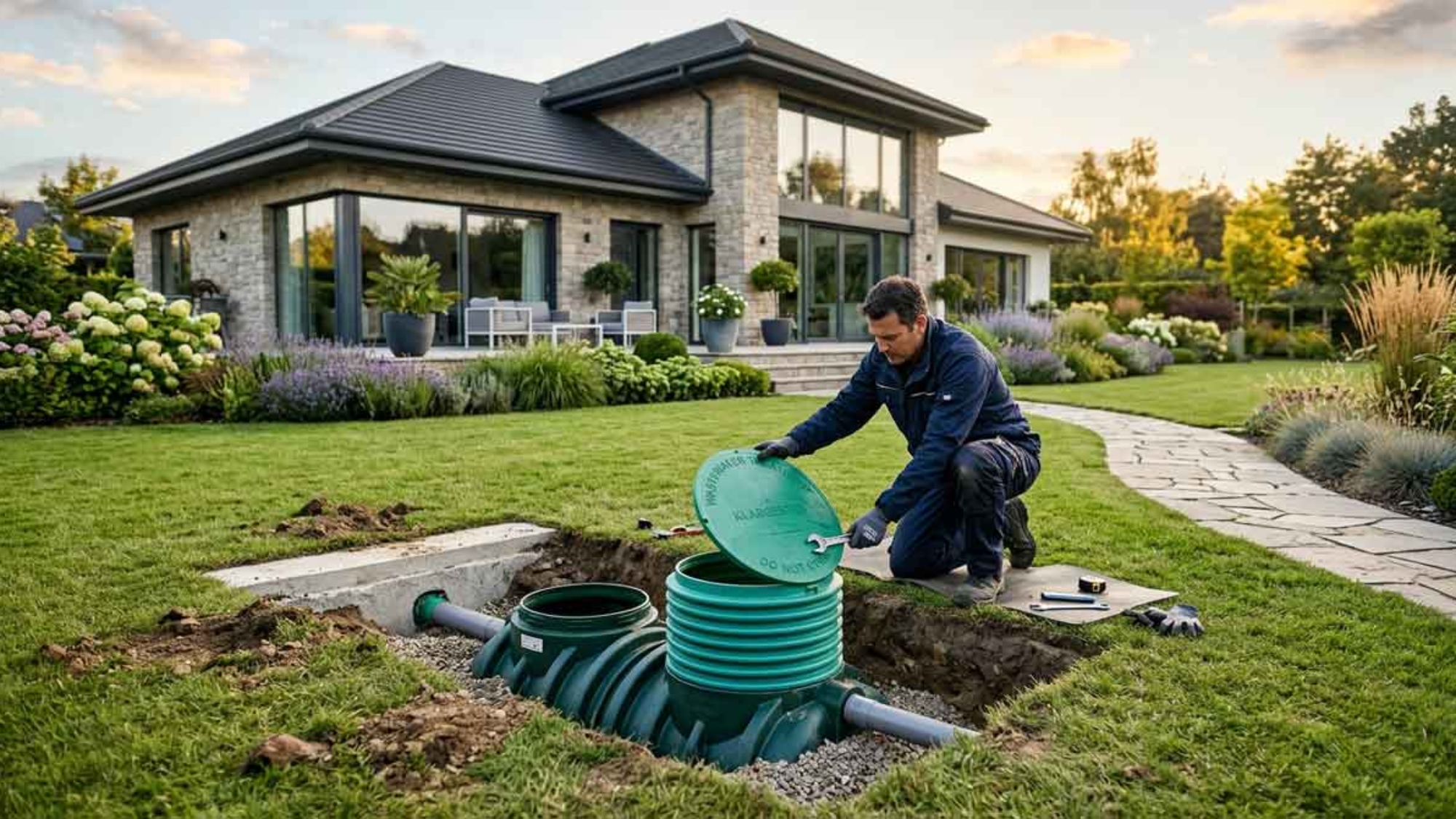
Today, with the increasing construction of villas, garden villas, and residential complexes outside city limits, the management and treatment of domestic wastewater has become one of the most important challenges in villa projects. In many villa areas, there is no municipal sewer network and the wastewater generated must be managed within the project itself, which is why using a villa wastewater treatment system is not only an engineering choice but also a health and environmental necessity. Improper disposal of wastewater can cause soil contamination, groundwater pollution, unpleasant odors, soakaway overflow, and the spread of microbial contamination, which is why many villas today use a polyethylene septic tank or a polyethylene wastewater treatment package.
What Are the Characteristics of Villa Wastewater?
Villa wastewater is usually generated by the toilet, bathroom, kitchen, laundry, and washbasin, and contains organic matter, fats and oils, detergents, suspended solids, and bacteria and microorganisms. An important feature of villa wastewater is that its flow rate is variable, consumption is intermittent, usage increases in certain seasons, and in many villas the available installation space is limited; therefore, a villa wastewater treatment system must be designed to suit these specific conditions.
Is a Soakaway Alone Enough?
In the past, many villas used only a soakaway (absorption well), but today this method alone is not sufficient in many projects. A soakaway without a treatment system can fill up quickly, create unpleasant odors, contaminate groundwater, and reduce the soil’s absorption capacity. For this reason, a septic tank or wastewater treatment package is usually used before the soakaway to reduce the pollution load.
Septic Tank or Wastewater Treatment Package?
Choosing the best system depends on various factors such as the number of users, whether the villa is used permanently or seasonally, the soil type, groundwater level, project space, budget, and the required effluent quality. However, two main options are usually used for villas: a polyethylene septic tank and a polyethylene wastewater treatment package. The table below shows the differences between these two options.
| Feature | Polyethylene Septic Tank | Polyethylene Wastewater Treatment Package |
|---|---|---|
| Cost | Lower | Higher |
| Power consumption | Very low or zero | Requires electrical equipment such as a blower |
| Maintenance | Simple | Requires more periodic inspection |
| Treatment efficiency | Primary treatment (sedimentation and anaerobic decomposition) | Much higher efficiency, reducing BOD and COD |
| Effluent quality | Moderate | High, reusable for irrigation |
| Suitable for | Small and medium villas with a limited budget | Projects requiring higher effluent quality |
A septic tank is chosen in many small and medium villas because of its lower cost, lack of need for complex equipment, negligible power consumption, simple maintenance, and fast installation. In projects where effluent quality matters more, a wastewater treatment package is used with processes such as aeration, activated sludge, sedimentation, and disinfection, which provides much higher treatment efficiency and the possibility of reusing the water for irrigation.
Is a Polyethylene or Concrete Septic Tank Better?
Today, in villa projects, the polyethylene septic tank has become far more popular because it is completely water-tight, has no leakage, is corrosion-resistant, weighs less, and offers better suitability for buried installation—whereas a concrete septic tank may over time suffer from cracking, leakage, corrosion, and structural problems.
The Best Technology for a Villa
In villa projects, the Extended Aeration system is one of the most widely used options thanks to its stable performance, easier maintenance, and good efficiency. The SBR system is more suitable for projects with limited space, a need for high effluent quality, and automatic control, while the EASS system—as an optimized version of extended aeration—is used in many modern polyethylene packages.
Buried or Above-Ground System for a Villa?
In villa projects, a buried system is usually the more popular choice because it does not occupy surface space, preserves the villa’s appearance, keeps the equipment out of sight, reduces noise, and provides better protection against environmental conditions. For this reason, many villa septic tanks and wastewater treatment packages are installed underground.
The Importance of Engineering Design in a Villa
One of the common mistakes in villa projects is selecting a system without engineering design. In designing a villa wastewater treatment system, the number of residents, water consumption, soil conditions, burial depth, groundwater level, and whether use is seasonal or permanent must be evaluated, because a wrong choice can cause bad odors, wastewater overflow, rapid filling of the system, and extra repair costs.
Price of a Villa Wastewater Treatment System
The price of a villa wastewater treatment system depends on the tank capacity, the type of system, whether it is buried or above-ground, the material type, the mechanical equipment, and the treatment technology. In general, a polyethylene septic tank costs less, while a wastewater treatment package offers higher efficiency, and the final choice must be made based on the real needs of the project.
Conclusion
Choosing the best villa wastewater treatment system depends on the project conditions, the number of users, the required effluent quality, and the budget. In many villas, the polyethylene septic tank is an economical and practical option thanks to its simplicity, reasonable price, and suitability for burial. However, for projects where higher effluent quality matters, using a polyethylene wastewater treatment package with technologies such as extended aeration, SBR, and EASS is the more professional choice.